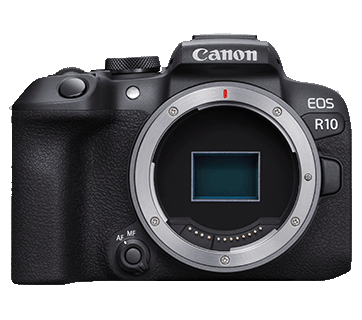
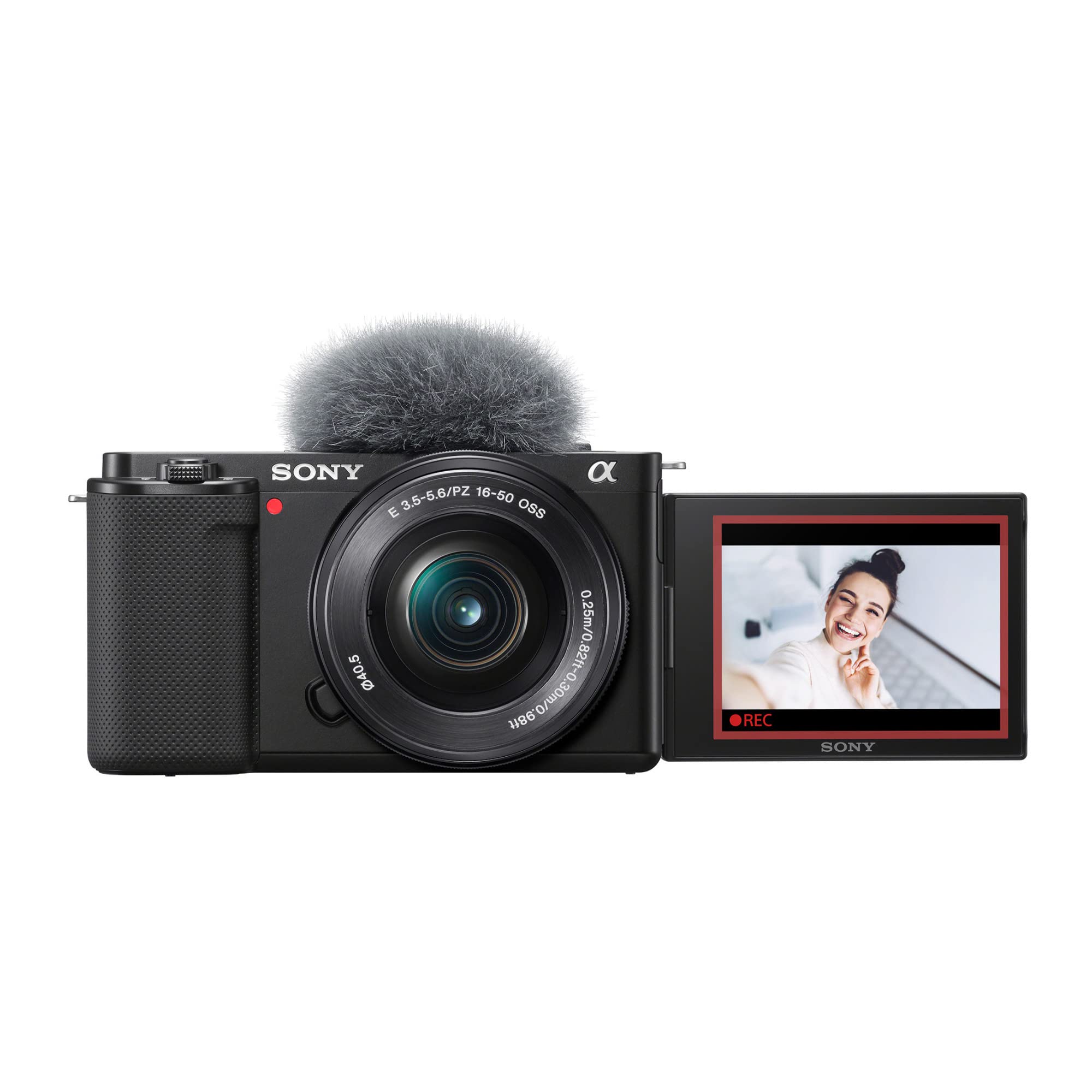
The Canon EOS R10 and the Sony ZV-E10 are two popular choices for content creators, vloggers, and photography enthusiasts who seek a compact APS-C mirrorless camera. Both models are highly regarded for their image quality, autofocus performance, and ease of use. While both cameras cater to similar audiences, key differentiators such as ergonomic design, video capabilities, and lens ecosystems can sway potential buyers towards one option over the other. The advanced features of the EOS R10 may attract those looking for higher specifications, while the ZV-E10's user-friendly design might appeal to vloggers and casual users.
Specifications Comparison
Detailed Comparison
Image Quality
Both the Canon EOS R10 and Sony ZV-E10 feature APS-C sensors with 24 megapixels, providing excellent image quality for both stills and video. The Canon model's sensor dimensions are slightly smaller at 22.2 x 14.8 mm compared to Sony's 23.5 x 15.6 mm, but this difference is negligible in everyday use. The EOS R10 supports an ISO range from 100 to 32,000, while the ZV-E10 can also extend to ISO 50 and 51,200, which can be beneficial for low-light situations. However, the real-world performance of these sensors results in strikingly similar image outputs, exhibiting good noise control across their respective ISO ranges. The choice between the two may come down to personal preference regarding color science and tonal reproduction, which can differ between Canon and Sony.
Autofocus System
The Canon EOS R10 offers a robust autofocus system with 651 autofocus points, significantly more than the Sony ZV-E10's 425 points. This extensive point coverage can be particularly advantageous in dynamic shooting scenarios, such as sports or wildlife photography. Canon's Dual Pixel autofocus technology is widely praised for its speed and accuracy, providing rapid subject acquisition. On the other hand, the ZV-E10 utilizes Sony's advanced Real-Time Eye Autofocus, which is excellent for portrait photography and vlogging, ensuring that the subject remains in focus. While the ZV-E10's autofocus performance is strong, particularly for face detection, the Canon's sheer number of focus points gives it an edge for versatility in various photography styles.
Video Capabilities
In terms of video specifications, the Canon EOS R10 can shoot 4K video at 30fps, which presents a significant advantage for creators prioritizing higher-resolution content. In contrast, the ZV-E10 is limited to 1080p recording at 24fps, a drawback for those looking to produce higher-quality video. However, the ZV-E10 offers unique features tailored for vloggers, including a flip-out screen and an enhanced microphone input, enhancing its usability during filming. While the ZV-E10 may appeal to novice vloggers due to its user-friendly interface and useful video-specific features, the higher video resolution of the EOS R10 makes it the preferable choice for serious videographers seeking quality over convenience.
Build & Ergonomics
When it comes to build quality, the Canon EOS R10 has a slightly larger footprint and weighs more at 426g compared to the ZV-E10's 343g. This may be a consideration for users prioritizing portability. The EOS R10 features an electronic viewfinder, which many photographers prefer for better composition and framing, while the ZV-E10 forgoes the viewfinder entirely in favor of a lightweight and compact design. Furthermore, the ZV-E10 includes a fully articulating touchscreen, which is very convenient for vloggers. For those who value a tactile shooting experience, the EOS R10's electronic viewfinder provides a crucial usability advantage, while the ZV-E10's design enhances flexibility for live video shooting.
Battery & Storage
Battery life is another important aspect for users on the move. The Canon EOS R10 delivers a slightly longer battery life, allowing for about 450 shots per charge, compared to the 440 shots from the Sony ZV-E10. Both cameras employ SD card slots for storage, however, the ZV-E10 offers the option for a higher capacity with UHS-I compatibility, which may be attractive to videographers using large file sizes. Additionally, both cameras support MP4 video formats and JPEG and RAW for still images, giving users flexibility during editing. While the differences in battery performance are minor, the slight edge of the R10 might be beneficial for extensive shooting sessions.
Value for Money
The pricing significantly differs, with the Canon EOS R10 being priced at $979, while the Sony ZV-E10 has a more accessible price point of $700. While the EOS R10's price reflects its higher resolution video capabilities and superior autofocus system, the ZV-E10 arguably offers better value for casual creators who prioritize ease of use and portability. For beginner vloggers or those on a budget, the ZV-E10 provides a comprehensive feature set at a lower upfront cost, while the EOS R10 appeals to those looking for advanced imaging capabilities and higher performance, justifying the price difference.
Our Verdict
Overall, the Canon EOS R10 emerges as the winner in this comparison, particularly for users seeking advanced photography features and superior video resolution. Its higher autofocus point count and 4K video capabilities make it an ideal choice for more serious photographers and content creators. However, the Sony ZV-E10 remains compelling for vloggers and beginners due to its lower price, lightweight design, and user-friendly features. Thus, while the EOS R10 provides enhanced performance, the ZV-E10 might be perfect for casual shooting and travel where portability is key.
Canon EOS R10
Sony ZV-E10
Also Compare
Frequently Asked Questions
Which camera is better for vlogging?
The Sony ZV-E10 may be better for vlogging due to its lightweight design, flip-out screen, and user-friendly features designed specifically for video creators.
Is the Canon EOS R10 worth the extra cost?
If you are serious about photography and require advanced features such as faster autofocus and 4K video, the EOS R10 justifies its higher price. However, for casual users, the ZV-E10 offers great value.
How do the autofocus systems compare?
The EOS R10 has 651 autofocus points, offering greater coverage for dynamic shooting. In comparison, the ZV-E10 has 425 points but performs well in face detection and tracking for vlogging.
Can both cameras shoot RAW images?
Yes, both cameras can shoot in RAW format, providing flexibility for post-processing in photography.
What are the major differences in weight and size?
The Canon EOS R10 is heavier at 426g and larger in dimensions compared to the 343g Sony ZV-E10, which might affect portability and handling for some users.