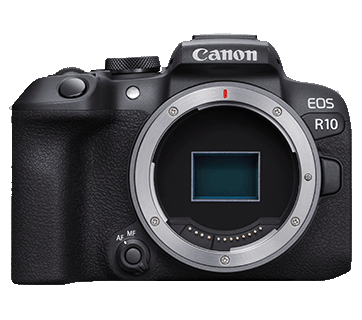

The Canon EOS R10 and the Sony A6700 are two popular mirrorless cameras in the APS-C segment, often compared by enthusiasts and professionals alike. Both cameras target photographers and videographers who desire a portable, lightweight body without compromising on essential features. Given the recent advancements in imaging technology, these models pique interest due to their unique offerings, making them strong contenders in their respective categories. Buyers must evaluate their specific needs, including image quality, video capabilities, and overall usability, to make an informed choice.
Specifications Comparison
Detailed Comparison
Image Quality
When it comes to image quality, both the Canon EOS R10 and Sony A6700 deliver impressive results, but there are some differences worth noting. The R10 features a 24-megapixel sensor, while the A6700 boasts 26 megapixels. This slight increase in resolution for the A6700 may appeal to those who often crop their images or require larger prints. Both cameras have an ISO range that tops out at 32,000, allowing for good low-light performance, though the A6700 can be expanded down to ISO 50 and up to 102,400, offering greater flexibility in extreme conditions.
The differences extend to dynamic range and color science; Canon is known for its impressive color fidelity and skin tones, often preferred by portrait photographers, while Sony's A6700 has advanced color profiles that provide versatile options for various shooting scenarios. In real-world testing, both cameras produce sharp, vibrant images, but subtle preferences may guide users toward one brand's color reproduction over the other. The edge in detail retrieval and high-resolution performance leans slightly towards the A6700, albeit at a modest level.
Ultimately, users seeking crisp images with great detail may favor the A6700, while those who prioritize color accuracy without needing the highest resolution might lean towards the R10.
Autofocus System
The autofocus systems in both cameras are impressive but cater to slightly different preferences. The Canon EOS R10 features 651 autofocus points, providing ample coverage across the frame, which is beneficial for tracking fast-moving subjects. In real-world scenarios, the R10's autofocus performance is reliable, especially in well-lit conditions, making it a solid choice for casual photographers and events. However, Sony takes the lead with the A6700's 759 autofocus points, which cover virtually the entire frame, ensuring precision in most shooting conditions.
Moreover, the A6700 incorporates advanced Real-Time Tracking and Eye Autofocus technology, which excels in capturing subjects, particularly advantageous in wildlife and sports photography. The speed and accuracy of the A6700's autofocus system often result in a higher keeper rate when conditions become more dynamic. When considering overall autofocus performance, the technological advancements of Sony's system provide a better edge, particularly for keen action and portrait shooters.
While both are robust systems, the A6700's ability to track and focus under various circumstances makes it the preferred choice for those prioritizing fast-paced photography.
Video Capabilities
Video performance is increasingly important in today's content creation market, and both the Canon EOS R10 and Sony A6700 bring impressive features to the table. The R10 can record in 4K at 30 frames per second, which is adequate for most casual videographers. However, it lacks built-in stabilization, which means users may need to invest in a gimbal or stabilize in post-production for smoother footage.
In contrast, the Sony A6700 offers 4K recording capabilities up to 120 frames per second, enabling high-frame-rate shooting for slow-motion effects, a feature that is highly sought after in professional video production. Additionally, the A6700's 5 stops of in-body image stabilization enhance its video performance significantly, allowing for more dynamic shooting without the necessity for stabilization tools.
With these considerations, video creators, especially those focusing on action or movement-heavy projects, will find the A6700's offerings far superior. The flexibility in frame rates and stabilization combined with its advanced codecs makes it a compelling choice for serious video enthusiasts or professionals.
Build & Ergonomics
Considering build quality and ergonomics, both cameras offer solid construction but differ in weight and weather-sealing features. The Canon EOS R10 weighs 426 grams, making it lightweight and easy to carry for long periods, which is beneficial for casual and travel photographers. Its dimensions are compact, allowing for easy handling and a comfortable grip, though it lacks weather-sealing, which may deter outdoor photographers from using it in harsh conditions.
On the other hand, the Sony A6700 weighs slightly more at 493 grams but features a durable design with weather-sealing, making it better suited for outdoor and adventure photography. The A6700's compact size is also designed for comfortable handling, featuring a thoughtfully designed grip that enhances user experience, especially in extended shooting scenarios.
The choice between the two in this category will hinge on the user's typical shooting conditions; those prioritizing portability may prefer the R10, while users looking for a camera capable of withstanding unpredictable weather are likely to favor the A6700.
Battery & Storage
Battery life is an essential factor for photographers and videographers on the go, and in this category, the Canon EOS R10 provides a solid performance with a rated battery life of up to 450 shots. This is respectable for everyday casual photography, allowing users to shoot for extended periods without frequent recharging. However, the R10 uses the LP-E17 battery, which is less efficient than some newer options, leading to shorter life during video shooting modes.
In contrast, the Sony A6700 excels with a higher battery life of approximately 570 shots, which is a significant advantage for those working on longer days without the opportunity to recharge. The A6700 utilizes the NP-FZ100 battery, which is widely praised for its robustness and capacity, especially during continuous shooting and video recording sessions.
Both cameras offer SD card slots, but the A6700 supports faster UHS-II cards, improving write speeds during burst shooting and 4K video recording. Consequently, when it comes to endurance and usability in prolonged shooting environments or sessions, the A6700 comes out ahead due to its superior battery performance and storage capabilities.
Value for Money
The Canon EOS R10 is priced at $979, making it a compelling entry point for those looking to invest in a mirrorless camera, particularly beginners or casual photographers. This price point provides access to a solid feature set, making it an attractive option for users who want good performance without breaking the bank. The overall value proposition is quite strong for its capabilities, especially for users less focused on video performance.
Conversely, the Sony A6700 retails for approximately $1,400, making it a higher investment but offering significant improvements in video capabilities, autofocus performance, and durability. For professionals or advanced shooters who require the best specifications and features available in a compact form factor, this investment might be justified. However, the price gap may place it out of reach for casual users.
When evaluating value for money overall, the R10 can be seen as a better fit for those on a budget, while the A6700 targets more serious enthusiasts and professionals with its robust feature set that supports demanding use cases. This leaves potential buyers weighing their budget against their specific needs and intended use more heavily.
Lens Ecosystem
Both Canon and Sony offer robust lens ecosystems, yet there are notable distinctions. Canon's RF mount has quickly amassed a strong lineup of lenses in a short time, equating well for the R10 users looking for versatile options. However, the R10, being relatively new, is slightly limited compared to the numerous EF lenses available through an adapter, providing flexibility for users transitioning from a DSLR. Canon's lenses generally have a reputation for excellent optical quality but can come with a higher price tag.
Sony, on the other hand, has a well-established E-mount system with a greater variety of native lenses, including options for nearly every shooting scenario, from wide angles to telephoto. The longer presence in the market means that users can find third-party options more readily as well in terms of adapters.
For buyers keen on lens variety, the A6700 may seem more appealing due to the maturity of Sony's lens ecosystem. However, for users already vested in the RF system or those looking for adapters to utilize existing glass, the Canon ecosystem can be quite appealing as well.
Ultimately, choice in lens ecosystem will likely depend on prior investments in glass and specific preferences towards usability and shooting styles.
Our Verdict
Overall, the Sony A6700 emerges as the winner in this comparison when considering its robust capabilities across various aspects. While the Canon EOS R10 offers excellent value and is a fantastic option for beginners, the A6700 is tailored for those seeking premium performance in autofocus, video capabilities, and build quality. For professional and serious enthusiasts, the A6700 justifies its higher price with features that enhance the overall shooting experience, while the R10 remains a strong contender for those who prioritize ease of use and budget-friendliness.
Canon EOS R10
Sony A6700
Also Compare
Frequently Asked Questions
Which camera is better for beginners?
The Canon EOS R10 is more beginner-friendly due to its lower price and simpler features, making it a great entry point into mirrorless photography.
Is the Sony A6700 worth the extra cost?
If you require advanced features like superior autofocus, higher video frame rates, and weather-sealing, the A6700 offers significant benefits that justify its higher price.
Can I use Canon lenses on the R10?
Yes, you can use Canon's EF lenses on the R10 with the appropriate adapter, allowing versatility for those transitioning from DSLR to mirrorless.
How does low-light performance compare?
Both cameras perform well in low-light scenarios, but the Sony A6700 has an expandable ISO range, enabling greater flexibility under challenging lighting conditions.
Is the video performance comparable?
No, the Sony A6700 offers superior video capabilities, including 4K at 120p and in-body stabilization, compared to the Canon EOS R10's 4K at 30p and lack of stabilization.