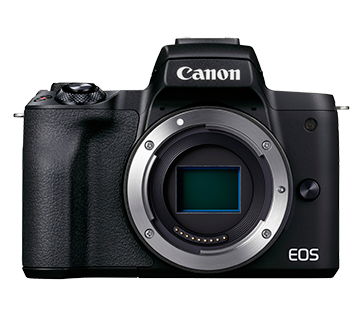
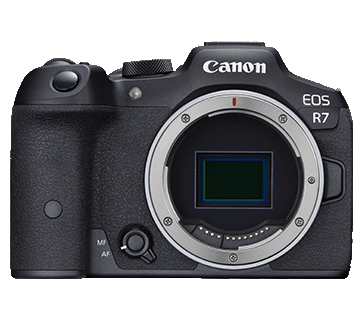
The Canon EOS M50 Mark II and the Canon EOS R7 are frequently compared by enthusiasts and aspiring photographers looking to step up from their smartphones or entry-level DSLRs to a more advanced, yet compact, mirrorless camera. Both models are APS-C sensor mirrorless cameras, offering a balance of portability, image quality, and feature-set that appeals to hobbyists, content creators, and even semi-professional shooters. However, they represent very different points in Canon's product strategy: the M50 Mark II belongs to the now sunsetted EF-M line, optimized for simplicity and vlogging, while the R7 is part of the much newer, future-proofed RF ecosystem with technology aimed at enthusiasts and advanced users.
Those choosing between these cameras should consider what they need most-accessibility, price, and a lightweight setup favor the M50 Mark II, while the R7 stands out with higher-end specs, faster performance, and more robust build. The key differentiators lie in the sensor resolution, autofocus sophistication, video functions, and, notably, system support and lens compatibility, which could heavily influence a buyer's long-term satisfaction.
Specifications Comparison
Detailed Comparison
Image Quality
The Canon EOS R7 features a 33-megapixel APS-C sensor, delivering higher resolution images than the 24.1-megapixel sensor inside the M50 Mark II. Both sensors are nearly identical in physical dimensions, but the R7's higher pixel count enables more detailed photos, especially noticeable in landscapes, studio shoots, and cropping flexibility.
In terms of base ISO, both cameras start at ISO 100, but the R7 stretches further to ISO 32,000 (expandable), theoretically providing more versatility in low light conditions compared to the M50 Mark II's 25,600 maximum. The R7 also leverages a newer sensor and image processor, which translate into improved dynamic range and better high-ISO noise performance-advantages particularly valuable for those shooting in challenging lighting.
Moreover, the R7 is equipped with in-body image stabilization (IBIS) up to 6 stops, a feature absent on the M50 Mark II. This helps handheld performance in low light and when using unstabilized lenses, further enhancing real-world image quality. Overall, while the M50 Mark II delivers good APS-C quality suitable for day-to-day shooting and content creation, the R7 is a step above for those who demand the best resolution and flexibility from an APS-C camera.
Autofocus System
The Canon EOS R7 takes a clear lead when it comes to autofocus, offering 651 autofocus points compared to the simpler system on the M50 Mark II (which uses Canon's older Dual Pixel CMOS AF with face/eye detection but fewer coverage points overall). This expansive AF area allows the R7 to track subjects with greater accuracy and speed, which is critical for sports, wildlife, or any moving subjects.
The R7's autofocus is further augmented by advances in subject detection and deep learning technologies, providing more reliable face, eye, and subject tracking even in difficult situations. The M50 Mark II, while competent for general use and vlogging, may struggle in more demanding scenarios where speed or precision is necessary.
Vloggers and casual photographers will find the M50 Mark II's AF system easy to use for self-shooting and daily life, but the R7 offers much more advanced focusing options for a wider variety of shooting genres.
Video Capabilities
Both cameras offer respectable video features, but there are key differences. The Canon EOS M50 Mark II shoots up to 4K 24p (with a crop and contrast-detection AF), and its 1080p performance is strong with good AF. It caters well to vloggers thanks to its fully articulated touchscreen and straightforward interface, even offering vertical video support.
The Canon EOS R7 ups the ante with 4K video at 30p, full sensor width (no significant crop), oversampled from 7K for improved detail, and advanced features such as C-Log 3 for color grading. Additionally, its 6-stop IBIS provides superior stabilization for handheld video, strongly benefitting creators who shoot on the go. Autofocus during video is also significantly better, thanks to the R7's advanced AF system.
While the M50 Mark II is a solid entry-level choice for YouTubers and streamers, the R7 is markedly more capable for those looking to produce more polished video content, or who intend to do more than basic vlogging.
Build & Ergonomics
The Canon EOS M50 Mark II is light and compact, making it highly portable and suited for travel or casual everyday use. Its plastic build feels decent at its price point, and the fully articulated touchscreen is a strong ergonomic point for self-shooters. However, it lacks features like weather-sealing or a substantial grip, which could matter for outdoor or intensive use.
The EOS R7, by contrast, is larger and heavier (612g vs the M50 Mark II's lighter build), but offers a much more robust body with full weather-sealing, a deeper grip, and a more professional control setup. The electronic viewfinder is larger and higher in resolution as well, benefiting photographers who shoot in bright conditions.
Ergonomically, the R7 is designed for more serious and varied shooting environments, while the M50 Mark II is optimized for lightweight use. Portability favors the M50 Mark II, but build quality, durability, and handling are far superior on the R7.
Battery & Storage
The Canon M50 Mark II offers a modest battery life, typical for small mirrorless cameras, commonly rated for around 250 to 305 shots per charge depending on usage. Storage is limited to a single SD card slot.
The EOS R7, thanks to a physically larger body, supports a much larger battery (LP-E6NH) and is rated for around 660 shots per charge-a substantial real-world advantage for travel, weddings, or event photography. It also features dual SD card slots, allowing for simultaneous backup or overflow, giving professionals peace of mind.
For photographers or videographers needing to shoot long stretches without access to charging, or who require redundancy when capturing important events, the R7's advantages in battery and storage are significant.
Value for Money
The M50 Mark II is much more affordable, often retailing for less than half the price of the R7. For beginners, vloggers, or those looking for an easy entry into interchangeable lens photography, it delivers an excellent user experience at a modest price. Its simplified controls and compact kit lenses make it attractive for budget-conscious buyers or those prioritizing compactness over feature depth.
The R7, at $1499 body only, is a more substantial investment, but it offers far more in terms of features, future-proofing, and performance. Its value lies in the professional-grade specifications and the advanced RF mount, which is where Canon is focusing its development efforts (and lens ecosystem) going forward.
While the R7 is objectively the stronger camera in most technical aspects, the M50 Mark II scores higher in pure cost-effectiveness for casual users, students, or those who simply want a great camera for social media and travel with little fuss.
Lens Ecosystem & Future Support
The Canon EOS M50 Mark II uses the EF-M mount, which has a limited set of native lenses and is no longer the focus of Canon's new lens development. Adapters allow for use of EF and EF-S DSLR lenses, but with some handling compromises. For shooters seeking a lightweight prime or zoom, the system covers basics, but telephoto and specialty lens options are limited.
Conversely, the R7 uses the RF mount, now Canon's standard for all new mirrorless models. The RF system already offers a fast-growing range of lenses-from budget-friendly to pro-level glass-plus excellent compatibility with legacy EF lenses via Canon's adapters (with full AF and metering support). The RF mount is the clear path for future-proofing, offering greater flexibility for enthusiasts and professionals down the line.
Photographers considering system longevity, third-party support, or investment in a broader lens selection should favor the RF mount of the R7.
Our Verdict
Overall, the Canon EOS R7 comes out ahead as the more advanced and future-proofed camera. It excels in image quality, autofocus performance, battery life, video capabilities, and, critically, offers a robust and expanding RF lens ecosystem. The R7's feature set will satisfy enthusiasts and semi-professionals needing high resolution, fast shooting, reliability, and a platform to grow with. That said, the Canon EOS M50 Mark II remains an excellent entry-level choice, especially for content creators, vloggers, or casual photographers who prioritize affordability and portability over advanced capabilities. Its user-friendly design and straightforward controls make it perfect for those entering the world of interchangeable lens cameras or needing a compact travel companion. Choose the R7 for serious photography or video production ambitions, and the M50 Mark II for simplicity and value.
Canon EOS M50 Mark II
Canon EOS R7
Also Compare
Frequently Asked Questions
Is the Canon EOS R7 worth the extra money over the M50 Mark II?
If you need higher resolution, faster and more reliable autofocus, better battery life, and want to invest in a growing lens system (RF mount), the R7's price is justified. For casual photography or vlogging, the M50 Mark II may be sufficient at a much lower cost.
How big is the difference in autofocus performance between the two?
The R7's autofocus system is considerably more advanced, offering 651 points and strong subject tracking powered by Canon's latest deep learning AF. The M50 Mark II is solid for basic face/eye detection and still subjects but is outclassed in action or low-light scenarios.
Is the M50 Mark II still a good buy now that Canon has moved to the RF mount?
The M50 Mark II remains a good value for beginners and those happy with the existing EF-M lens lineup. However, its mount system is no longer being developed, so future lens options will be limited. Serious photographers should consider the R7 for system longevity.
Which is better for travel and vlogging?
The M50 Mark II is much lighter and more compact, making it excellent for travel and handheld vlogging. Its fully articulated touchscreen and simple operation are big pluses. However, the R7 offers better video quality and stabilization for those prioritizing production value, albeit with a bigger kit.
Can I use my older EF lenses on the R7 and M50 Mark II?
Both cameras can use EF and EF-S DSLR lenses via Canon adapters, but the R7 with the RF mount adapter typically offers better compatibility, performance, and a more natural handling experience. The M50 Mark II works well with adapters, but lens balancing can be awkward on the smaller body.
Which camera is better if I want to become a professional photographer?
The R7 is the superior choice for those looking to go professional or pursue photography seriously thanks to its higher image quality, speed, advanced features, and a much more robust system for growth. The M50 Mark II is best viewed as an entry-level or secondary camera.