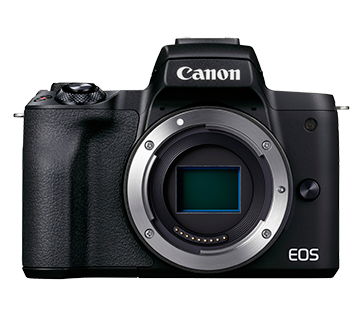
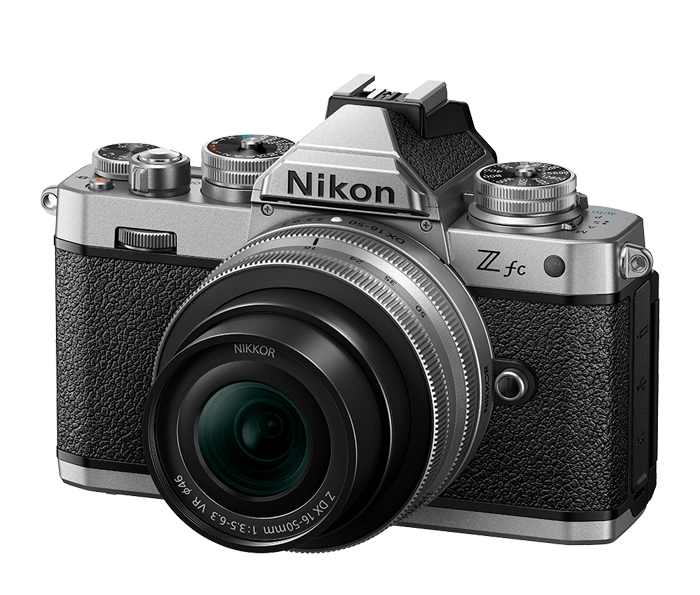
The Canon EOS M50 Mark II and Nikon Z fc are two popular mirrorless cameras targeting enthusiasts, vloggers, and those seeking a step up from entry-level models. Both offer compact designs with APS-C sensors, flexible displays, and good video capabilities, making them attractive for hybrid shooters and content creators. Buyers comparing these models are usually looking for portability, imaging performance, and ease of use, often weighing them as alternatives in the sub-$1,000 price range.
Key differentiators between these cameras include aesthetics and controls (the Z fc's retro styling vs. the M50 II's modern, compact look), lens ecosystem maturity, and nuanced differences in autofocus, video, and display functionality. The Canon appeals to those invested in Canon glass or who prioritize a fully articulated touchscreen, whereas the Nikon shines with its advanced autofocus system and vintage design. Understanding their specific strengths, limitations, and suitability for various shooting needs is crucial for informed decision-making.
Specifications Comparison
Detailed Comparison
Image Quality
Both cameras feature APS-C sensors, ensuring solid image quality and good performance in a variety of situations. The Canon EOS M50 Mark II uses a 24.1MP sensor (22.3 x 14.9 mm), while the Nikon Z fc has a 21MP sensor (23.5 x 15.7 mm). In practical terms, this means the Canon offers a modestly higher resolution, which can be beneficial for cropping flexibility or larger prints.
In low light, the Nikon's higher native ISO range (up to 51,200 and expandable to 204,800) provides the theoretical advantage for very dark scenes. However, practical use reveals that both cameras perform similarly up to about ISO 6400, beyond which noise becomes prominent. Color rendition and dynamic range are competitive, with the Nikon having a slight edge in highlight recovery in some situations, but the difference is minimal for most users.
JPEG color science is pleasing on both cameras; Canon is renowned for warm skin tones, while Nikon delivers more neutral, natural hues. Raw shooters will find both offer ample flexibility in post-processing. Overall, both cameras deliver excellent image quality for their class, with minor differences unlikely to be decisive for most buyers.
Autofocus System
The Nikon Z fc stands out for its cutting-edge autofocus system, boasting 209 focus points across most of the sensor and fast, reliable subject tracking. It features advanced eye-detection AF for both humans and animals, making it highly suitable for portraiture, street, and event photography. Continuous autofocus is robust for stills and competitive for video.
Canon's M50 Mark II uses Dual Pixel CMOS AF, a system praised for its smooth and reliable performance, especially during live view and video. It supports eye detection but is more limited with subject tracking compared to Nikon's offering. Coverage is not as comprehensive as Nikon's, especially toward the frame's edges.
In practice, both systems are fast and accurate for regular use, but Nikon's sheer number of AF points, adaptive coverage, and improved tracking give it an edge for demanding autofocus needs.
Video Capabilities
Both cameras offer strong video features, including 4K recording, but some key differences exist. The Nikon Z fc records 4K at up to 30p with full sensor readout and supports subject tracking AF in this mode. However, it lacks in-body image stabilization, making handheld video trickier without a stabilized lens.
The Canon EOS M50 Mark II can also capture 4K video, but does so with a noticeable crop and slower autofocus than in 1080p mode (where Dual Pixel AF excels). Vloggers may find the crop restrictive, especially for handheld and selfie-style shooting.
Canon counters with a fully articulated touchscreen, a huge advantage for vloggers and solo content creators, whereas Nikon employs a vari-angle display that, while user-friendly, isn't quite as versatile. Neither camera features in-body stabilization, but Canon's digital IS option can help mitigate shakes at the expense of an additional crop.
Overall, while both are capable, the Nikon Z fc offers better 4K quality and focusing, but Canon's screen articulation and digital IS options appeal more to solo video content creators.
Build & Ergonomics
The Nikon Z fc is striking for its retro-inspired design, machined dials, and premium feel, appealing strongly to users who appreciate tactile controls and vintage aesthetics. Its magnesium alloy construction adds durability, and the electronic viewfinder is bright and detailed. However, its larger size (135 x 94 x 44 mm, 445g) makes it bulkier than the Canon.
The Canon EOS M50 Mark II is notably compact and lightweight, ideal for travel and everyday portability. Its grip is deeper, offering secure one-handed use despite its small size. The fully articulated touchscreen improves usability for vlogging, low/high-angle shots, and menu navigation. Its plastic build is less premium than the Nikon, but the compact design and lightweight body (approximately 387g, not specified here, but notably lighter than Z fc) are ideal for those prioritizing discretion and minimalism.
In summary, the Nikon excels in build quality and manual controls, while the Canon is superior in compactness and touchscreen ergonomics. The better choice depends on whether you value retro styling and tactile dials over portability and display versatility.
Battery & Storage
The Nikon Z fc offers a CIPA-rated battery life of 300 shots per charge, which is standard for a camera in this class. The Canon M50 Mark II delivers a similar rating, typically around 305 shots per charge according to Canon, though actual mileage may vary depending on shooting style and use of features like Wi-Fi.
Both cameras use a single SD card slot and charge via USB. The difference in charging and operational longevity is minimal in real-world use, with both benefiting from spare batteries for day-long shoots. Neither system stands out for battery innovation or stamina.
Storage formats are identical, and both are compatible with UHS-I SD cards, leading to similar performance in burst mode and video recording.
Value for Money
The Canon EOS M50 Mark II is generally priced lower than the Nikon Z fc. It provides excellent performance for stills and video, a fully articulated touchscreen, and a dependable autofocus system for a relatively low entry price, making it an attractive option for students, vloggers, and hobbyists on a budget.
The Nikon Z fc is more expensive (listed at $959 USD body-only), reflecting its premium build, more advanced autofocus, and unique styling. For buyers who prioritize aesthetics, manual controls, and AF sophistication, the price is justified. However, if your needs are basic or you're just starting out, the Canon's cost-effectiveness is hard to beat.
For most buyers, especially on a tight budget, the M50 Mark II delivers more value for money, leaving resources for accessories or lenses.
Lens Ecosystem
The Canon EF-M system does not have as wide or mature a native lens selection as Canon's EF/EF-S or RF lines. A handful of high-quality prime and zoom lenses exist, but growth has stalled, and third-party support is limited. Adapting Canon EF lenses is possible, though this adds bulk and sometimes limits functionality.
Nikon's Z mount is newer but promises more growth and innovation, especially with recent investment in the APS-C and full-frame Z lens lines. While some of its APS-C lenses are still limited, the ability to use full-frame Z-mount glass is a substantial benefit. Third-party lens support is rapidly improving.
For future-proofing and versatility, the Nikon Z mount shows more promise and already offers access to high-quality glass throughout Nikon's lineup.
Our Verdict
Both the Canon EOS M50 Mark II and Nikon Z fc offer strong performance in a compact form factor, but their priorities and strengths diverge in meaningful ways. The Nikon Z fc secures overall victory by excelling in autofocus performance, lens ecosystem potential, and build quality, even though it comes at a higher price point. Its advanced tracking autofocus, elegant retro design, and better support for Z-mount lenses will appeal strongly to enthusiasts and those seeking a future-proof investment. The Canon M50 Mark II, while edged out in some categories, is still an excellent choice for budget-conscious buyers, vloggers, and travelers who value a compact system, fully articulated touchscreen, and straightforward usability. It is particularly attractive for those entering the mirrorless world without a hefty investment. Ultimately, if budget and screen functionality are paramount, the Canon shines; for users demanding top autofocus, more lens options, and premium build, the Nikon Z fc is the superior choice.
Canon EOS M50 Mark II
Nikon Z fc
Also Compare
Frequently Asked Questions
Which camera is better for vlogging: Canon EOS M50 Mark II or Nikon Z fc?
The Canon EOS M50 Mark II wins for vlogging due to its fully articulated touchscreen and lighter, more compact body. Although the Nikon Z fc offers better 4K with no crop, its lack of articulated screen and in-body stabilization make solo video recording less convenient.
Is the lens selection better for Canon EF-M or Nikon Z?
Nikon's Z mount lens selection is broader and growing faster, especially with access to both APS-C and full-frame Z glass. Canon's EF-M system has a more limited lineup with little new development. Nikon is better for long-term lens options.
Which camera has superior autofocus for fast action or tracking?
The Nikon Z fc has a more advanced autofocus system with 209 points, better subject tracking, and excellent eye detection, giving it a clear edge for action, wildlife, and dynamic portraiture.
Are either of these cameras good for beginners?
Yes, both are accessible for beginners, but the Canon EOS M50 Mark II is especially beginner-friendly with a simple menu, great touchscreen interface, and lower price. Nikon's manual dials may be more intimidating to complete novices but offer more control for those wanting to learn manual settings.
Which is more compact and easier to travel with?
The Canon EOS M50 Mark II is notably smaller and lighter, making it preferable for travel, everyday carry, and street photography.
Does either camera have in-body image stabilization (IBIS)?
No, neither the Canon EOS M50 Mark II nor the Nikon Z fc have in-body image stabilization. You will need to use lenses with built-in stabilization or rely on digital IS (in Canon) for reduced shake in video.