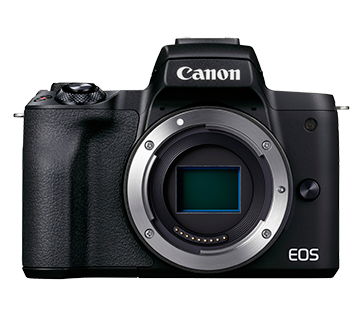
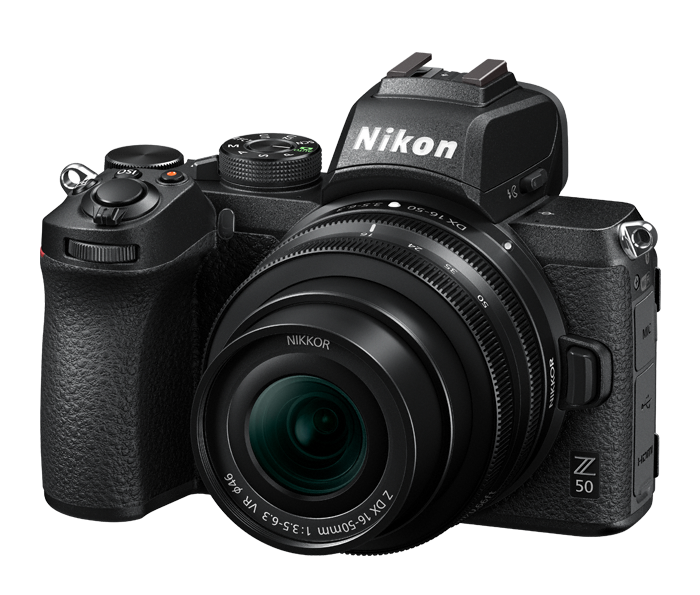
The Canon EOS M50 Mark II and Nikon Z50 are two of the most popular mirrorless cameras for enthusiasts and aspiring content creators looking to step up from smartphones or older DSLRs. Both cameras offer compact bodies, user-friendly interfaces, and strong video features, making them ideal choices for vloggers, travelers, and day-to-day photographers. Their APS-C sensors provide a significant image quality boost over smartphones, yet both models remain significantly more affordable and portable than most full-frame options.
Buyers often find themselves torn between these two models due to their competitive specifications and similar price bracket. Key differentiators include the more mature sensor of the Canon, the superior autofocus and burst speed of the Nikon, and differences in lens systems. Your choice will likely depend on whether you prioritize stills or video, portability, lens selection, or future system expandability.
Specifications Comparison
Detailed Comparison
Image Quality
Both the Canon EOS M50 Mark II and Nikon Z50 feature APS-C sensors, but there are subtle differences. The M50 Mark II offers a 24.1-megapixel sensor, slightly edging out the Z50's 21 megapixels in resolution. For those interested in cropping or making larger prints, the extra pixels can be beneficial. However, the Z50's sensor is a touch larger (23.5 x 15.7 mm versus 22.3 x 14.9 mm), which can provide a marginal edge in noise performance, particularly at higher ISOs.
Nikon's Z50 wins significantly on ISO range, offering standard sensitivity up to 51,200 (expandable to 204,800), compared to the Canon's 25,600. In real-world low-light conditions, the Z50 produces cleaner images at higher sensitivities, making it more versatile for night or indoor shooting.
Color science differs between brands, with Canon's renowned color profiles being a favorite among portrait shooters, while Nikon's files often exhibit a slight edge in dynamic range. Both cameras deliver attractive images out-of-the-box, but the Nikon Z50's increased dynamic range and low-light capabilities give it a technical edge.
Ultimately, the M50 Mark II is competitive for most use cases, but advanced users may appreciate the Z50's flexibility in challenging lighting.
Autofocus System
The Nikon Z50 stands out with its 209-point phase-detection autofocus system, which covers a wide area of the frame and is quick to lock onto subjects, especially moving ones. It also boasts advanced subject-tracking features and reliable eye-detection, making it ideal for action and portrait photography.
The Canon EOS M50 Mark II utilizes a Dual Pixel CMOS AF system with fewer autofocus points and somewhat less coverage, though it is still efficient for face and eye detection in both stills and video. For vlogging and everyday use, Canon's AF is accurate and rarely misbehaves, but it cannot match the speed and coverage of Nikon's system, particularly for tracking subjects across the frame or during high-speed continuous shooting.
In lower light conditions, the Z50 generally maintains more responsive performance. For sports, wildlife, or children, the Z50's autofocus offers a noticeably higher hit rate.
While Canon's AF is strongly competitive for most users, those who frequently photograph action or need consistent tracking will benefit from the Nikon.
Video Capabilities
Both cameras offer 4K video recording, but there are some important differences. The M50 Mark II can record 4K but with a significant crop and uses contrast-detection autofocus in this mode, which is less reliable for tracking than its Dual Pixel AF in 1080p. The camera's fully-articulating touchscreen is a real asset for solo creators and vloggers, but the 4K limitations can be a dealbreaker for those wanting the sharpest video.
The Nikon Z50 delivers 4K video at 30p without an additional crop, and maintains fast, accurate autofocus while recording. Its 3.2-inch tilting screen can be used for framing from high and low angles, though it's not side-hinged and makes vlogging less convenient than the Canon's design.
Audio options are similar, with both offering microphone inputs but lacking headphone jacks. The overall video image quality from the Z50 has more detail and less rolling shutter.
For creators prioritizing 4K quality or hybrid work, the Z50 is the stronger contender. If you primarily shoot in 1080p, the Canon's ergonomic screen is a big advantage for vlogging.
Build & Ergonomics
The Nikon Z50 has a robust build for its class, including weather sealing and a deep, comfortable grip. Its magnesium alloy body feels more premium and ready for outdoor use. The 450-gram weight is well-balanced with Z-mount lenses, and the camera's dimensions allow for a secure hold even during extended shoots.
The Canon EOS M50 Mark II is lighter and more compact, making it an excellent option for travel or everyday carry. It feels less substantial, lacking weather sealing, but its smaller size and weight may suit those prioritizing portability or minimal kit.
Both cameras have electronic viewfinders and bright, high-resolution LCDs. The Canon's fully articulated screen is an ergonomic advantage for vlogging and self-recording, while the Z50's screen is larger (3.2-inch vs. 3.0-inch) and higher resolution, but only flips downward.
For build quality and ruggedness, Nikon wins, but Canon is notably more pocketable and friendly for handheld vlogging.
Battery & Storage
Neither camera packs class-leading battery life, but the Nikon Z50 has a slight edge, rated at 320 shots per charge versus Canon's 305. Real-world usage finds the Z50 lasting longer, especially when sparing use of the LCD or EVF. Both use proprietary batteries and support USB charging, allowing for on-the-go top-ups with power banks.
Both support a single UHS-I SD card slot. Write speeds and buffer sizes are roughly equal and suitable for typical enthusiast shooting, but serious sports shooters will run into limitations in both systems.
Although the difference is marginal, the Nikon's small advantage in shot count and more efficient power usage makes it preferable for long outings.
Value for Money
The Canon EOS M50 Mark II typically comes in below the Nikon Z50 in price, which for many budget-conscious buyers is a significant factor. While the Z50 provides notable technical upgrades (better AF, higher ISO, rugged build), the M50 Mark II's compactness, ease of use, and ample image quality make it an extremely attractive entry into the mirrorless world-especially for casual shooters, travelers, or first-time vloggers.
Nikon's higher price is justified by its more advanced feature set and future-proof Z-mount platform, but for buyers who don't need maximum speed or weather sealing, the value proposition of the Canon is extremely compelling.
Lens Ecosystem
The Canon M50 Mark II uses the EF-M mount, which has a relatively limited selection of native lenses compared to Nikon's newer Z-mount APS-C lineup. However, Canon offers excellent adapters for EF and EF-S lenses, expanding creative flexibility (albeit with increased size). Third-party options also provide affordable alternatives, but the slow expansion of native EF-M lenses has been a concern for system longevity.
The Nikon Z50 takes advantage of the new Z-mount, which already has several high-quality primes and zooms available natively, and can also adapt older Nikon F-mount lenses quite effectively with an adapter. The Z-mount promises a stronger long-term ecosystem, especially as more Z lenses roll out with deeper third-party support.
If you need a deep, modern native lens lineup, Nikon is building a stronger case for its system, but if you already have Canon glass or value very compact lenses, EF-M may suit your needs for now.
Our Verdict
Summing up the comparison, the Nikon Z50 emerges as the more capable all-around camera for most enthusiasts. Its superior autofocus, uncropped 4K video, weather-sealed body, slightly better battery life, and a promising Z-mount ecosystem offer genuine advantages for those who want maximum performance from a compact mirrorless. The Canon EOS M50 Mark II remains a superb option for content creators seeking a lightweight, affordable, and user-friendly camera-especially for 1080p video work or everyday photography. It's the better choice for vloggers wanting a fully-articulated screen and anyone prioritizing portability on a budget. However, for users wanting greater flexibility for growth, superior low-light and tracking capability, or a more robust body, the Z50 is the clear winner.
Canon EOS M50 Mark II
Nikon Z50
Also Compare
Frequently Asked Questions
Which camera is better for beginners?
Both cameras are user-friendly, but the Canon EOS M50 Mark II is especially approachable with intuitive menus and straightforward controls. Its lighter weight and fully articulating screen also make it easy for new shooters and vloggers. Nikon's Z50 is also beginner-friendly but offers more room to grow into advanced photography.
Is the Nikon Z50 worth the extra money?
If you plan to use your camera for fast action, need better autofocus tracking and want uncropped 4K video, the Z50's additional cost is justified. Its weather sealing and more rugged build make it a better investment for outdoor or heavy use. If you only shoot occasionally or value compact size above all, the M50 Mark II is easier on the wallet.
Which is better for vlogging or YouTube content?
The Canon EOS M50 Mark II is preferred by solo content creators and vloggers thanks to its fully-articulated side-hinged touchscreen, making self-recording much easier. However, if you need the highest possible video quality in 4K, the Z50's uncropped 4K and better autofocus is a plus, though its screen flips down-less convenient with full tripods.
How do the lens options compare for each camera?
The Nikon Z-mount has a stronger roadmap with several excellent Z-mount primes and zooms, and adapts older Nikon F lenses with good performance. The Canon EF-M mount has a more modest native lens offering but can use EF/EF-S lenses via adapters, keeping options flexible for Canon users.
Is either camera good for sports or wildlife photography?
The Nikon Z50 is better suited for sports and wildlife due to its faster burst rate (11 fps), more sophisticated autofocus system with better tracking, and higher ISO capabilities. While the M50 Mark II can manage casual action shots, it's not as fast or consistent in these demanding scenarios.
Which system is better for future upgrades?
Nikon's Z-mount is rapidly expanding with new lenses and bodies, providing more upgrade paths in the mirrorless line. EF-M, while a stable system, hasn't seen as much recent lens development, so Nikon offers a stronger platform for photographers looking to grow their system over time.