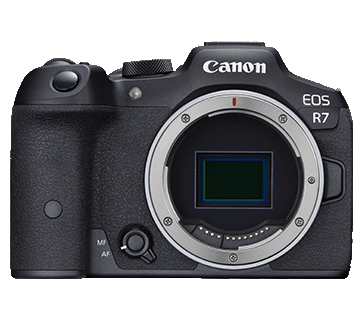
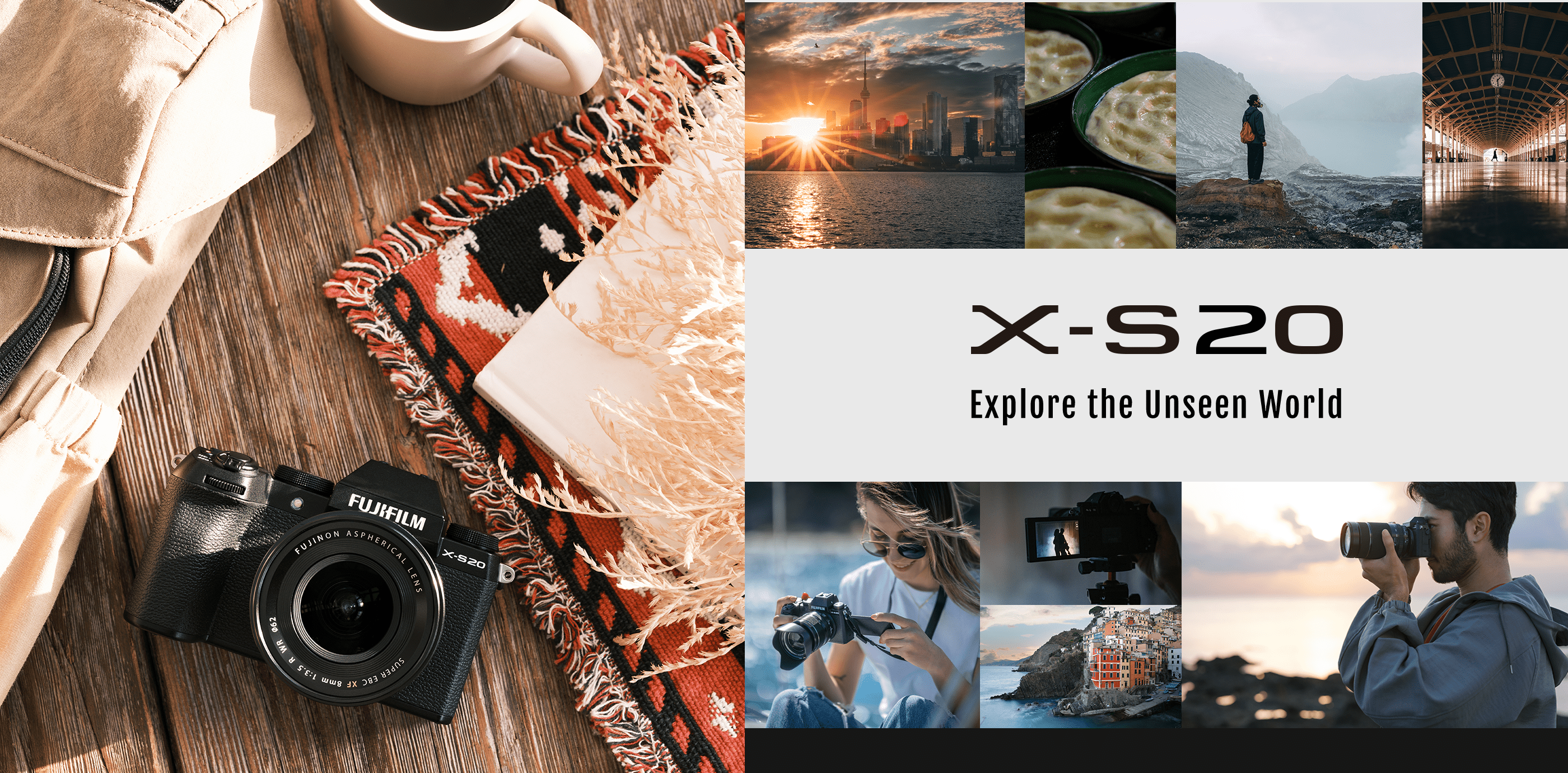
The Canon EOS R7 and Fujifilm X-S20 are two standout APS-C mirrorless cameras that appeal to both photography enthusiasts and professionals. Canon R7, released in 2022, is recognized for its impressive resolution and robust autofocus system, while the newer Fujifilm X-S20, launched in 2023, boasts higher video frame rates and lighter design. Buyers often find themselves choosing between these two models due to their competitive prices, diverse feature sets, and solid performance in various photography and videography situations. The key differentiators stem from their specifications in image quality, autofocus capabilities, video performance, and ergonomic design.
Specifications Comparison
Detailed Comparison
Image Quality
The Canon EOS R7 features a 33-megapixel sensor, offering a higher resolution compared to the Fujifilm X-S20's 26-megapixel sensor. This difference means that the R7 can capture more detail, making it a stronger choice for large prints or cropping images significantly without losing quality. Additionally, Canon's sensor design often excels in low light with a well-balanced dynamic range, which can enhance the overall image quality in various lighting conditions. The R7's ISO range extends from 100 to 32,000, which is beneficial for low-light scenarios.
On the other hand, the Fujifilm X-S20, while lower in resolution, makes up for it with an ISO range that not only includes Auto but expands effectively from 160 to 12,800 and can reach 80-51,200, allowing for more flexibility in extreme low-light situations. Fujifilm is also renowned for its unique film simulation modes, which add creative control over color grading in-camera, appealing to those who appreciate retro aesthetics in their images. While both cameras produce excellent image quality, the approach to color reproduction and low-light handling diverges significantly based on user preference.
Overall, while the Canon EOS R7 may have the edge in raw resolution and color fidelity, the Fujifilm X-S20 shines in low-light capabilities and creative control. This aspect ultimately comes down to user preference regarding output and processing.
Autofocus System
The autofocus system is a crucial aspect for action photography and fast-moving subjects. The Canon EOS R7 boasts an impressive 651 autofocus points, making it highly effective for tracking moving subjects across the frame. This numerous point coverage and Dual Pixel autofocus technology allow for quick and accurate focusing, ensuring that subjects remain sharp even at high frame rates of up to 15 frames per second.
In contrast, the Fujifilm X-S20 comes with 425 autofocus points, which, while adequate for general use, might seem less impressive compared to the R7's feature set in dynamic situations. However, the X-S20 supports up to 20 frames per second in continuous shooting, making it very capable for capturing fast action. Fujifilm's focusing algorithms are also noted for being reliable, allowing for smooth subject detection and tracking.
In practice, while the R7 offers more points that can improve precision, the X-S20's speed may be more beneficial for certain types of photography, including sports or wildlife. As such, photographers may prefer one system over the other based on specific needs and shooting style, but the sheer number of autofocus points gives the Canon EOS R7 a definitive advantage.
Video Capabilities
When it comes to video recording, the Fujifilm X-S20 excels with its capability to shoot in 4K at up to 60 frames per second, providing more fluid motion which is highly advantageous for videographers. This high frame rate allows for slow-motion effects and captures more detail during rapid movements, appealing to filmmakers and content creators.
In comparison, the Canon EOS R7 offers 4K video at up to 30 frames per second, which, while it still provides high-quality footage, lacks the same degree of motion fluidity as the X-S20. However, the R7 does feature advanced video stabilization with a 6-stop capability, which can greatly benefit handheld shooting scenarios. While both cameras feature electronic viewfinders, the video shooting capabilities of the R7 are centered more on standard video production needs than high-frame-rate abilities.
For aspiring filmmakers or videographers looking for flexibility and high-performance features, the X-S20's superior video recording specifications make it the clear winner for video-focused applications.
Build & Ergonomics
Build quality and ergonomics can significantly affect a photographer's experience, especially during long shooting sessions. The Canon EOS R7 weighs 612 grams and has a more robust build with weather sealing, making it better suited for photographers who often work in challenging environments. Its dimensions (132 x 90 x 92 mm) also contribute to a solid grip and comfortable handling of the camera, especially with larger lenses.
Conversely, the Fujifilm X-S20 is lighter at 491 grams and more compact (127 x 85 x 65 mm), making it a more portable option for travel or street photography. Its design is also ergonomically pleasant for extended use. However, it lacks the same level of weather sealing found on the R7, which may deter some photographers who need durability in harsh weather.
Ultimately, while the R7 may be better for those prioritizing build and weather resistance, the X-S20's lightweight and ergonomic design cater to users who value portability. Thus, it depends on the shooting style and environment in which the user plans to utilize their gear.
Battery & Storage
Battery life is a critical consideration for photographers and filmmakers alike. The Canon EOS R7 has a rated battery life of approximately 660 shots, which is fairly respectable. This means that users can expect to shoot comfortably for a substantial part of a day without worrying about changing batteries.
In comparison, the Fujifilm X-S20 boasts an even more impressive battery life, rated at around 750 shots. This slight advantage could be crucial for videographers or photographers who spend long hours shooting or are involved in extended projects. Both cameras utilize their respective proprietary battery technology, which performs well under consistent use.
In terms of storage, both cameras use SD cards, but the R7 supports faster UHS-II types, while the X-S20 may be limited to UHS-I speeds, which could potentially slow down writing large video files. Thus, photographers could consider potential read-write speeds when choosing storage solutions. While both cameras perform well in battery life, the X-S20 holds a slight edge, especially for extended use.
Value for Money
The pricing for these two models is fairly competitive, with the Canon EOS R7 retailing at approximately $1499 and the Fujifilm X-S20 at around $1299. Given the specifications of the R7, such as higher megapixels and autofocus points, it positions itself as a robust option for professional photographers, offering excellent value for high-resolution needs.
On the other hand, the X-S20 provides a slightly better value proposition for videographers due to its higher frame rates for video and its lightweight design, which may benefit those prioritizing comprehensive video performance without the need for high-resolution stills. The difference in price also allows potential buyers to factor in lens system investments and additional accessories they might need.
When comparing the two, the choice often boils down to what the photographer or videographer prioritizes more: If they need a higher resolution and robust autofocus, the R7 might be worth the extra cost; however, for those focused on video capabilities and portability, the X-S20 offers great features for the price. Hence, each camera has distinct advantages to consider based on individual needs.
Our Verdict
Overall, the Fujifilm X-S20 and the Canon EOS R7 each have unique strengths catering to distinct user profiles. The R7 shines with its superior image quality, advanced autofocus system, and robust build quality, making it an excellent choice for traditional photographers seeking high-resolution stills in a durable body. Meanwhile, the X-S20 offers impressive video capabilities, higher frame rates, and better portability, making it the preferable choice for videographers and travelers looking for versatility. Ultimately, the choice boils down to the photographer's or videographer's specific use case, determining which model aligns better with their creative goals.
Canon EOS R7
Fujifilm X-S20
Also Compare
Frequently Asked Questions
Which camera is better for sports photography?
The Canon EOS R7 is better for sports photography due to its superior autofocus system with 651 points and continuous shooting speed of 15 fps, allowing for fast tracking of moving subjects.
How do the video capabilities compare?
The Fujifilm X-S20 excels in video with 4K at 60 fps compared to the Canon EOS R7's 4K at 30 fps. If video quality and frame rate are priorities, the X-S20 is the better choice.
Which camera is more portable?
The Fujifilm X-S20 is more portable with its lighter weight (491 g) and compact design, making it ideal for travel or street photography.
How do they perform in low light?
The Canon EOS R7 has a notable advantage in low light with a higher native ISO range. However, the X-S20's expanded ISO range can be beneficial for extreme low-light situations.
Which camera offers better battery life?
The Fujifilm X-S20 has a longer battery life at approximately 750 shots, compared to the Canon EOS R7's 660 shots, making it a better option for extended shooting sessions.