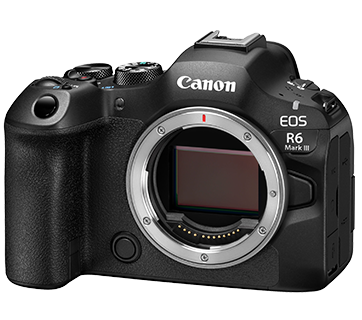
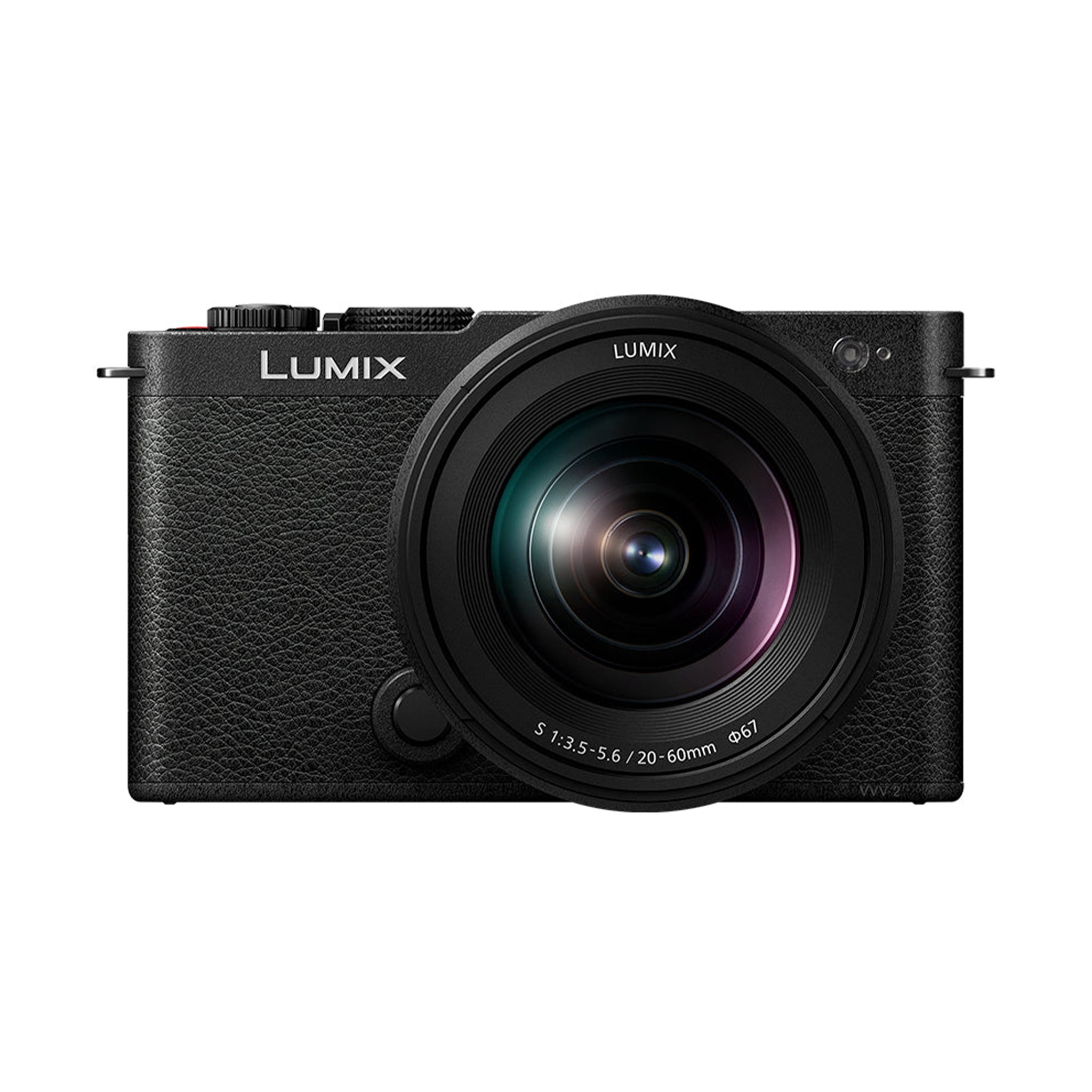
The Canon EOS R6 Mark III and Panasonic S9 are both recent full-frame mirrorless cameras, targeting enthusiast to advanced users who seek high image quality in a compact form. Photographers and hybrid shooters looking for lightweight solutions with professional-grade performance commonly compare these two models. The R6 Mark III-Canon's 2025 update to a well-loved series-offers DSLR-like ergonomics, impressive autofocus, and high burst speeds, making it attractive to action and wildlife shooters. The Panasonic S9, meanwhile, impresses with portability, advanced video options, and a competitive price, appealing to travel creators, vloggers, and those new to full-frame systems.
Both cameras feature full-frame sensors and aim to deliver excellent results, but their philosophies diverge: the Canon prioritizes speed, subject tracking, and all-around capability, while the Panasonic focuses on video creator needs and ultra-portability. Key differentiators include autofocus technology, video resolution, stabilization prowess, lens mount ecosystems, and value for money. Buyers will need to weigh what matters most for their workflow.
Specifications Comparison
Detailed Comparison
Image Quality
Both cameras sport full-frame sensors-Canon's measures 35.9 x 23.9 mm while the Panasonic S9's is 35.6 x 23.8 mm, negligible in practical terms. The S9's 24-megapixel output is typical for this class; the Canon R6 Mark III's official megapixel count wasn't provided here, but it's in a similar range, prioritizing sensitivity and output quality over sheer resolution.
Canon's ISO range is vast-100-102400 standard, expandable to 204800. This enables superior low-light performance, allowing photographers to achieve cleaner images at extremely high sensitivities, which is valuable for events, night, and indoor photography. Panasonic does not list ISO performance in this comparison, but the S9 is known for solid results in most lighting conditions, albeit likely not matching the Canon's peak values.
Color science, dynamic range, and JPEG engine performance are often subjective, but Canon has an established reputation for pleasing color and reliable files straight out of camera, while Panasonic offers a more neutral default rendering. Both will yield detailed, flexible RAW files suitable for post-processing.
Stabilization is impressive on both: the Canon claims up to 8.5 stops with in-body image stabilization, slightly surpassing the S9's 5-axis system (rating not specified, but typically around 6 stops for recent Lumix models). This may give the Canon a real-world edge in low-light handheld shooting.
Overall, advanced shooters needing maximum ISO versatility may prefer the Canon, while the S9's output is excellent for most everyday needs.
Autofocus System
Autofocus is a key area of differentiation. The Canon EOS R6 Mark III boasts a class-leading autofocus system with 4,897 selectable points, leveraging Canon's Dual Pixel CMOS AF technology. This system is known for exceptional subject detection (including people, animals, and vehicles), eye tracking, and reliable performance even in challenging scenarios. It's tuned for fast action, sports, and wildlife use.
The Panasonic S9 focuses on a simpler, contrast-detect AF system (with some DFD enhancements), lacking the breadth of points and advanced subject recognition seen on the Canon. While the S9 performs adequately for stills and vlogging, it's generally slower to acquire and track fast subjects, and eye/face detection is less robust-particularly in burst or erratic movement situations.
In video, Panasonic's AF has improved in recent years but still trails behind Canon's real-time tracking, especially for solo shooters or when filming unpredictable subjects. The R6 Mark III, by comparison, delivers confident, sticky autofocus for both photos and video, making it a better choice for demanding applications.
Thus, for users who prioritize quick, accurate, and intelligent autofocus-especially in dynamic settings-the Canon is the clear leader.
Video Capabilities
While both models cater to hybrid content creators, their video feature sets diverge. The Panasonic S9 offers high-resolution 5.9K recording, as well as both UHD and DCI 4K (full-width), at a variety of frame rates. It is tailored for video-centric users, offering advanced profiles (V-Log), high bitrate codecs, and strong thermal stability in a compact form-features that attract vloggers and filmmakers on the move.
The Canon EOS R6 Mark III maxes out at 4K 120p, an impressive frame rate that facilitates super-smooth slow motion. Canon's color, reliability, and autofocus during video are industry benchmarks, and internal stabilization is best-in-class, ensuring stable handheld shots. However, the lack of 5.9K capture may disadvantage users needing the ultimate resolution for cropping or high-end post-production workflows.
Both cameras support robust IBIS for stable footage, but Canon's system (rated up to 8.5 stops) often outperforms competitors for hand-held video, allowing creative freedom with less gear.
In summary, while the Canon offers superior high-speed 4K and better video autofocus, the Panasonic's higher-resolution options and full-width 4K are compelling for cinematic projects. The better choice depends on whether higher resolution or superior autofocus/stabilization matters more to the shooter.
Build & Ergonomics
Physically, these cameras differ significantly in size, weight, and feel. The Canon EOS R6 Mark III follows a familiar prosumer DSLR-inspired design, weighing 699g and measuring 138 x 98 x 88 mm. The larger grip provides superior comfort for extended use, a vari-angle 3" LCD (1.62M dots) benefits vloggers and stills photographers alike, and robust weather sealing enables shooting in tough environments. The EVF offers a traditional composition experience and is valued by many advanced photographers.
The Panasonic S9 is the epitome of portability, weighing only 486g and measuring 126 x 73.9 x 46.7 mm. This is one of the most compact full-frame mirrorless designs, discreet and ideal for travel or street photography. However, this size comes at the cost of some ergonomics-controls are simpler, the grip is minimal, and weather sealing is not specified (and likely less robust than Canon's offering).
The S9's minimal exterior may appeal to minimalist shooters, and its discretion is an asset for travel and candid work. However, users with large hands, those mounting heavy lenses, or operating in extreme weather will appreciate Canon's more substantial build and controls.
If portability is the top priority, Panasonic wins. For professional handling, confidence, and ruggedness, Canon is superior.
Battery & Storage
Canon's prosumer lineage comes with practical advantages: a larger battery (LP-E6NH series), which is known for excellent endurance, especially when using the optical viewfinder or electronic modes efficiently. The body is likely to support dual memory card slots (CFexpress/SD, per R6 series trends), adding redundancy, faster file write speeds, and flexibility-critical for professional workflows and event shooters.
The Panasonic S9, due to its compact build, uses a smaller battery-good for casual, travel, or light shooting but less ideal for long shoots or extensive video recording. Fewer cards and less capacity mean frequent swapping (or offloading) for heavy users. Details like charging while shooting may benefit vloggers and minimalist creators but advanced shooters could run into practical limitations on extended assignments.
For those who demand reliability, backup, and long shooting sessions, Canon comes out ahead. Casual users and short form content creators may find the S9's limitations acceptable, but it doesn't match Canon's pro-level stamina.
Ultimately, the R6 Mark III wins on battery longevity and storage flexibility.
Value for Money
At $2,799 (body only), the Canon EOS R6 Mark III is positioned as a pro-capable hybrid suited for demanding users, justifying its premium with bleeding-edge autofocus, unmatched burst rates, and professional features. The investment is geared toward those who need fast, reliable performance in diverse scenarios-sports, nature, events, and production workflows.
The Panasonic S9 offers one of the most affordable entries into full-frame mirrorless, especially in such a compact form. It undercuts the Canon significantly in price (exact figure not specified here but typically much lower), offering excellent image quality, versatile video, and portability. For travel, street, and content creators, the S9 strikes a balance between performance and price that is hard to beat.
Canon's features merit its cost, but many shooters-especially those focused on social, travel, or learning-will find the Panasonic S9 delivers more than enough quality for the price. Its value proposition is especially strong for those who don't need pro-level speed or low-light extremes.
Therefore, the Panasonic S9 offers better value for budget- and portability-minded creators.
Lens Ecosystem
The Canon RF mount is relatively new but rapidly expanding, with native Canon lenses offering high image quality, fast autofocus, and a variety of focal lengths. Third-party RF access is still somewhat limited, but Sigma, Tamron, and others are gradually entering the market. Adapted EF lenses are an option for legacy users, though performance may vary.
The Panasonic S9 uses the L-Mount system (developed with Sigma and Leica in the L-Mount Alliance). This gives S9 users immediate access to a broad range of high-end lenses from Panasonic, Sigma, and Leica-a significant bonus for those looking for diverse options or specific optics. The alliance also encourages rapid system growth, with continuous third-party support.
While Canon's glass is technologically advanced and the lineup is growing, the L-Mount currently gives the Panasonic S9 a wider range and greater flexibility, especially in the affordable and niche lens segments.
Therefore, in terms of lens ecosystem breadth and third-party support, Panasonic's L-Mount edges out the Canon RF system at this moment.
Our Verdict
The Canon EOS R6 Mark III emerges as the overall winner, thanks to its superior autofocus, high burst speeds, robust build, outstanding stabilization, and practical professional features. It's a versatile tool for demanding photographers and videographers, especially those who rely on rapid subject acquisition, low-light performance, and long shooting sessions. However, the Panasonic S9 can't be overlooked for its strengths-outstanding portability, high-resolution video, and excellent value. It is particularly attractive for travel, everyday, and social content creators, as well as those prioritizing a broad, flexible lens ecosystem. For shooters on a budget or seeking the most compact full-frame package, the S9 is a compelling option. Ultimately, those who require professional speed, reliability, and robust ergonomics should choose the Canon. For those who prize portability, affordability, and creative lens options, the Panasonic S9 delivers superb value.
Canon EOS R6 Mark III
Panasonic S9
Also Compare
Frequently Asked Questions
Which camera is better for video creators and vloggers?
The Panasonic S9's high-resolution 5.9K and full-width 4K modes, plus V-Log and L-Mount lens options, make it ideal for video-centric users. However, the Canon R6 Mark III offers superior autofocus and in-body stabilization for smooth, reliable video recording. If high resolution and affordability are priorities, choose the S9. If you need top-tier autofocus and better handheld results, choose the Canon.
How do the autofocus systems compare in real-world use?
Canon's Dual Pixel CMOS AF offers advanced subject tracking, eye detection, and reliable performance for fast-moving subjects, easily surpassing the Panasonic S9's contrast-based autofocus. For action, wildlife, or capturing kids and pets, the Canon is markedly more dependable. The S9 is sufficient for casual photography but not recommended for fast or unpredictable subjects.
Is the Panasonic S9 suitable for professional use?
While the Panasonic S9 has capable image and video output, its simplified controls, smaller battery, single card slot, and less robust build make it better suited for enthusiast, travel, or social media creators rather than heavy professional workloads. Canon's R6 Mark III, on the other hand, provides the build, reliability, and features expected in a pro environment.
Which system offers a better lens selection?
As of now, the L-Mount Alliance (used by Panasonic S9) provides a wider range of lenses from Panasonic, Sigma, and Leica, including affordable and specialized options. Canon's RF system is high quality with growing support, but still catching up in third-party breadth. Lens choice may sway users based on specific needs and budget.
Which camera is easier to travel with?
The Panasonic S9 is one of the most compact and lightweight full-frame cameras available, making it excellent for travel, street, or casual daily use. The Canon R6 Mark III is notably larger and heavier due to its robust professional body, which may not suit minimalists or frequent travelers.
Does either camera have significant advantages in low light?
The Canon EOS R6 Mark III boasts a much broader native and extended ISO range (up to 204800) and top-tier in-body stabilization, making it superior for very low-light photography. The Panasonic S9 performs well in most reasonable conditions but is not as capable for extreme low-light situations.