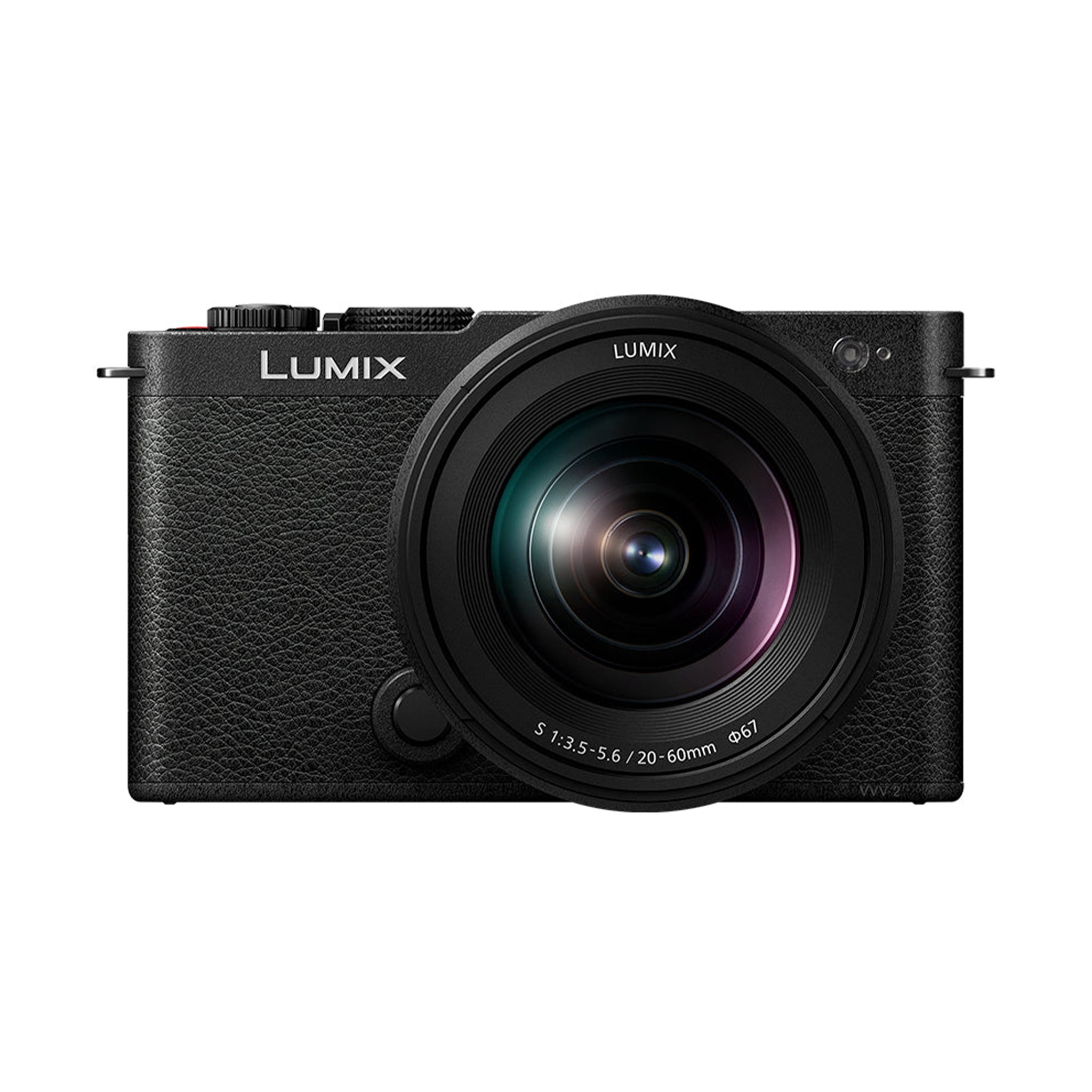

The Panasonic S9 and Sony ZV-E1 are two compelling options in the full-frame mirrorless camera market, often compared by enthusiasts and content creators looking to step up their photography and videography game. The S9, launched in 2024, presents a robust feature set with significant video capabilities, while the ZV-E1, released in 2023, is specifically designed for vloggers and content creators with its user-friendly features and lightweight build. Understanding the strengths and weaknesses of each model is vital for buyers who need to choose between high-quality image performance and specialized video features.
Specifications Comparison
Detailed Comparison
Image Quality
The Panasonic S9 features a 24-megapixel full-frame sensor, offering higher resolution images compared to the Sony ZV-E1, which has a 12-megapixel sensor. This higher resolution in the S9 allows for more detail capture, making it a better option for large prints or heavy cropping during post-processing. Moreover, the S9's larger sensor effectively captures more dynamic range and performs better in low-light conditions, producing cleaner images with less noise at higher ISO settings than the ZV-E1, especially given the Panasonic's more extensive ISO capabilities that stretch beyond what is officially stated. On the other hand, while the Sony ZV-E1 has lower pixel count, it benefits from the latest sensor technologies that provide impressive image quality and noise reduction, especially important for video recording scenarios. Thus, for still photography, the S9 takes the edge.
Autofocus System
The autofocus system in the Sony ZV-E1 excels, boasting 759 phase detection points as well as advanced subject tracking capabilities that make it ideal for video work and fast-paced shooting situations. Coupled with its real-time eye autofocus technology, it ensures accurate focusing on subjects in motion, a major advantage for content creators working with moving subjects. The Panasonic S9, although equipped with a competent autofocus system, does not match the impressive tracking features of the ZV-E1. Even though it can provide good focus performance, it lacks the sheer number of focus points and advanced subject recognition that the Sony offers. For those prioritizing fast and reliable autofocus, especially during vlogs or events, the ZV-E1 is the clear winner.
Video Capabilities
When it comes to video capabilities, the Panasonic S9 supports impressive resolutions up to 5.9K, along with a variety of frame rates in UHD 4K and DCI 4K formats. This level of detail provides immense flexibility in post-production for high-quality presentations. The S9 also excels with its 5-axis image stabilization technology that enhances video recording sharpness. In contrast, the Sony ZV-E1 records at 4K 60p, which is notably lower in resolution. However, the ZV-E1 features strong video-centric functions like live streaming capabilities and simplified operations designed for vloggers. Depending on the user's primary focus, if maximum video quality and resolution are the goal, the Panasonic S9 takes the spot. For ease of use and live performance, the ZV-E1 might be more practical.
Build & Ergonomics
The build quality of both cameras is solid, but they cater to slightly different user experiences. The S9's dimensions of 126 x 73.9 x 46.7 mm and weight of 486g provide a robust feel ideal for professional photographers who may use it for extended periods. It is ergonomic, yet slightly bulkier compared to the ZV-E1. In contrast, the Sony ZV-E1 is lighter at 483g and more compact with dimensions of 121 x 72 x 54 mm, making it perfect for content creators who often shoot on the go. Additionally, the ZV-E1 comes with features like a fully articulating screen that is particularly beneficial for vlogging. For the sheer convenience and portability needed by many creators, the ZV-E1 wins in this category.
Battery & Storage
In terms of battery performance, the Sony ZV-E1 boasts an impressive battery life of approximately 570 shots, providing ample shooting time for extended use, particularly during events or long shooting days. The Panasonic S9, while lacking a specific battery life rating, generally can be expected to perform well but is likely to be less efficient relative to the ZV-E1, especially considering the higher power draw from its 5.9K video recording capabilities. On the storage front, both cameras use similar SD card slots, but the S9 benefits from additional formats in video recording that require larger storage capacities. Ultimately, for those who prioritize battery life and need to shoot longer sequences without frequent interruptions, the ZV-E1 stands out.
Value for Money
The pricing for the Sony ZV-E1 sits at $2200, while pricing for the Panasonic S9 has yet to be determined but is likely to be competitive given its advertising for professional use. When evaluating the feature sets, the S9 provides significant advantages in image quality and video resolution. However, for dedicated vloggers or casual shooters, the ZV-E1's focus on ease of use, video capabilities, and lightweight design may present a more appealing value proposition without needing the added features of a professional camera. Buyers need to consider what they prioritize-if high-performance stills and video capabilities are the goal, the S9 may justify a higher price; if user-friendliness and portability are key, the ZV-E1 could be seen as the better investment.
Lens Ecosystem
The Panasonic S9 utilizes the L-Mount, which provides access to a range of high-quality lenses from Panasonic, Sigma, and Leica. This diversity offers a strong selection for various photographic styles and high-end optics. Conversely, the Sony E-mount's ecosystem is far more extensive, with a broader range of lenses available, from budget options to premium glass designed for professional use. The availability of fast autofocus lenses compatible with the ZV-E1 also directly complements its advanced autofocus system, making it easier for content creators to achieve high-quality results seamlessly. For users who want a powerful lens selection, especially for video work, the Sony E-mount setup is advantageous.
Our Verdict
In the overall comparison, the Sony ZV-E1 emerges as the winner mainly due to its superior autofocus system, lightweight design, and user-focused features, making it an exceptional choice for vloggers and content creators. While the Panasonic S9 boasts superior image quality and video resolution, it may cater more to professional photographers looking for advanced capabilities. Ultimately, the decision hinges on the user's specific needs: if high-resolution stills and extensive video options are the priority, the S9 is ideal, whereas for ease of use in dynamic filming environments, the ZV-E1 excels.
Panasonic S9
Sony ZV-E1
Also Compare
Frequently Asked Questions
Which camera is better for video recording?
The Panasonic S9 supports resolutions up to 5.9K, providing superior video quality. However, the Sony ZV-E1 offers ease of use and great features for vloggers, making it better for straightforward content creation.
Is the autofocus system better on the S9 or ZV-E1?
The Sony ZV-E1 has a more advanced autofocus system with 759 focus points and great subject tracking, making it superior for video and action shots.
How do the image quality and resolution compare?
The Panasonic S9 provides greater image quality with its 24MP sensor, enabling more detail in photos compared to the 12MP sensor of the ZV-E1.
What are the battery lives like?
The Sony ZV-E1 features a battery life of approximately 570 shots, which is quite good, while the Panasonic S9's performance is less defined but generally expected to be less efficient based on usage.
Which camera is more portable?
The Sony ZV-E1 is lighter and more compact, making it easier to carry around for extended shooting sessions or in tight spaces.
How do the lens selections compare?
The Sony E-mount has a broader range of lenses available, which can be crucial for photographers and videographers looking for specific lens capabilities, while the L-Mount has a solid selection but may be more limited.