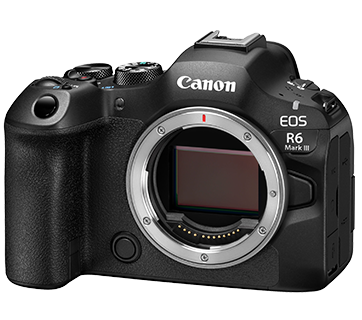
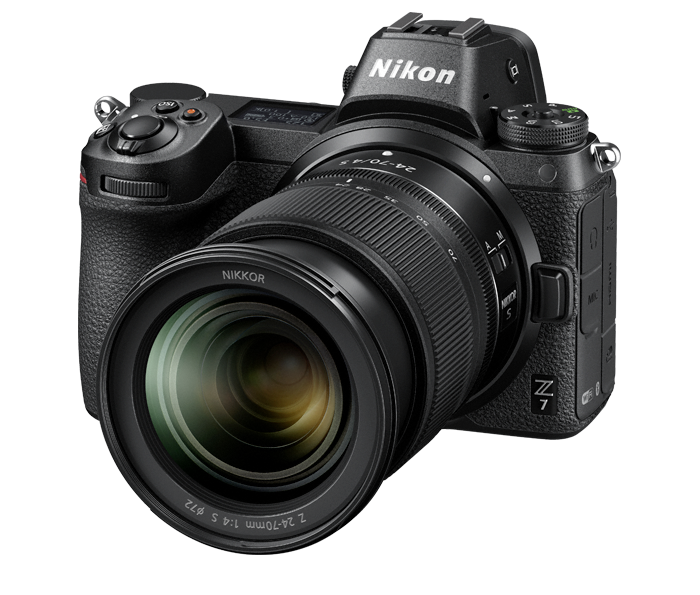
The Canon EOS R6 Mark III and the Nikon Z7 are two flagship mirrorless cameras that often find themselves in direct competition, attracting photographers and videographers seeking high-performance capabilities. With their full-frame sensors, impressive autofocus systems, and robust build qualities, both cameras cater to advanced enthusiasts and professionals. Canon users looking to upgrade or expand into the RF lens ecosystem may lean towards the R6 Mark III, while Nikon users with an investment in Z lenses may prefer the Z7 for its higher resolution and established features. Key differentiators between these models include sensor resolution, autofocus performance, video capabilities, and overall ergonomics.
Specifications Comparison
Detailed Comparison
Image Quality
In terms of image quality, the Nikon Z7 stands out with its impressive 46-megapixel resolution, which enables ultra-detailed images and greater cropping flexibility. This is particularly advantageous for landscape and studio photographers who require the finest detail in their captures. On the other hand, the Canon EOS R6 Mark III, while having a lower resolution, focuses on delivering superior performance in low-light situations with an ISO range of 100-102400, expandable to 204800. This allows the R6 Mark III to excel in challenging lighting conditions where noise might be a concern.
Both cameras produce images with excellent dynamic range and color accuracy, but the decision may largely depend on the user's needs-detailed resolution versus low-light performance. Furthermore, the R6 Mark III has proven to be a strong contender for fast-paced sports or wildlife photography due to its rapid shooting capabilities. Thus, if resolution is critical, the Z7 takes the lead; however, for overall versatility, especially in low light, the R6 Mark III has the edge.
In summary, while the Nikon Z7 wins on sheer megapixel count, the Canon EOS R6 Mark III offers competitive image quality with its high ISO performance, making this aspect nuanced depending on specific photographic needs.
Autofocus System
Both the Canon EOS R6 Mark III and the Nikon Z7 feature advanced autofocus technologies that cater well to different shooting styles. The EOS R6 Mark III has a formidable autofocus system boasting 4897 AF points, which offers incredibly precise focus tracking, especially beneficial for moving subjects in sports and wildlife photography. Coupled with its Eye AF capabilities, the R6 Mark III is designed to track subjects seamlessly, proving to be very effective for action shots.
In contrast, the Nikon Z7 provides 493 AF points, which, while fewer than the Canon, still provide excellent coverage for most shooting scenarios. Nikon's implementation of eye detection is also robust, making it suitable for portrait photography. However, the overall speed and accuracy of the Canon's autofocus system, especially in continuous shooting modes, generally outpaces that of the Z7.
Ultimately, for those who prioritize fast and accurate autofocus during dynamic shooting, the Canon EOS R6 Mark III is a clear winner in this category, while the Nikon Z7 remains competitive but slightly behind in terms of advanced tracking capabilities.
Video Capabilities
When it comes to video capabilities, the Canon EOS R6 Mark III takes a significant lead over the Nikon Z7. The R6 Mark III can shoot 4K video at up to 120 frames per second, offering filmmakers high-frame-rate options for slow-motion capture, which is increasingly popular in modern content creation. It also supports 10-bit 4:2:2 internal recording, a feature that enhances color grading and overall video quality.
On the other hand, the Nikon Z7 is limited to 4K video at 30 frames per second, which may be sufficient for basic video needs but lacks the flexibility and creative potential that higher frame rates offer. Additionally, the Z7's 8-bit recording may not satisfy more demanding videographers looking for richer color depth.
In conclusion, if video quality and flexibility are a priority, the Canon EOS R6 Mark III is the clear winner, catering to professionals requiring high-performance video features. The Z7, while still a capable video camera, does not match the advanced capabilities of the R6 Mark III in this regard.
Build & Ergonomics
Both the Canon EOS R6 Mark III and Nikon Z7 are built with a weather-sealed design, making them suitable for outdoor photography in varying conditions. However, there are some design nuances worth noting. The R6 Mark III weighs slightly more at 699 grams compared to the 675 grams of the Z7, which may be a factor for photographers prioritizing portability.
In terms of ergonomics, the R6 Mark III features a slightly larger grip, which can feel more comfortable during extended shooting periods. The Z7, while also comfortable, has a more compact design, which some users may find appealing for travel photography.
Display-wise, the Z7 boasts a higher resolution screen at 2,100,000 dots compared to the R6 Mark III's 1,620,000 dots, offering sharper live-view images and menus. The R6 Mark III provides a slightly smaller 3-inch screen versus the Z7's 3.2 inches, which may impact usability in bright conditions.
Overall, both cameras excel in build quality, but the Canon EOS R6 Mark III pulls ahead slightly in ergonomics for sustained use, while the Z7 offers superior display quality.
Battery & Storage
Battery life is another critical aspect for photographers and videographers, especially during extensive shooting sessions. The Nikon Z7 offers a rated battery life of approximately 330 shots, which is relatively decent for a full-frame mirrorless camera. However, the Canon EOS R6 Mark III significantly enhances this with an impressive performance, allowing for prolonged shooting without frequent interruptions, thanks to its optimized power management system.
In terms of storage, both cameras support dual card slots; however, the Canon R6 Mark III is more flexible, allowing simultaneous and backup storage setups. Meanwhile, the Z7's dual slots can offer similar functionality but may not match the speed benefits offered by Canon's implementation.
For photographers looking for reliability during long shoots, the Canon EOS R6 Mark III stands out with its superior battery life, making it a more practical choice for intensive photography and videography projects.
Value for Money
Value for money is an essential consideration for prospective buyers. The Canon EOS R6 Mark III is priced at $2799, which is competitive given its feature set that includes advanced video capabilities, superior autofocus, and excellent low-light performance. This makes it appealing for professional users who require a versatile camera without compromising on key functionalities.
On the other hand, the Nikon Z7, priced at $3399, is positioned as a high-megapixel camera targeting specific niches like landscape and studio photography. While it does deliver excellent image quality, the higher price may not justify the lower video capabilities and slower autofocus performance when compared to the R6 Mark III.
Thus, for users seeking a well-rounded camera that excels across multiple disciplines including video, the Canon EOS R6 Mark III offers better value overall. The Z7 may appeal more to users who specifically need the high-resolution output but might leave general consumers wanting in other areas.
Our Verdict
The Canon EOS R6 Mark III emerges as the overall winner in this comparison, excelling in autofocus capabilities, video performance, battery life, and overall user experience. While the Nikon Z7 is an excellent camera with superior resolution, it falls behind in practical features that many photographers and videographers require. The R6 Mark III's versatility makes it an ideal choice for a wide range of photography styles-especially action and low-light scenarios-while the Z7 may still fit those needing maximum detail in still images. Ultimately, the decision comes down to the specific needs of the user, but for a comprehensive, high-performing camera, the R6 Mark III is the superior option.