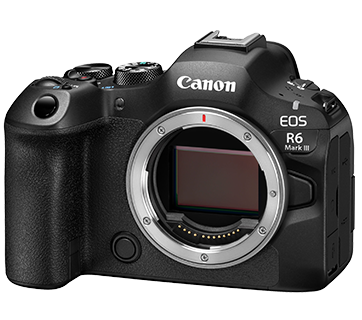
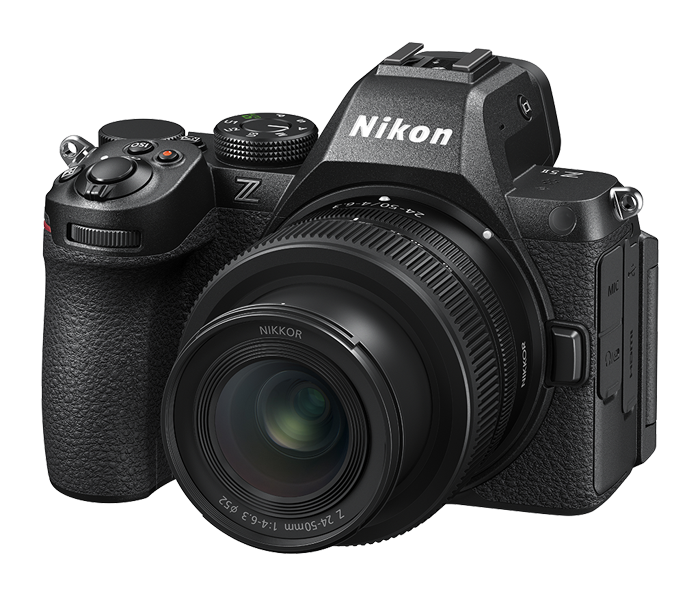
The Canon EOS R6 Mark III and Nikon Z5II are both full-frame mirrorless cameras targeting serious enthusiasts and semi-professional photographers in 2025. They are often compared because they represent the latest mid-range offerings from two of the most respected camera brands. Both offer robust feature sets, excellent sensor technology, and weather-sealed bodies suited for a variety of photographic and video applications.
Photographers comparing these cameras are likely to be advanced amateurs, enthusiasts, or professionals seeking a balance between high performance and price. The key differentiators center around each camera's burst speed, autofocus sophistication, video features, and price. While the Canon EOS R6 Mark III commands a higher premium, it brings bleeding-edge frame rates, class-leading stabilization, and advanced autofocus, while the Nikon Z5II counters with a very competitive price, robust build, and a higher resolution rear display.
Specifications Comparison
Detailed Comparison
Image Quality
Both the Canon EOS R6 Mark III and Nikon Z5II utilize full-frame sensors measuring 35.9 x 23.9 mm, ensuring a similar image depth, dynamic range, and low-light capability. However, only the Nikon Z5II's megapixel count is specified at 24MP; Canon's is not directly stated, but the R6 Mark II is 24MP, so the Mark III is likely similar or slightly improved.
Where the Canon significantly differentiates itself is with its ISO range. The R6 Mark III offers a native ISO of 100-102400, expandable to 204800, whereas the Nikon Z5II's exact range isn't specified, but traditionally, Z5-class cameras have a more limited ISO range. This means the Canon will likely pull ahead in extreme low-light scenarios.
Color science remains subjective, but Canon cameras are renowned for their pleasing, natural tones, while Nikon offers excellent rendering and dynamic range as well. In terms of stabilization, the Canon leads with an impressive 8.5 stops compared to Nikon's 7.5. This can make a practical difference for low-light shooting or handheld photography.
Autofocus System
The Canon EOS R6 Mark III brings a dramatically advanced autofocus system with 4897 selectable AF points-far surpassing the Nikon Z5II's 299 points. This allows for more precise subject tracking and focus area selection, which benefits fast-paced action, wildlife, and portrait photographers.
Canon's autofocus is also widely regarded for its speed, accuracy, and subject/environmental recognition, leveraging deep learning and AI for eye, face, and animal detection. While Nikon has improved its AF algorithms substantially and the Z5II retains respectable tracking, it cannot match Canon's breadth of AF coverage and tracking tenacity, especially in complex scenarios.
Both cameras offer subject recognition and eye detection, but the Canon is more refined and feature-rich in this area. Thus, for action, sports, or unpredictable subjects, the Canon demonstrates a clear advantage.
Video Capabilities
The Canon EOS R6 Mark III targets hybrid and video creators with an impressive 4K 120p recording mode, offering substantial slow-motion flexibility and high-detail capture. The R6 Mark III also integrates robust in-body stabilization (8.5 stops), which is a particular advantage when recording handheld footage.
Conversely, the Nikon Z5II offers 4K video up to 60p, which is a notable improvement over previous Nikon entry full-frame models. Its rear screen is slightly larger and higher resolution, which can help with critical focus or playback during video shoots. However, lacking 120p at 4K puts the Nikon at a disadvantage for creators wanting slow-motion and the highest level of frame rate flexibility.
Both cameras are weather sealed and suited for demanding environments, but video-centric users will find Canon's higher frame rates and superior ibis especially compelling.
Build & Ergonomics
Both cameras are weather sealed for reliable use in tough environments. The Canon EOS R6 Mark III is fractionally lighter at 699g versus the Nikon's 700g-nearly identical in daily use. The Canon is a bit larger (138 x 98 x 88 mm) compared to the Nikon (134 x 101 x 72 mm), which could mean a deeper grip and potentially improved balance for larger lenses.
Nikon counters with a bigger, higher-resolution rear screen at 3.2 inches and 2,100,000 dots, aiding image review and menu navigation, compared to Canon's 3-inch, 1,620,000-dot screen. Those who frequently use the LCD for composing or reviewing images may appreciate this detail.
Both cameras feature excellent electronic viewfinders and robust builds. Ergonomics are highly personal, but Nikon is often praised for its class-leading grip, while Canon offers intuitive control layouts. Overall, build quality and handling are closely matched.
Battery & Storage
Battery life is only specified for the Nikon Z5II at 330 shots per charge. This figure is fairly standard for mirrorless cameras but may not satisfy high-volume shooters (such as event, sports, or wildlife photographers). The Canon EOS R6 Mark III's battery life isn't provided, but previous Canon R6 models hover around the same range-potential buyers should expect similar endurance and factor in extra batteries for a full day's shoot.
In terms of storage, both systems offer dual card slots in their sibling models, but specifics are not provided in the specs-buyers should double-check to ensure the Mark III and Z5II maintain this feature. As current trends suggest, both are likely covered in this regard.
Given the parity in likely battery life and storage arrangement, neither camera takes a clear lead unless battery life is a buyer's decisive metric.
Value for Money
The Nikon Z5II comes in at a tempting $1,699-noticeably less expensive than the Canon EOS R6 Mark III, which retails at $2,799. This $1,100 difference is significant, allowing buyers to invest in higher-quality lenses or accessories. For photographers who don't need the Canon's extremely high FPS, advanced video modes, or top-tier autofocus, the Nikon offers robust core features and excellent image quality for the price.
On the other hand, Canon justifies its price premium with class-leading performance in autofocus, video, and burst capabilities. Enthusiasts and professionals needing those capabilities will see value in the additional investment. However, for most generalist photographers and those entering full-frame for the first time, the Nikon Z5II is the more financially accessible, well-featured option.
Thus, the Nikon wins on outright value if headline features aren't a key deciding factor.
Lens Ecosystem
Both Canon RF and Nikon Z mounts have rapidly grown, each now supporting an expanding range of native lenses from their respective manufacturers and third-party companies. Canon's RF lens lineup is noted for innovative optical designs and very fast apertures, but RF lenses can be expensive, and Canon has restricted some third-party autofocus lens development.
Nikon's Z system covers all the critical focal lengths, and third-party support has grown, especially in the affordable and mid-range segments. This offers Nikon Z shooters access to more budget-friendly glass compared to the RF system.
Ultimately, both ecosystems are competitive and viable, but those who prioritize third-party affordability or specific lenses might favor Nikon, while those seeking Canon's unique RF optics will prefer that route.
Our Verdict
Overall, the Canon EOS R6 Mark III secures a decisive win thanks to its advanced autofocus system, superior image stabilization, faster burst rates, and premium video functionality. These qualities appeal directly to action, wildlife, and hybrid shooters who demand maximum technical prowess. Those requiring industry-leading features for demanding scenarios will justify the higher price of the EOS R6 Mark III. However, the Nikon Z5II stands out as a phenomenal value, packing excellent image quality, a durable body, and a strong feature set at a much more affordable price. It is a smart, pragmatic choice for enthusiasts or pros who do not need the Canon's advanced speed and video features but still want a reliable full-frame package. Buyers prioritizing budget, a slightly better rear display, or broader lens value options will find the Z5II appealing. Ultimately, Canon wins on sheer technological merit, but Nikon offers a compelling alternative where value takes precedence.
Canon EOS R6 Mark III
Nikon Z5II
Also Compare
Frequently Asked Questions
Which camera is better for sports and action photography?
The Canon EOS R6 Mark III is better suited for sports and action due to its 40 fps burst rate and advanced 4897-point autofocus system, providing much faster subject tracking and capture rates than the Nikon Z5II's 14 fps and 299-point autofocus.
Is the price difference between the Canon R6 Mark III and Nikon Z5II justified?
If you need high-speed performance, advanced video features, or state-of-the-art autofocus, the Canon justifies its premium price. However, if you prioritize core image quality and reliability at a lower cost, the Nikon offers excellent value for most needs.
Which camera is better for video creators?
The Canon EOS R6 Mark III excels for video, offering 4K at up to 120p and industry-leading image stabilization, while the Nikon Z5II maxes out at 4K 60p. Video users and hybrid creators will appreciate Canon's frame rate flexibility and stabilization.
How do the lens options compare between Canon RF and Nikon Z mounts?
Both mounts offer high-quality native lens selections, but Nikon has wider third-party support and more affordable options. Canon RF lenses are highly innovative but often more expensive, and third-party AF lens choices are more limited.
How do the rear screens compare for composing and reviewing images?
The Nikon Z5II features a larger (3.2-inch) and higher-resolution (2,100,000 dots) rear screen, which can make image review and menu navigation easier than the Canon's 3-inch, 1,620,000-dot screen.
Are both cameras well-suited for outdoor or professional use?
Yes, both cameras are weather sealed and designed for professional use in challenging conditions. Either is suitable for demanding fieldwork and outdoor sessions.