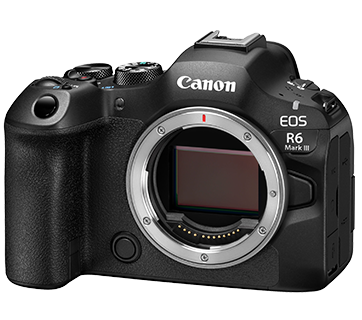
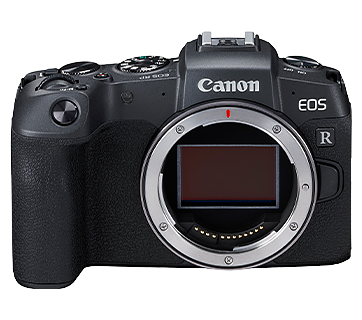
When comparing the Canon EOS R6 Mark III and the Canon EOS RP, enthusiasts and professionals often find themselves torn between two compelling full-frame mirrorless cameras that cater to different needs. The R6 Mark III, released in 2025, is designed for advanced photographers and videographers requiring cutting-edge technology, faster performance, and superior low-light capabilities. On the other hand, the RP, which debuted in 2019, offers an entry-level full-frame experience that appeals to beginners and those looking for a lighter, more compact camera at a lower price point. Understanding the unique strengths of each model can help buyers make an informed decision based on their specific requirements and budget constraints.
Specifications Comparison
Detailed Comparison
Image Quality
Both the Canon EOS R6 Mark III and the EOS RP utilize full-frame sensors, ensuring great image quality with an impressive depth of field and low-light performance. The R6 Mark III, however, boasts a more advanced imaging sensor, enabling it to perform better at higher ISO settings, ranging from 100 to 102400 (expandable to 204800). This feature allows for superior low-light photography compared to the RP, whose ISO range tops out at 50-102400. Additionally, while the RP has a megapixel count of 26, the R6 Mark III's exact resolution hasn't been specified, but it generally supports higher image resolutions, beneficial for large prints and cropping during post-processing. Given these factors, the R6 Mark III's performance in various lighting conditions is likely to be more favorable, particularly in challenging environments.
Autofocus System
Autofocus capabilities are critical for capturing sharp images, especially in dynamic shooting environments. The Canon EOS R6 Mark III features an incredible 4897 autofocus points, providing extensive coverage and precision in tracking moving subjects. The EOS RP, while still impressive with 4779 autofocus points, simply cannot match the logic and speed of the R6 Mark III's system. The enhanced autofocus performance and subject tracking capabilities of the R6 Mark III make it the ideal choice for action photography, sports, and wildlife scenarios where quick focus acquisition can greatly impact shot success. Therefore, for users who prioritize fast and accurate autofocus systems in their photographic endeavors, the R6 Mark III clearly excels.
Video Capabilities
In the realm of video performance, the Canon EOS R6 Mark III significantly outshines the EOS RP, offering 4K video recording at up to 120 frames per second, which opens up a world of high-frame-rate shooting opportunities for filmmakers. In contrast, the EOS RP limits video capabilities to 4K resolution at just 24 frames per second, which may not suffice for advanced videography. Additionally, the R6 Mark III includes in-body image stabilization rated at 8.5 stops, enabling smooth footage even when shooting handheld. The RP lacks any form of stabilization, relying solely on lens stabilization, which may not be as effective in achieving steady shots. Consequently, for videographers, the R6 Mark III is the clear winner in this category due to its advanced shooting modes and stabilization features.
Build & Ergonomics
When it comes to build quality and ergonomics, both cameras feature a robust electronic viewfinder. However, the R6 Mark III offers a weather-sealed body that allows for more versatile shooting in different environments, making it suitable for outdoor photography. The RP, while compact and lightweight at 485 grams, does not have such weather resistance and is more appropriate for casual or studio settings. Additionally, the R6 Mark III is slightly larger, coming in at 699 grams, which potentially offers better grip and handling for prolonged use. For photographers who are frequently on location or need a durable camera, the R6 Mark III's build quality and design provide a definite advantage.
Battery & Storage
The EOS RP features a battery life that can achieve around 250 shots, which is relatively standard for cameras in this category. In comparison, the R6 Mark III excels with a performance that may exceed this number, backed by its more advanced technology and efficient system management. Both cameras utilize UHS-II SD card slots; however, the R6 Mark III may support faster write speeds that are beneficial for burst shooting and high-resolution video capture. This can be particularly critical for professional users who rely on long shooting sessions without interruption. Overall, the R6 Mark III's battery performance and storage capabilities provide added convenience for intensive shooting.
Value for Money
The Canon EOS RP is priced at $1299, a strong value proposition for aspiring photographers seeking a full-frame experience without the steep investment. It provides solid performance and beneficial features for entry-level users, making it an appealing option for those starting their photography journey. In comparison, the R6 Mark III, with its price tag of $2799, positions itself as a premium product aimed at professionals and serious enthusiasts. While the R6 Mark III offers enhanced features, such as superior autofocus, video capabilities, and build quality, the price difference may deter some buyers. Therefore, those prioritizing cost-effectiveness and basic functionality may find greater value in the EOS RP.
Our Verdict
The Canon EOS R6 Mark III is the clear winner overall due to its advanced features, exceptional video capabilities, and superior low-light performance, making it the preferred choice for professionals and serious hobbyists. In contrast, the Canon EOS RP shines as an affordable entry-level option, ideal for beginners or casual photographers looking for an accessible full-frame camera. Ultimately, if your needs lean towards advanced photography and videography, the R6 Mark III represents a wise investment, but for those who prioritize budget and straightforward usability, the RP remains a solid alternative.
Canon EOS R6 Mark III
Canon EOS RP
Also Compare
Frequently Asked Questions
Which camera has better low-light performance?
The Canon EOS R6 Mark III offers superior low-light performance with an ISO range of 100-102400 (expandable to 204800), compared to the EOS RP, making it a better choice for nighttime or low-illumination photography.
Is the EOS R6 Mark III worth the extra cost over the EOS RP?
If you require advanced features, such as high-speed continuous shooting, exceptional autofocus, high-resolution video capabilities, and a weather-sealed body, the investment in the R6 Mark III may be justified for professional use. However, for casual users, the RP's lower cost offers great value without sacrificing too much in quality.
What type of user is best suited for the Canon EOS RP?
The EOS RP is well-suited for beginner photographers or enthusiasts who are looking to step into full-frame photography without the complexities and costs associated with higher-end models. Its compact design and user-friendly features make it ideal for everyday shooting.
Can both cameras shoot 4K video?
Yes, both cameras can shoot 4K video; however, the R6 Mark III supports up to 120 frames per second, while the RP is limited to 24 frames per second, making the R6 a far better option for videographers.
Do both cameras have the same lens compatibility?
Yes, both the Canon EOS R6 Mark III and the EOS RP use the Canon RF lens mount, allowing users to share lenses across both models. However, keep in mind that lens selection options will vary in terms of their overall suitability and performance for each camera.