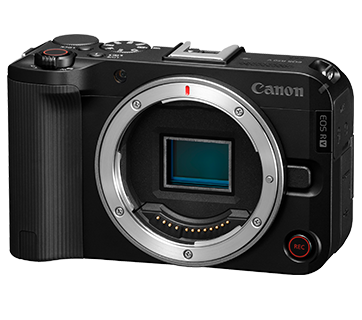
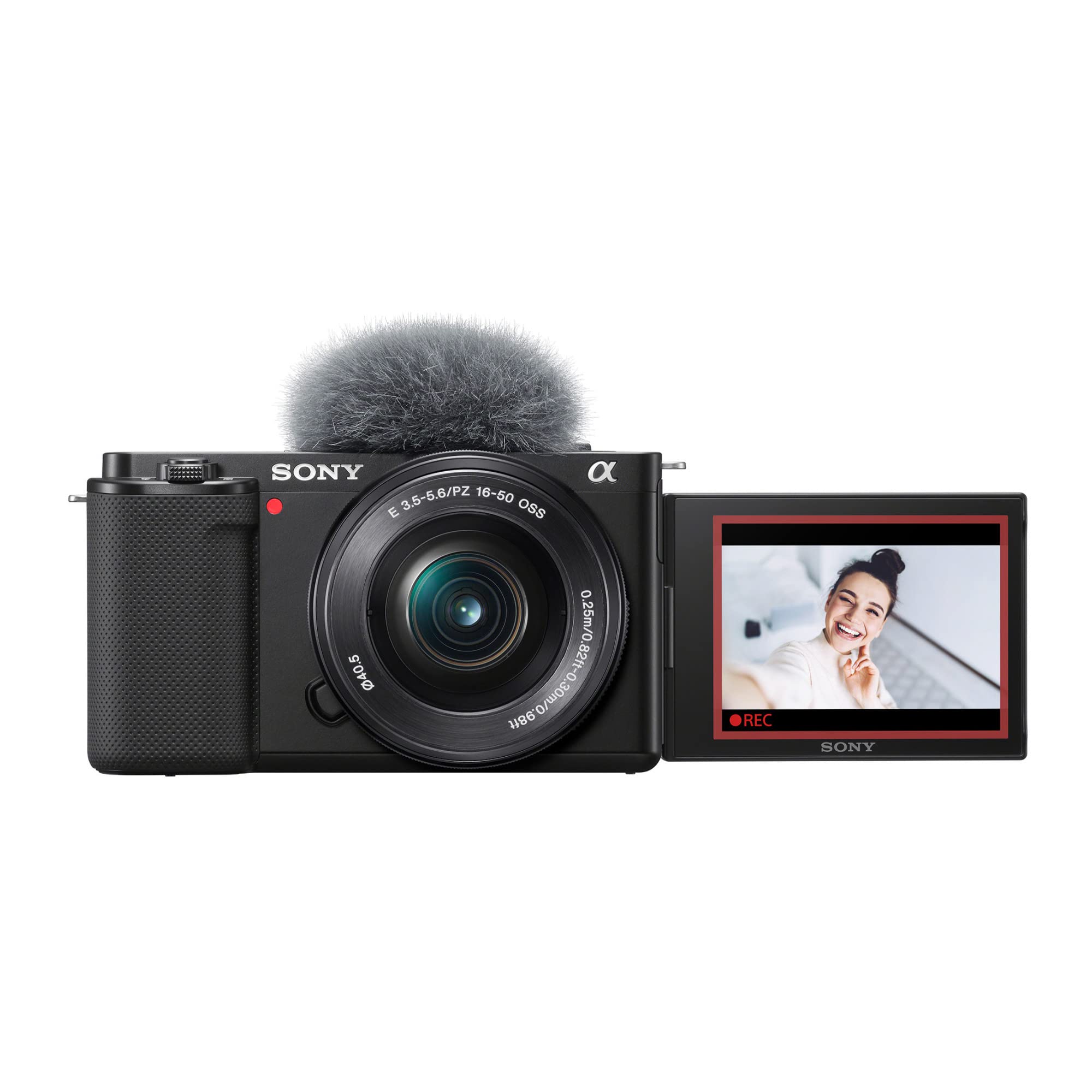
The Canon EOS R50 V and Sony ZV-E10 are two popular entry-level mirrorless cameras targeting content creators, vloggers, and photography enthusiasts seeking lightweight, versatile gear. They are often compared because both offer large APS-C sensors, compact bodies, and user-friendly interfaces at accessible price points. Buyers choosing between them are likely deciding which camera suits their balance of photo and video needs, especially for travel, vlogging, or social media content.
Key differentiators include the Canon R50 V's updated design, higher-end video features (notably 4K 60p), and the RF-S lens mount versus Sony's established E-mount system. The Sony ZV-E10, on the other hand, is widely regarded for its class-leading autofocus system, strong battery life, and mature lens ecosystem. These distinctions can make either camera the right fit, depending on the user's priorities.
Specifications Comparison
Detailed Comparison
Image Quality
Both the Canon EOS R50 V and Sony ZV-E10 use APS-C sensors of nearly identical size, each offering 24 megapixels of resolution. In practical terms, stills from both cameras are crisp, detailed, and suitable for large prints or cropping.
The Sony ZV-E10 has a slightly larger sensor area (23.5 x 15.6 mm vs. 22.3 x 14.9 mm) and provides a broader native ISO range (100-32000, expandable to 50-51200), which can deliver a slight edge in extreme low-light scenarios and when shadow recovery is important. However, Canon's recent sensors are known for good color science and solid dynamic range, making the difference in most shooting conditions negligible for the average user.
With no anti-aliasing filter and strong JPEG processing, both cameras produce satisfying results straight out of camera. The Canon R50 V does not offer a clear advantage in pure still image quality, balancing the ZV-E10's marginal low-light advantage with Canon's color science.
Autofocus System
The Sony ZV-E10 boasts a fast, accurate autofocus system with 425 phase-detection points and proven real-time Eye AF for both humans and animals. Its tracking performance is among the best in its class, making it a top choice for video bloggers, action shots, or pet photography.
Canon's EOS R50 V features Canon's latest Dual Pixel CMOS AF, which has matured rapidly to compete with Sony. While Canon does not specify the number of autofocus points, Dual Pixel AF is known for consistent subject detection, smooth transitions, and reliable face/eye-tracking-especially in video and live-view shooting.
In real-world use, both systems are highly effective and easy to use. That said, Sony's system offers a marginal speed and configurability edge, especially for action or when tracking unpredictable movement across the frame.
Video Capabilities
The Canon EOS R50 V is a clear front-runner in video features. It records 4K video at up to 60p, offering higher resolution and smoother capture for action or slow-motion effects. This is a significant technical leap over the Sony ZV-E10, which maxes out at 1080p (Full HD) at 24 fps for video. For creators prioritizing sharp, future-proof content or editing flexibility, Canon's 4K/60p is a huge advantage.
Both cameras feature a fully articulating 3-inch screen to aid vlogging and self-recording. Canon includes digital stabilization to help steady handheld footage-though it introduces a crop and can't match in-body stabilization systems, it still offers more than the ZV-E10's complete lack of stabilization.
Sony does offer reliable autofocus during filming and advanced audio capabilities with its Multi Interface Shoe, but its video resolution limits are a major downside for today's content creators. As such, the R50 V easily claims the win for video.
Build & Ergonomics
Both cameras are impressively compact and lightweight, making them excellent choices for travel and handheld shooting. The Canon EOS R50 V weighs 370g and measures 119 x 74 x 45 mm, while the Sony ZV-E10 is slightly lighter at 343g and even more compact at 115 x 64 x 45 mm. If portability is paramount, Sony's smaller footprint could be advantageous.
Canon offers a slightly higher-resolution touchscreen (1,040,000 vs. 920,000 dots) for sharper image playback and menu navigation, but the practical difference is modest. Neither camera features a built-in viewfinder, keeping the design streamlined for video-first users.
Ergonomically, both are optimized for vloggers with side-articulating screens. The ultimate choice here depends on hand feel, button placement, and individual preference, though Canon's slightly larger grip could benefit users with bigger hands.
Battery & Storage
The Sony ZV-E10 pulls ahead in battery performance, rated for an impressive 440 shots per charge versus unspecified stats for the Canon EOS R50 V (though similar Canon bodies often fall short of Sony's endurance). This makes the ZV-E10 better-suited for long days of shooting or travel when outlets are scarce.
Both cameras use single SD card slots, with cards easily accessible alongside the battery. Neither offers dual card support or advanced power options seen on higher-end models, so backing up in-camera or shooting for long periods will require extra batteries or cards.
Overall, the Sony ZV-E10 is the more reliable workhorse for battery life and extended shoots.
Value for Money
Priced at $649, the Canon EOS R50 V undercuts the Sony ZV-E10 by $50 while offering significant upgrades in video capabilities-especially 4K 60p video, which is rare at this price point. Canon delivers a more modern touchscreen, digital video stabilization, and advances in autofocus, making this a strong value for new creators who want high-resolution video without breaking the bank.
Sony's ZV-E10, at $700, justifies its price with superior battery life, a highly refined autofocus system, and the benefits of an established E-mount lens system. However, the much lower video specs make it a harder sell to most new buyers-unless they can find it discounted.
Canon's feature set per dollar is simply more compelling for most casual shooters and video creators.
Lens Ecosystem
The Sony E-mount system is one of the most mature mirrorless ecosystems on the market, with a vast selection of native lenses from Sony and third-party makers like Sigma, Tamron, and others. This breadth covers everything from ultra-wide to super-telephoto, often at very reasonable prices.
Canon's RF mount is newer, with the RF-S sublineup for APS-C bodies like the R50 V still filling out its range. Canon's native choices are more limited and generally costlier, especially for specialized focal lengths. However, the system is rapidly growing, and adapters allow use of some EF lenses with varied compatibility depending on autofocus features.
For users investing long-term or seeking variety, Sony's lens library is a distinct advantage.
Our Verdict
Overall, the Canon EOS R50 V emerges as the winner for most new buyers and content creators. Its standout 4K 60p video, modern autofocus, digital stabilization, and lower price make it a superb entry point for those serious about video or hybrid content creation. Still shooters are well-served too, with great image quality matched by the ZV-E10, and the latest ergonomic and usability refinements mean few compromises in operation. However, the Sony ZV-E10 retains strengths important to some users. Its superior autofocus tracking, class-leading battery life, and especially its much deeper lens ecosystem make it an excellent investment for those focused on photography, specialized lenses, or shooting long sessions away from power. Users valuing portability, battery life, and lens options-or who are already invested in Sony glass-may still prefer the ZV-E10. Ultimately, both cameras are strong choices; decide based on your primary type of shooting and lens system preference.
Canon EOS R50 V
Sony ZV-E10
Also Compare
Frequently Asked Questions
Which camera is better for vlogging?
The Canon EOS R50 V is the better choice for most vloggers, offering 4K 60p video, a fully articulating touchscreen, and digital stabilization for smoother handheld footage. Sony's ZV-E10 is still a popular alternative, but its max 1080p video makes it less future-proof.
Which camera has better autofocus for action or pets?
The Sony ZV-E10 edges ahead with its 425-point phase-detect autofocus and excellent real-time tracking for humans and animals. It is widely regarded as one of the most reliable systems for fast or unpredictable subjects. Canon's R50 V is also strong, but Sony's speed and reliability set the standard here.
Is the Canon RF-S or Sony E-mount better for lens selection?
Sony E-mount is superior for lens selection. With years of third-party support and a massive catalog from Sony and others, it covers more focal lengths and price points than Canon's younger RF/RF-S mount. Canon's system is improving but is more limited and generally costlier right now.
Which camera is more portable for travel?
Both are highly portable, but the Sony ZV-E10 is a bit lighter and more compact (115 x 64 x 45 mm vs. 119 x 74 x 45 mm). This makes it slightly easier to pack and carry for all-day adventures, though the Canon is still very travel-friendly.
Does either camera have in-body stabilization (IBIS)?
No, neither model features in-body stabilization. The Canon R50 V offers digital video stabilization (with some crop), while the Sony ZV-E10 lacks any form of built-in stabilization. For maximum steadiness, pair either camera with stabilized lenses or a gimbal.
Which camera offers better value for money?
Canon EOS R50 V offers more advanced video features at a lower price, making it stronger value for new hybrid shooters and video creators. However, Sony ZV-E10 may be preferred for those valuing battery life, autofocus, or lens variety.