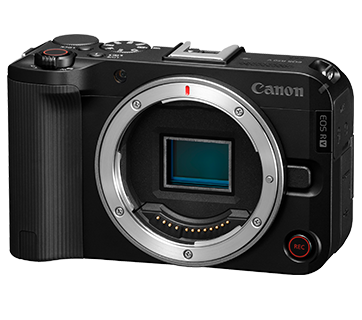
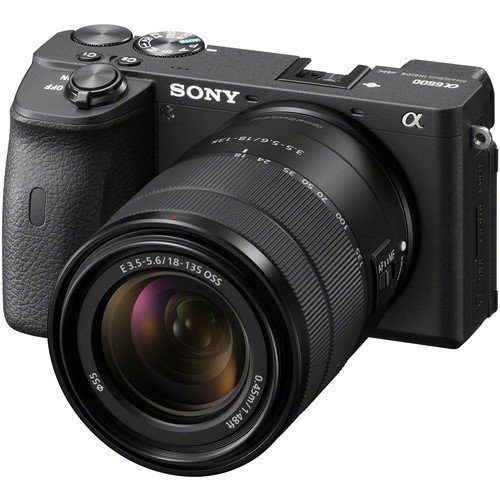
The Canon EOS R50 V and Sony A6600 are both highly popular APS-C mirrorless cameras targeting enthusiast and advanced entry-level photographers, particularly those interested in compact and versatile systems. They are often compared because they sit at critical price points in their respective brand lineups-Canon as a budget-friendly, latest-generation option, and Sony as a proven, feature-rich performer that's established itself among both hybrid shooters and stills photographers. Buyers comparing these models are typically considering factors such as image quality, autofocus sophistication, video functionality, portability, and system extensibility.
Key differentiators include the Canon's newer release date, highly competitive price, more advanced video specs, and lightweight build, while the Sony A6600 boasts industry-leading battery life, in-body image stabilization (IBIS), and a robust, weather-sealed body aimed at more demanding shooting conditions. The choice between them often comes down to whether the buyer prioritizes modern features and a lower cost in a more compact package (Canon), or advanced stability, greater battery endurance, and a mature lens ecosystem (Sony).
Specifications Comparison
Detailed Comparison
Image Quality
Both the Canon EOS R50 V and Sony A6600 utilize similar 24-megapixel APS-C sensors, with only minute differences in their physical dimensions (Canon: 22.3x14.9 mm; Sony: 23.5x15.6 mm). In terms of real-world resolution, dynamic range, and color depth, performance is remarkably close. Both cameras yield high-quality images suitable for large prints and professional work.
Though Sony's slightly larger sensor theoretically collects more light and could edge ahead in dynamic range, practical differences are minimal for most users. The Sony A6600 does feature a more extensive native ISO range (100-32,000, expandable to 102,400), making it somewhat better suited to low-light conditions and high-ISO photography. The Canon EOS R50 V, with its newer sensor design, may benefit from slightly better noise control or color processing in JPEGs, but this is often subtle.
Ultimately, both deliver excellent image quality for their class, but the Sony's broader ISO range and sensor-stabilization can give it an edge in less-than-ideal lighting conditions.
Autofocus System
The Sony A6600 is well-regarded for its fast and highly reliable autofocus system, featuring 425 phase- and contrast-detect points covering a wide area of the frame. Subject tracking and real-time Eye AF are powerful for both stills and video, making the A6600 a favorite among action and portrait shooters.
The Canon EOS R50 V, being a more recent model, benefits from Canon's updated Dual Pixel CMOS AF technology. While Canon doesn't specify the exact number of AF points, their Dual Pixel systems are known for smooth, accurate subject tracking, including effective Eye AF for both humans and animals. For casual video creators and everyday photographers, Canon's AF system is intuitive and effective.
In practical use, both systems are highly competent, though professional reviewers often find Sony's implementation a bit more consistent for subject tracking, thanks to its larger point count and sophisticated algorithms. However, the differences are marginal for most users, and Canon's system has overtaken Sony in some real-world tests, especially with vlogging or single-subject scenarios.
Given performance parity and the fact that both are top contenders, this aspect is rated a tie.
Video Capabilities
The Canon EOS R50 V takes a clear leap forward in video specs for an entry-level camera. It supports uncropped 4K recording at up to 60p, which is excellent for creators needing high-frame-rate UHD footage, and it offers a highly usable interface for hybrid shooters. Its full-width 4K60 ensures sharp, detailed video without field-of-view loss, and Canon's autofocus performance transfers over well to video work.
The Sony A6600, although advanced in its time, offers 4K recording only up to 30p. It does, however, benefit from in-body sensor-shift stabilization, which helps keep handheld video smooth-especially when paired with unstabilized lenses. The A6600's autofocus remains impressive in video mode, making it easy for solo creators to keep themselves in focus.
However, Canon's higher resolution and frame rate in 4K make it the stronger option for contemporary video needs, despite relying only on digital stabilization. For serious videographers who need high-rate 4K or intend to slow footage in post, the EOS R50 V offers more flexibility straight out of the box.
Thus, Canon wins this video round.
Build & Ergonomics
The Sony A6600 is designed with durability and robustness in mind. Its weather-sealed magnesium alloy body makes it suitable for demanding environments, while the deeper handgrip, additional physical controls, and built-in electronic viewfinder support more traditional and professional handling styles. At 503g, it's heavier, but the trade-off is superior build quality and resistance to adverse scene conditions.
Canon's EOS R50 V emphasizes compactness and portability, weighing just 370g with a notably smaller footprint. This makes it ideal for travel, vlogging, or outings where minimizing gear is a priority. However, its lack of weather sealing and a simpler control scheme may not appeal to users who frequently shoot in challenging conditions or desire more manual control at their fingertips.
Screen quality is very close, though Canon edges ahead in screen resolution (1,040,000 vs 921,600 dots). The Sony's built-in EVF is a crucial usability win for bright-light shooting and more traditional composition styles, while Canon omits a viewfinder entirely.
Overall, Sony delivers a more professional build and all-weather usability, making it the winner for this section.
Battery & Storage
Sony's A6600 is arguably the king of battery life among APS-C mirrorless cameras, using the well-established NP-FZ100 battery for up to 810 shots per charge-nearly double industry averages. For travel, events, or video recording days, this is a decisive advantage, reducing the need to carry spares and enhancing reliability in the field.
Canon has not specified a CIPA-rated battery life for the EOS R50 V, but based on its size, weight, and predecessors, unified estimates put it at well below Sony's class-leading endurance-often around 300 shots per charge. This makes a practical difference for long shoots or heavy video use.
Both cameras take a single SD UHS-I card, suitable for their file sizes and speed requirements at this tier.
The A6600's extended battery life makes it a clear favorite for anyone who values time away from chargers.
Value for Money
The Canon EOS R50 V is priced at $649, less than half the Sony A6600's $1400 launch price (though discounts on older Sony stock can sometimes narrow this gap). For a current-generation, feature-packed mirrorless camera offering uncropped 4K60 and advanced autofocus, this is extraordinary value for beginners, vloggers, or budget-conscious upgraders.
Sony's A6600, while offering deeper weather-sealing, IBIS, and legendary battery stamina, commands a steep premium and is now several years old. Unless these features are essential, many will find its price difficult to justify over Canon's more affordable but equally-or more-capable body.
In pure value terms, Canon's combination of latest-generation features, compactness, and low price win hands down.
Lens Ecosystem
Sony's E-mount system is the most extensive APS-C mirrorless lineup in terms of lens availability. Third-party options and native Sony lenses cover everything from budget wide-angles to professional telephotos, giving users unparalleled flexibility as their needs grow.
Canon's RF-S mount is still maturing, and while the ecosystem is quickly expanding-especially with RF and adapted EF lenses-users may find fewer APS-C-specific choices, particularly in the affordable segment. Nonetheless, Canon's mount is steadily attracting third-party manufacturers, and full-frame RF lenses can be used seamlessly, albeit at greater cost and size.
For users who prioritize ongoing system investment and specialty optics, Sony's platform remains more versatile at this time.
Our Verdict
Overall, the Sony A6600 comes out ahead-primarily due to its professional build, exceptional battery life, real-world image quality advantages in tough conditions, in-body stabilization, and vastly larger lens ecosystem. These are crucial factors for experienced photographers, travelers, or those who shoot in difficult or changing environments. However, the Canon EOS R50 V makes a compelling case, especially for beginner to intermediate photographers, vloggers, and creators focused on video, value, and portability. Its modern, lightweight design and advanced 4K 60p video capability, combined with an accessible price, make it a standout choice in the budget/enthusiast segment. If the highest battery life, weather sealing, and robust handling are must-haves, the Sony A6600 is the logical winner. For those on a budget or starting out in the mirrorless world, or for those who need the most current video features in a highly compact body, the Canon EOS R50 V may be the smarter choice.
Canon EOS R50 V
Sony A6600
Also Compare
Frequently Asked Questions
Which camera is better for video blogging (vlogging)?
The Canon EOS R50 V is generally better suited for vlogging thanks to its lightweight body, fully articulating high-resolution screen, and uncropped 4K 60p recording. While the Sony A6600's in-body stabilization and proven autofocus are valuable, its 4K30p cap and heavier body make it less ideal for handheld, run-and-gun video work.
Does the Canon EOS R50 V have a viewfinder?
No, the Canon EOS R50 V lacks a built-in electronic or optical viewfinder. You must compose your shots using the rear screen only. The Sony A6600, on the other hand, features a high-quality electronic viewfinder, which is preferred for stills shooters and use in bright sunlight.
Which camera has better battery life?
The Sony A6600 has dramatically better battery life, rated at up to 810 shots per charge compared to the much lower battery endurance of the Canon EOS R50 V (typically around 300 shots per charge). For all-day shooting or travel, the A6600 is the superior choice.
Is lens availability a concern with either camera system?
Sony's E-mount system offers a much larger range of native and third-party lenses, particularly for APS-C users, due to its maturity. Canon's RF-S mount is newer, with fewer APS-C-specific lenses available, though the full-frame RF lineup can supplement as needed (albeit at higher cost and weight).
Which camera is better for low-light photography?
While both cameras perform admirably in good light, the Sony A6600 has a broader ISO range (100-32,000 expandable to 102,400) and in-body stabilization that helps in low-light conditions, making it better suited for shooting handheld in challenging lighting.
Which is better for travel and casual photography?
The Canon EOS R50 V is lighter, more compact, and costs much less, making it excellent for casual use, travel, and everyday carry. Its modern video features and simple operation especially benefit content creators who prefer a low-profile camera.