
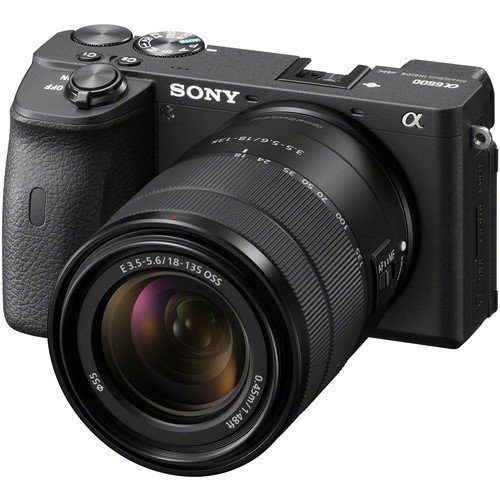
The Fujifilm X-H2S and the Sony A6600 are popular choices in the APS-C mirrorless camera market, often attracting both amateur and professional photographers alike. These models represent a significant investment, and potential buyers may find themselves weighing the advantages of each to suit specific needs-such as videography, photography, or travel. The X-H2S, launched in 2022, boasts advanced features for high-performance stills and video, while the A6600, released in 2019, offers solid reliability and versatility with an established ecosystem.
The key differentiators lie in their specifications: the X-H2S offers a higher frame rate for continuous shooting, advanced video capabilities, and superior image stabilization, making it an excellent option for fast-paced environments and videographers. Conversely, the A6600 delivers superior battery life and a more compact design, appealing to those who prioritize portability and longevity in a versatile camera system.
Specifications Comparison
Detailed Comparison
Image Quality
Both cameras feature an APS-C sensor, with the X-H2S featuring 26 megapixels compared to the A6600's 24 megapixels. While the difference in resolution is minimal, Fujifilm's color science and film simulation modes may provide a creative edge for photographers seeking unique color profiles. The X-H2S's ISO range spans from 160-12800 (expanding to 80-51200), allowing for excellent low-light performance, while the A6600 offers an expandable ISO range of 100-32000 (up to 102400), performing well in low-light but potentially yielding more noise at higher settings.
Real-world tests show that the X-H2S typically offers more detailed and richer colors, particularly in complex lighting situations, thanks to its advanced image processing capabilities. Additionally, its improved dynamic range enhances detail in both highlights and shadows. Overall, while both cameras provide impressive image quality, the edge goes to the X-H2S for its greater versatility and superior high-ISO performance.
Autofocus System
Both the Fujifilm X-H2S and Sony A6600 feature sophisticated autofocus systems with 425 points. However, the X-H2S is equipped with phase detection that is particularly effective for tracking subjects at high speeds. With continuous shooting speeds of up to 40 frames per second, the X-H2S ensures that even fast-moving subjects are captured with precision and clarity. In contrast, the A6600's maximum burst rate of 11 frames per second, while competent, falls short in high-action scenarios.
Moreover, Fujifilm's implementation of AI-powered subject detection allows the X-H2S to excel in scenarios demanding quick focus adjustments, such as wildlife photography or sports. The A6600 does offer reliable autofocus performance and features like Real-time Eye autofocus, but it lacks the same level of speed. Therefore, in scenarios where autofocus performance is paramount, the winner is clear.
Video Capabilities
When it comes to video performance, the Fujifilm X-H2S significantly outperforms the A6600 with its ability to record 4K video at 60p compared to the A6600's limitation of 4K at 30p. This advantage makes the X-H2S a strong candidate for videographers who demand high frame rates for slow-motion effects. Additionally, the 7 stops of in-body image stabilization (IBIS) provided by the X-H2S ensures smoother handheld footage, even during dynamic filming scenarios.
On the other hand, while the A6600 offers good video quality and features like S-Log profiles for color grading, its limitations in frame rates and an overall lack of advanced video features compared to the X-H2S restrict its appeal for professional video work. Considering these elements, when evaluating video capabilities, the Fujifilm X-H2S takes the lead decisively.
Build & Ergonomics
The Fujifilm X-H2S weighs in at 660 grams while the Sony A6600 is significantly lighter at 503 grams, making the A6600 a more appealing option for photographers who prioritize mobility and compactness, especially during long shoots. Both cameras feature sturdy weather sealing, providing protection against dust and moisture, making them suitable for outdoor use.
In terms of controls, Fujifilm's retro dial design on the X-H2S is favored by many for its tactile and intuitive handling, especially for controlling shutter speed and ISO. However, the A6600's electronic viewfinder and touchscreen display may appeal to users who prefer a more modern, minimalist approach. While both cameras are well-built, the choice often comes down to user preference for size and handling, leading to a tie in this aspect as different users could favor either design philosophy.
Battery & Storage
The A6600 boasts an impressive battery life, capable of taking around 810 shots per charge, compared to the X-H2S's lower performance at around 580 shots. This makes the A6600 more suitable for extended shooting sessions without needing to change batteries frequently. Such longevity is particularly beneficial for traveling photographers or those shooting events.
In terms of storage, both utilize similar SD card formats, providing flexibility for media storage. While the X-H2S supports faster UHS-II cards that could enhance burst performance, the difference may not be a deciding factor for many users. Overall, when considering battery life and practical usage, the A6600 has a clear advantage.
Value for Money
Pricing is an important consideration for many, with the Fujifilm X-H2S retailing at $2499 and the Sony A6600 at $1400. At first glance, the significant price difference may make the A6600 seem more attractive for budget-conscious buyers. However, the X-H2S offers advanced features that cater to professional users demanding cutting-edge performance in both photography and videography, which justifies its higher price point.
Moreover, while the A6600 presents a solid value, it may not fulfill the needs of those requiring high-end features. Therefore, in scenarios where high-performance capabilities such as fast burst rates and advanced video specifications are paramount, the X-H2S may represent a better investment in the long run, particularly for creative professionals. This creates a complex scenario in which the value depends on the user's specific needs.
Our Verdict
Overall, the Fujifilm X-H2S emerges as the winner of this comparison, particularly for users focused on advanced photography and videography capabilities. With superior autofocus, video performance, and image quality, it serves as a robust choice for professionals. However, the Sony A6600 still holds merit, providing exceptional battery life and a compact design for travelers or those who prefer a more budget-friendly option. Ultimately, the decision between these two excellent cameras will depend on the specific needs and priorities of the buyer.
Fujifilm X-H2S
Sony A6600
Also Compare
Frequently Asked Questions
Which camera has better low-light performance?
The Fujifilm X-H2S has a wider native ISO range and better low-light handling overall, making it generally superior for low-light photography.
Is the Fujifilm X-H2S worth the extra money?
If you prioritize high-speed continuous shooting and advanced video capabilities, the X-H2S is likely worth the investment. However, if your needs are more general, the A6600 offers great value.
How does the weight affect usability?
The A6600's lighter weight makes it more suited for long-duration shoots, while the X-H2S is bulkier, but may feel more robust in a professional environment.
Which camera is better for vlogging?
The Fujifilm X-H2S is better suited for vlogging due to its higher video framerate and stabilization features, making it perfect for dynamic shooting environments.
Can I find compatible lenses for both models?
Yes, both Fujifilm and Sony offer a wide range of compatible lenses, though the lens ecosystem is more extensive for the Sony E-mount system.