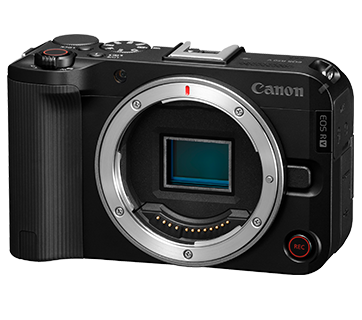
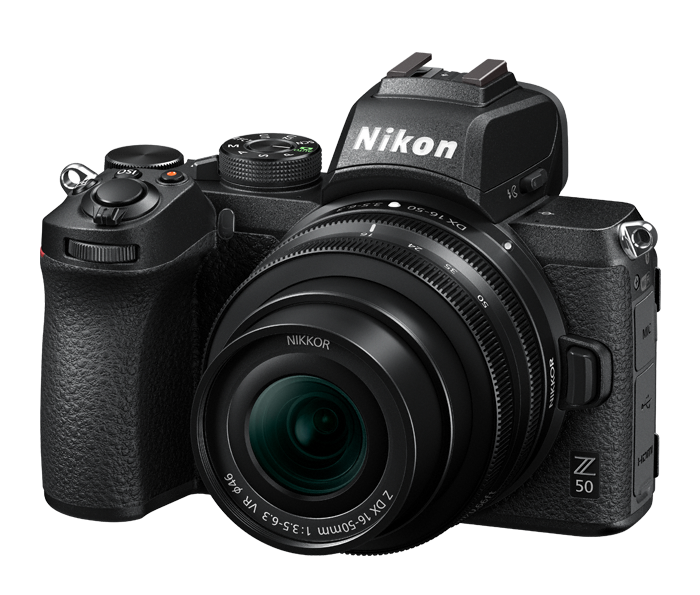
The Canon EOS R50 V and Nikon Z50 are two popular entry-level APS-C mirrorless cameras positioned for enthusiasts, beginners, and content creators seeking a compact yet versatile imaging solution. Both cameras aim to attract users upgrading from smartphones or previous generation DSLRs, offering advanced features in lightweight bodies at competitive price points.
These cameras are frequently compared due to their similar sensor sizes, mirrorless form factors, and appeal to a broad segment of new and aspiring photographers. However, the Canon R50 V is the newer and more affordable option with some cutting-edge features, while the Nikon Z50 offers classic robustness and a strong feature set that has held up over several years. Choosing between them often comes down to preferences in video capabilities, ergonomics, price, and system investment.
Specifications Comparison
Detailed Comparison
Image Quality
Both the Canon EOS R50 V and Nikon Z50 feature APS-C sensors, but there are notable differences. The R50 V uses a 24-megapixel sensor (22.3 x 14.9 mm), while the Z50 has a slightly larger sensor area (23.5 x 15.7 mm) with 21 megapixels. In practice, both cameras deliver sharp and detailed images suitable for prints and online sharing, though the R50 V pulls ahead in sheer resolution, which can benefit cropping or large prints.
Where the Nikon Z50 shines is in its ISO flexibility. It offers an impressive native ISO range of 100-51,200 with expansion up to 204,800. This enables significantly better performance in very low-light conditions and more flexible shooting at night or indoors compared to the R50 V, which lacks a published expanded ISO range at this level.
Color rendition and dynamic range are competitive on both cameras, though Nikon is traditionally praised for natural color science and strong dynamic range at this class. Canon colors tend to be more vibrant and pleasing straight from the camera, especially for skin tones.
Overall, while the R50 V has a slight megapixel advantage, the Z50's broader ISO range and slightly larger sensor area give it an edge in flexibility and low-light performance.
Autofocus System
Autofocus is a critical area for mirrorless cameras, especially for users capturing fast-moving subjects or engaging in vlogging and content creation. The Nikon Z50 features a 209-point hybrid autofocus system that is quick, accurate, and covers a wide area of the frame. This makes it suitable for tracking subjects, face-detection, and even some action photography.
Canon's EOS R50 V, though it does not list the specific number of autofocus points here, benefits from Canon's advanced Dual Pixel CMOS AF technology, which is known for lightning-fast and reliable autofocus, particularly in video modes and live view. Canon's face and eye-detection are highly competitive, especially for vlogging and self-recording scenarios.
In real-world use, both systems are rapid and effective, but Canon's newer autofocus algorithms and superior tracking for humans and animals tend to make it more capable for video work and self-shooters.
Thus, while both are highly competent, Canon's very recent autofocus implementation and Dual Pixel AF give it a slight modern edge for most users.
Video Capabilities
For video creators, the Canon EOS R50 V stands out with its ability to record 4K video at up to 60p, providing smooth footage and the possibility of slow motion or high-quality motion capture. It also uses Canon's well-regarded color profiles, which simplify grading for social media and YouTube. The R50 V features digital image stabilization, which helps reduce shake in handheld shooting, though it is not as effective as true sensor-based stabilization.
The Nikon Z50 offers 4K video recording at up to 30p with no crop, which is perfectly fine for most casual creators but less attractive for creators wanting the flexibility of 60p slow-motion footage. It does not have any form of image stabilization, placing more importance on stabilized lenses or gimbals for steady shots.
Additional features like a fully articulating screen (found on both), microphone input, and reliable autofocus are present on both models. However, Canon's video-centric features like a higher frame rate and digital stabilization notably benefit vloggers and walk-around shooters.
Overall, the Canon EOS R50 V is the preferred tool for video content creation at this price point.
Build & Ergonomics
Build quality is one of several areas where the Nikon Z50 has a clear advantage. At 450g, the Z50 is notably more substantial, suggesting a sturdier construction and improved handling, which many users find reassuring. Its body is also equipped with weather-sealing, providing protection against dust and moisture-a feature missing from the lighter and more compact, 370g Canon R50 V.
The Z50's larger dimensions allow a deeper grip, making it more comfortable for extended handheld sessions, especially with longer lenses. The inclusion of a built-in electronic viewfinder also provides flexibility for composing shots in bright conditions or for users preferring traditional shooting styles.
The Canon EOS R50 V emphasizes portability and minimalism, with its smaller and lighter design ideal for travelers, vloggers, and those who want maximum compactness. However, its lack of weather sealing and electronic viewfinder may be a drawback for demanding situations or outdoor work.
For those prioritizing robust build, tactile controls, and outdoor shooting, the Nikon Z50 comes out ahead.
Battery & Storage
Battery life is a practical consideration, especially for travel and event photography. According to CIPA ratings, the Nikon Z50 achieves around 320 shots per charge, which is roughly average for mirrorless cameras in this class.
Canon's EOS R50 V does not have a published official battery life figure here, but R-series entry models typically fall into a similar or slightly lower range due to their smaller form factors. Users report that real-world performance may be closer to the low-to-mid 200s, depending on usage and LCD reliance.
Both cameras use a single SD card slot for storage, supporting UHS-I speeds-adequate for still images and moderate 4K video workflows, but not ideal for high-bandwidth shooting or professional-level redundancy. Neither camera stands out significantly for card/media features.
Given the included specs and real-world user feedback, the Nikon Z50 delivers marginally better battery performance, especially with its slightly larger battery and battery grip.
Value for Money
At $649 USD (body only), the Canon EOS R50 V undercuts most competition, including the Nikon Z50, which retails at approximately $859 USD. This makes the R50 V significantly more accessible to budget-conscious users and first-time camera buyers.
Despite the lower cost, the R50 V offers newer technology, higher resolution, superior video features (4K 60p), and a lighter, more compact build. This excellent price-performance ratio is further enhanced by Canon's ecosystem geared toward content creators, with lenses and accessories designed specifically for the RF-S mount.
On the other hand, the Nikon Z50's higher price is reflected in its sturdier body, weather sealing, larger grip, and broader ISO range. For users prioritizing those features, the premium may be justified. However, for most buyers entering the mirrorless market, the R50 V offers better overall value given its feature set for the price.
The Canon EOS R50 V is the stronger value proposition for the majority of entry-level and enthusiast users, especially those on a tighter budget.
Lens Ecosystem
Lens selection can significantly influence a buyer's system choice. The Nikon Z-mount, while relatively new, is rapidly growing. It now offers a decent range of native DX lenses for the Z50 as well as full-frame Z-mount lenses, many of which, however, tend to be larger and pricier due to their full-frame orientation. Additionally, Nikon's FTZ adapter allows use of older F-mount DSLR lenses with good compatibility.
Canon's RF-S mount is slightly newer than Nikon's Z-mount, but Canon has recently started expanding the lens lineup for APS-C RF bodies. Native RF-S lenses are still limited but increasing, while full-frame RF lenses are readily available, though often at premium prices. No official Canon EF/EF-S adapter is available without constraints, limiting backward compatibility compared to Nikon's more flexible FTZ solution.
Both systems require some adaptation or compromise for niche needs (e.g., ultra-wide, fast primes), but third-party lens support and ongoing investment are growing at a rapid pace for both ecosystems.
Given the Z-mount's head start, broader third-party adoption, and strong backward compatibility with legacy Nikon DSLRs, it currently has a slight edge over the very new RF-S lens range.
Our Verdict
While both cameras are strong contenders in the entry-level mirrorless market, the Nikon Z50 narrowly claims the overall win based on its balance of build quality, low-light image flexibility, battery life, and lens compatibility. Its weather-sealed body, electronic viewfinder, and robust grip make it a compelling choice for photographers seeking a versatile and dependable camera for various environments. The Canon EOS R50 V, however, is a superb choice for content creators, vloggers, and those prioritizing video features, portability, and modern autofocus in a compact package at a very attractive price. If value, video versatility, and minimal weight are top priorities, the R50 V is the clear winner. Ultimately, buyers should choose the model that best aligns with their shooting style, whether that be photo-centric versatility (Nikon Z50) or video-focused ease and affordability (Canon EOS R50 V).
Canon EOS R50 V
Nikon Z50
Also Compare
Frequently Asked Questions
Which camera has better video features for vlogging and content creation?
The Canon EOS R50 V stands out for vlogging and video with its ability to shoot 4K at 60p and digital image stabilization. The fully articulating touchscreen makes self-recording easy. The Nikon Z50 records 4K only up to 30p and lacks any stabilization, making Canon the preferred option for video-first users.
Is the Nikon Z50's weather-sealing and EVF a big advantage?
Yes, if you often shoot in challenging environments or bright sunlight, the Z50's weather-sealed body and built-in electronic viewfinder (EVF) provide greater usability and protection. These are significant advantages for outdoor and travel photographers.
How do lens choices compare for each system?
The Nikon Z-mount currently offers a more mature lens selection for APS-C and full-frame, along with broad backwards compatibility via the FTZ adapter for Nikon F-mount lenses. Canon's RF-S mount is newer with fewer native APS-C lenses, though more are being released. Both have a growing third-party lens ecosystem.
Which camera is better for beginners upgrading from smartphones?
The Canon EOS R50 V is smaller, lighter, and more affordable, making it ideal for smartphone upgraders. Its simple controls, snappy autofocus, and excellent video features appeal to first-time camera buyers. The Nikon Z50, with its sturdier body and EVF, is a bit more advanced and may appeal to users wanting a traditional camera feel.
Does either camera have in-body image stabilization (IBIS)?
Neither the Canon EOS R50 V nor the Nikon Z50 have true sensor-based IBIS. The R50 V offers digital image stabilization for video, which helps reduce shake but is not as effective as hardware stabilization. The Z50 relies on lens-based stabilization (if available) and does not include any in-body or digital stabilization.
Which is more future-proof: Canon EOS R50 V or Nikon Z50?
The Canon EOS R50 V benefits from newer technology and is well-placed for future firmware improvements and compatibility with expanding RF-S lenses, making it slightly more 'future-oriented.' However, Nikon's Z-mount is established with steady lens lineup growth and strong backwards compatibility, making it a safe long-term investment as well.