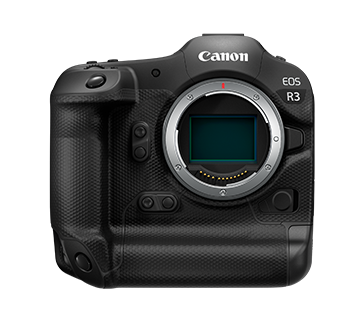

The Canon EOS R3 and Sony A9 III are two of the most sought-after mirrorless cameras on the market, frequently compared by professional photographers and enthusiasts alike. Both cameras boast full-frame sensors and cater to similar user bases, particularly focused on sports, wildlife, and event photography where speed and reliability are paramount. Their respective brand loyalties may also play a significant role in a buyer's choice, as well as specific technical features that offer distinct advantages depending on the shooting scenario. The key differentiators lie in their autofocus capabilities, continuous shooting speeds, weight, and battery life, among others.
Specifications Comparison
Detailed Comparison
Image Quality
When it comes to image quality, both the Canon EOS R3 and Sony A9 III offer impressive results owing to their full-frame sensors. The R3 features a 24-megapixel sensor, while the A9 III offers a slightly higher resolution at 25 megapixels. The difference is minimal, but for those focused on large prints or heavy cropping, the extra megapixel could offer a slight edge with the Sony camera. Both sensors have excellent dynamic range and handle high ISO settings well, but the R3's ISO range expands from 100 to a significant 204800, whereas the A9 III has a maximum native ISO of 102400. This could present the Canon as a better option for low-light conditions and high sensitivity tasks.
Autofocus System
The autofocus systems of both cameras feature cutting-edge technology. The Canon EOS R3 is equipped with 1053 autofocus points, providing comprehensive coverage and accuracy for fast-moving subjects, typically favored in sports photography. The A9 III, however, excels with its incredibly fast 120 frames per second continuous shooting speed, which can outpace the R3's 30 fps during high-speed tracking. The A9 III also includes Sony's renowned Real-time Eye autofocus, which is particularly beneficial for capturing portraits and delicate moments in dynamic environments. Thus, while both systems are robust, for ultra-fast action scenarios, the A9 III might appeal to professionals demanding the fastest tracking.
Video Capabilities
Both the Canon EOS R3 and Sony A9 III are capable of recording 4K video at up to 120 frames per second, making them suitable for high-speed video capture. However, the Canon's advanced control over video features-such as Canon Log, ProRes RAW output, and a more user-friendly interface-may appeal more to serious video creators. The R3's superior video functionalities and image stabilization features allow for smoother shots without the need for additional stabilization gear. These features indicate that while both cameras can shoot high-quality video, the versatility of the R3 makes it the better choice for those focusing heavily on video production rather than just photography.
Build & Ergonomics
In terms of build quality and ergonomics, the Canon EOS R3 is a bulky yet solid camera, weighing 1015 grams and designed to withstand harsh environments with its weather-sealed body. By contrast, the Sony A9 III takes a more compact approach, weighing only 617 grams, thus being a lighter option for photographers who travel frequently. Both cameras feature 3.2-inch screens, but the R3's higher resolution at 4,150,000 dots offers finer detail for reviewing images. The R3's larger dimensions may feel more robust and comfortable for larger hands, while the A9 III's compactness makes it easier for extended handheld use. Ultimately, the choice may depend on personal preference and usage scenarios.
Battery & Storage
When considering battery life, the Canon EOS R3 stands out with a capacity for approximately 760 shots per charge, which is substantial in a professional shooting environment. The A9 III's battery life is commendable as well, but exact figures vary based on usage scenarios. Both cameras support dual card slots for professional needs, but the R3 offers flexibility with support for both CFexpress and SD cards, allowing faster write speeds and more storage options. These aspects provide a straightforward advantage to users shooting in demanding conditions who may require longer continuous operation without the hassle of changing batteries.
Value for Money
Both cameras are positioned in the professional market segment, but their pricing highlights a key distinction. The Canon EOS R3 is priced at $5999, which reflects its advanced features and robust build. The A9 III, while also in a premium price range due to its capabilities, is set to compete closely with the R3. Buyers will need to assess which camera serves their specific needs better. Those who prioritize autofocus and lightweight portability may find the A9 III offers better value, whereas those looking for superior video features and build quality may favor the R3. Therefore, it ultimately comes down to the specific requirements of the user.
Our Verdict
Both the Canon EOS R3 and Sony A9 III find themselves in a deadlock, equally poised to satisfy differing needs across various photography and videography applications. Each excels in different aspects: the R3 is great for video and builds, while the A9 III is exceptional at high-speed photography and autofocus system efficiency. Therefore, a photographer's specific shooting context, including whether they prioritize video capabilities or fast action photography, will ultimately guide their decision. It's advisable for potential buyers to consider their primary needs and try out each camera firsthand for the best experience.
Canon EOS R3
Sony A9 III
Also Compare
Frequently Asked Questions
Which camera is better for wildlife photography?
Both cameras are excellent for wildlife photography due to their fast autofocus systems and high frame rates. However, the Canon EOS R3 offers better low-light performance due to its wider ISO range, while the Sony A9 III excels in continuous shooting speed and focus tracking.
Is the Canon EOS R3 better for video?
Yes, the Canon EOS R3 features advanced video capabilities, including support for ProRes RAW, which may attract videographers seeking high-quality video output.
How do the battery lives compare?
The Canon EOS R3 has a longer battery life at approximately 760 shots per charge, giving it an advantage for longer shooting sessions without battery changes.
Which camera is lighter?
The Sony A9 III is significantly lighter, weighing only 617 grams compared to the Canon EOS R3's heft of 1015 grams, making it a more portable option for travel.
Do both cameras have weather sealing?
Yes, both the Canon EOS R3 and Sony A9 III are weather-sealed, providing added durability in challenging environments.