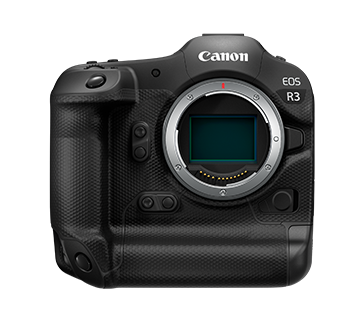

The Canon EOS R3 and Sony A7S III represent two of the most advanced full-frame mirrorless cameras on the market, often attracting professional photographers and videographers looking for top-tier performance. While both cameras are highly capable, they cater to slightly different needs and use cases - the EOS R3 is particularly appealing for high-speed photography, while the A7S III shines in video production and low-light scenarios. Buyers choosing between these models must consider their specific requirements, such as frame rates, autofocus capabilities, and overall image quality, which are crucial in different shooting environments.
Specifications Comparison
Detailed Comparison
Image Quality
The Canon EOS R3 features a 24-megapixel sensor with a generous full-frame size of 36 x 24 mm, allowing for high-resolution captures with excellent detail and clarity. Its higher pixel count helps in producing sharper images and better crop ability when needed. Additionally, the R3 supports a wide ISO range from 100 to 102400, expandable up to 204800, providing flexibility in various lighting situations.
In comparison, the Sony A7S III is equipped with a lower 12-megapixel sensor, which might seem limiting on the surface. However, its pixel design allows for exceptional low-light performance, with an impressive ISO sensitivity range of 80 to 102400, expandable to 409600. This option is particularly attractive for filmmakers and photographers who often work in dim environments, as the A7S III produces cleaner images under challenging lighting conditions.
Ultimately, while both cameras provide excellent image quality, the choice may come down to intended use: the R3's higher resolution may appeal to still photographers, while the A7S III's low-light capabilities make it a better fit for video work. Therefore, we're considering the overall versatility in image quality, giving the edge to the Canon EOS R3 for photography angles and the Sony A7S III for videography.
**Winner: tie**
Autofocus System
The autofocus system in the Canon EOS R3 is particularly robust, offering 1053 AF points, which ensures high accuracy and fast focusing capabilities. Canon's Dual Pixel CMOS AF technology allows continuous tracking of moving subjects, making it an ideal choice for sports and wildlife photography. The combination of speed and accuracy helps artists capture fleeting moments with precision, which is crucial for high-action scenarios.
Conversely, the Sony A7S III has 759 autofocus points, which are also highly effective, utilizing Fast Hybrid AF that combines phase-detection and contrast-detection techniques. While it has fewer points than the R3, it still offers reliable focusing performance, especially in video scenarios where subject tracking is critical.
Given the R3's more extensive AF points and faster operation, it provides an advantage in situations where timing is everything. However, both cameras boast sophisticated AF systems that serve well in their respective strengths. For versatility and tracking performance in fast-paced environments, the Canon EOS R3 nudges ahead due to its advanced technology and additional AF points.
**Winner: a**
Video Capabilities
Both the Canon EOS R3 and Sony A7S III are exceptional for video recording, supporting 4K video at 120fps, making them ideal for high-speed and slow-motion filming. However, the A7S III goes a step further with advanced video features like 16-bit RAW output via HDMI, which provides filmmakers with more post-production flexibility, an essential advantage for professionals using external recorders.
The Canon EOS R3 also supports Canon Log 3, which enhances dynamic range, but its video output options are somewhat more limited compared to those of the Sony for maximum filmic qualities. Sony additionally includes features like S-Log and HLG (Hybrid Log-Gamma), appealing to users who prioritize creative video grading in post-production.
Overall, while both cameras offer high-quality 4K recording, the A7S III's superior video-centric features make it the more favorable option for dedicated videographers. Thus, for video features that enhance creative freedom, the Sony A7S III holds the upper hand.
**Winner: b**
Build & Ergonomics
The Canon EOS R3 is designed with a robust build quality and features a body that is heavier at 1015 grams, contributing to a solid feel that reflects its professional-grade status. With dimensions of 150 x 143 x 87 mm, it also offers an ergonomic grip for extended shooting sessions, especially in challenging conditions thanks to its weather-sealed design that withstands elements best suited for outdoor use.
On the other hand, the Sony A7S III is significantly lighter at 699 grams and smaller in size (129 x 97 x 81 mm), which can be advantageous for portability, making it a good option for on-the-go videographers. Its weather sealing also ensures durability in demanding environments. However, while it's compact, some users may find the grip less comfortable compared to the R3 over long periods.
Both cameras are weather-sealed and built for professionals, but if weight and compact size are considerations, the A7S III provides a significant advantage for portability. However, in terms of ergonomics and a slightly more robust construction, the Canon EOS R3 stands out.
**Winner: a**
Battery & Storage
When it comes to battery life, the Canon EOS R3 excels, providing approximately 760 shots per charge, which is advantageous for longer shooting sessions without worrying about changing batteries frequently. It uses the LP-E19 battery, which is designed to handle the power demands of high-performance photography.
The Sony A7S III delivers slightly lower battery performance at around 600 shots per charge. It utilizes the NP-FZ100 battery, which is widely used in other Sony models. While the A7S III's battery life is satisfactory, it does fall short of the R3 in extensive shooting scenarios.
In terms of storage, both cameras offer comparable capabilities with dual card slots, accommodating CFexpress Type B slots for high-speed recording essential for 4K video. Both systems are designed to optimize performance for both stills and video. However, the R3 being the leader in endurance in battery performance makes it a better choice for long events.
**Winner: a**
Value for Money
The Canon EOS R3 is positioned at a price point of $5999, which reflects its higher-end specifications and robust feature set. For professional photographers focused on speed, shooting performance, and superior autofocus, the investment may be justified. However, for casual users or those primarily engaged in video work, this price tag could be considered steep.
In contrast, the Sony A7S III at $3499 offers incredible value, particularly for video-centric professionals. Its performance in low-light situations combined with substantial video capabilities positions it as one of the most cost-effective options for filmmakers. The lower price, coupled with pro-level features, allows a broader range of users to access top-quality equipment without the high upfront investment.
Considering these factors, while the Canon EOS R3 may have more advanced features suited specifically for high-speed photography, the Sony A7S III offers robust performance at a significantly lower investment, appealing to a broader audience. Thus, for value, the A7S III outshines the R3.
**Winner: b**
Our Verdict
While the Canon EOS R3 and the Sony A7S III offer substantial strengths, the overall package of the R3, particularly its superior autofocus performance, battery life, and ergonomics, gives it the edge, especially for professionals who require speed and accuracy in photography. On the other hand, the A7S III's unparalleled video features and exceptional low-light capabilities allow it to really shine for videographers and content creators, offering fantastic value for money. Ultimately, if your focus is on high-performance photography, particularly in fast-paced environments, the Canon EOS R3 is the better choice. For video-centric professionals or those seeking great low-light performance at a lower cost, the Sony A7S III is the ideal option.
Canon EOS R3
Sony A7S III
Also Compare
Frequently Asked Questions
Which camera is better for low-light photography?
The Sony A7S III is specifically designed for low-light conditions with its 12-megapixel sensor and higher extended ISO range, making it a favorite among videographers and photographers working in challenging lighting.
Is the Canon EOS R3 worth the higher price?
If you are a professional photographer needing high-speed performance and advanced autofocus capabilities, the Canon EOS R3 justifies its higher price with unparalleled features.
Can both cameras shoot 4K video?
Yes, both the Canon EOS R3 and Sony A7S III can record 4K video at up to 120 fps, making them suitable for high-quality video production.
Which camera has better battery life?
The Canon EOS R3 offers better battery life, rated at approximately 760 shots per charge, compared to the A7S III's 600 shots.
What type of photography is each camera best suited for?
The Canon EOS R3 excels in high-speed photography and action shots, while the Sony A7S III is better suited for videography and low-light photography.