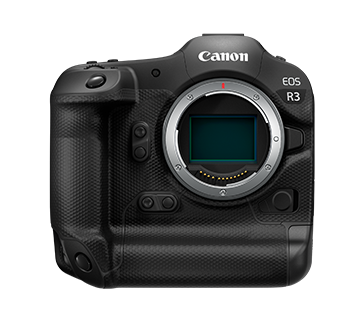
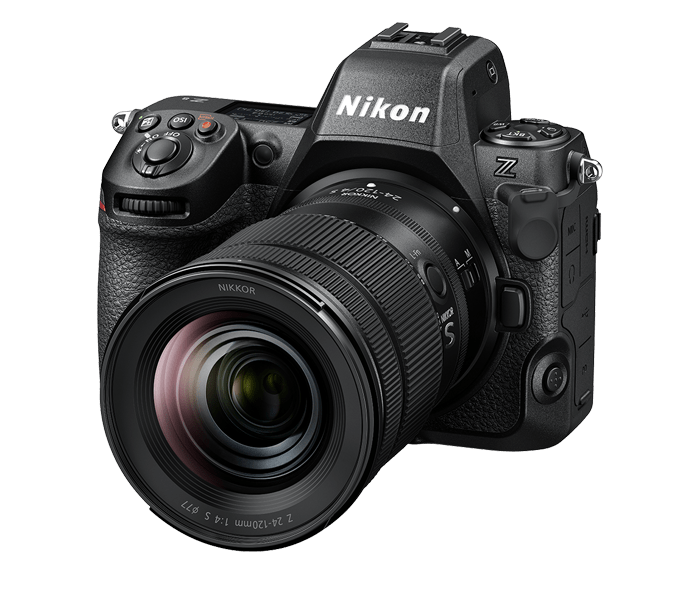
The Canon EOS R3 and Nikon Z8 are two of the most significant mirrorless cameras in the market, attracting professional photographers and serious enthusiasts alike. Both models bring impressive specifications and functionality, making them suitable for diverse applications such as wildlife photography, sports events, and videography. Buyers are often torn between these two models due to their high performance, advanced features, and varying price points. The key differentiators lie in their sensor resolution, autofocus capabilities, and overall ergonomics, which can sway a decision based on specific use cases and preferences.
Specifications Comparison
Detailed Comparison
Image Quality
The Canon EOS R3 features a 24-megapixel full-frame sensor that is adept at producing images with excellent dynamic range and low-light performance, thanks to its wide ISO range of 100-102400 (expandable to 50-204800). This allows the EOS R3 to perform well in challenging lighting conditions, making it a robust choice for action and sports photography.
On the other hand, the Nikon Z8 boasts a higher resolution 46-megapixel sensor, enabling it to capture more detail, which is particularly beneficial for landscape photography, portraits, and large prints. The Z8's lower native ISO range of 64-25600 may limit its low-light performance compared to the R3, but many users find the image quality to be superb with retaining detail even in shadow areas.
Ultimately, those prioritizing high resolution for detailed images may lean towards the Z8, while those needing excellent low-light capability and faster workflows might prefer the R3. The difference in sensor megapixels can significantly impact how images are used and processed, thus influencing a buyer's decision based on their specific photography style.
Autofocus System
The autofocus system in the Canon EOS R3 is exceptionally advanced, featuring 1053 autofocus points. This allows for highly accurate and speedy focusing, making it an excellent choice for fast-paced photography, like sports and wildlife. The EOS R3's Dual Pixel CMOS AF technology also provides smooth and reliable tracking of moving subjects, which is beneficial when capturing dynamic scenes.
Conversely, the Nikon Z8 uses a robust autofocus system with 493 points. While it may have fewer points compared to the R3, many users report that the Z8 also delivers commendable performance with subject detection and tracking capabilities. Nikon's focus features have improved significantly over recent generations, and the Z8 effectively handles fast action as well.
While both systems are top-notch, the R3's larger number of autofocus points may give it a slight edge for critical situations, particularly in fast-paced shooting. However, real-world performance can often depend on user preference and specific scenarios, making this area a critical consideration for potential buyers.
Video Capabilities
Both the Canon EOS R3 and Nikon Z8 cater to videographers with exceptional performance, supporting up to 4K video recording at 120 frames per second. This capability highlights their potential for high-quality slow-motion footage, appealing to filmmakers and vloggers alike.
The R3 provides additional advantages such as Canon Log 3 support and a pro-grade codec that allows for greater flexibility in color grading during post-production. Additionally, the impressive in-body stabilization of 8 stops in the R3 ensures smoother handheld video results, making it a strong contender for dynamic shooting environments.
While the Z8 also supports high resolution 4K video recording, it lacks the same level of stabilization as the R3, with only 6 stops of in-body stabilization. However, the Z8 stands out with its consistent image quality and higher resolution, making it an excellent option for those who prioritize detail in their videos. Despite this, the R3's superior stabilization gives it an edge for action-oriented video work.
Build & Ergonomics
Both the Canon EOS R3 and Nikon Z8 are built with durability and weather sealing in mind, enabling photographers to use them in various environments without worrying about moisture or dust interference. The R3 is slightly larger and heavier, weighing in at 1015 grams, compared to the Z8 at 910 grams, which may influence a user's choice based on comfort and handling during extended shooting sessions.
Ergonomically, the R3's design incorporates a more prominent grip, making it ideal for long scenes or demanding shooting styles. Furthermore, its electronic viewfinder boasts a high resolution of 5.76 million dots, enhancing the viewing experience while composing shots in bright conditions.
In contrast, the Z8's dimensions make it more compact and lightweight, which can be advantageous for travel or on-the-go shooting. The trade-off comes down to personal preference regarding handling, but users prioritizing comfort for prolonged usage may favor the R3, while those appreciating a lighter system may choose the Z8. Ultimately, both cameras have solid build quality and are designed for professional-use conditions.
Battery & Storage
Battery performance can significantly affect workflow, especially during long shoots. The Canon EOS R3 excels with a rated battery life of approximately 760 shots, outperforming the Nikon Z8's 340 shots. This longer battery life can reduce the frequency of changing batteries in demanding environments, allowing photographers to remain focused on their subjects rather than their equipment.
Both cameras utilize different battery systems: the R3 uses Canon's LP-E19, while the Z8 relies on the EN-EL15c. The difference in battery capacity and performance may influence users who often find themselves on extended assignments in the field or in situations where access to charging facilities is limited.
In terms of storage, both cameras feature dual memory card slots, allowing for practical and extensive storage options for photo and video files. Given the battery longevity of the R3, it may appeal to professionals needing reliability throughout long-duration shoots.
Value for Money
When evaluating value for money, the Nikon Z8 is priced at $3999, significantly lower than the Canon EOS R3 at $5999. This $2000 price difference can provide a compelling reason for many buyers to opt for the Z8, particularly those who are entering the mirrorless landscape or who do not require the specialized capabilities that the R3 offers.
The Z8's high megapixel count, robust video features, and solid build quality make it an attractive option for photographers who rely on detail and versatility without breaking the bank. On the other hand, buyers who require advanced features like superior autofocus, longer battery life, and enhanced video stabilization may find the R3's higher price justified, especially in professional settings.
Ultimately, the decision hinges on the buyer's needs: serious hobbyists or those looking for an entry into high-quality photography may find the Z8 to be an unbeatable deal, while professionals needing the utmost performance may be willing to invest more in the Canon EOS R3.
Our Verdict
Overall, the Nikon Z8 stands out as the winner mainly due to its compelling price point and higher resolution, which appeals to a broad range of photographers. The camera's versatility and excellent image quality make it an impressive value choice. However, the Canon EOS R3 does excel in autofocus performance, battery life, and advanced video stabilization, making it the stronger choice for professionals who require those specific features. Buyers should consider their individual needs, whether it be high resolution and budget-friendliness or professional-grade functionality and performance.
Canon EOS R3
Nikon Z8
Also Compare
Frequently Asked Questions
Which camera is better for low-light photography?
The Canon EOS R3 may provide better results in low-light conditions due to its wider ISO range, allowing for cleaner images. However, the higher resolution of the Z8 can also yield excellent detailed images in various lighting situations.
How do the autofocus systems compare for action photography?
The Canon EOS R3 has a more advanced autofocus system with 1053 points, making it better at tracking moving subjects. The Nikon Z8, while having fewer points, still performs well for action photography and may suit many users' needs.
Is the video quality the same on both models?
Both cameras offer 4K video at 120p, but the R3 has superior in-body stabilization and offers features like Canon Log for advanced color grading, making it the better option for serious videographers.
How important is the weight of the camera for travel?
Weight can be a significant factor for travel photographers. The Nikon Z8 is lighter at 910 grams compared to 1015 grams for the R3, which could make a more considerable difference over long periods of use.
What is the most significant differentiator between the two?
The most significant differentiator lies in their intended use; the R3 is designed for professional use, particularly in action photography with superior autofocus and battery life, while the Z8 offers higher resolution and better value for those prioritizing image detail.