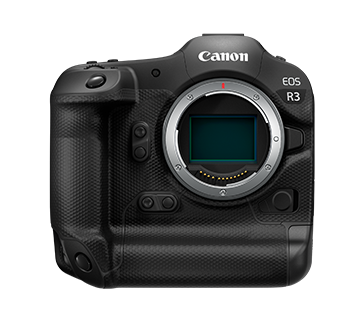
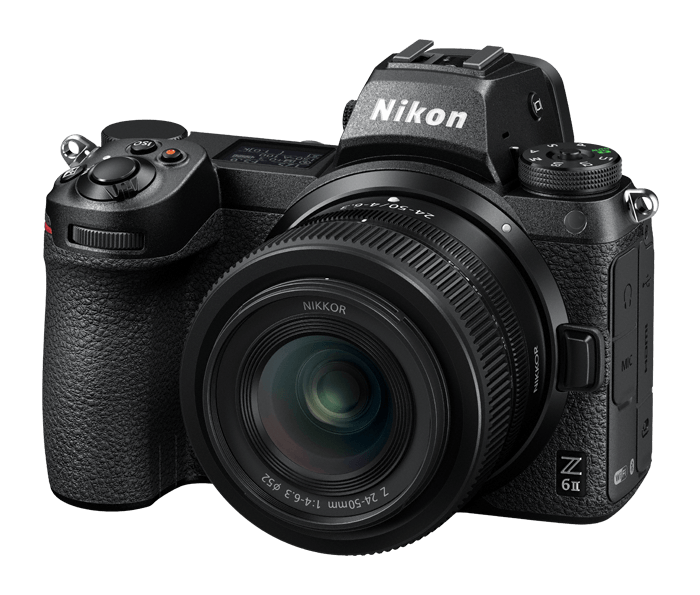
The Canon EOS R3 and Nikon Z6 II are two high-caliber mirrorless cameras that often find themselves compared by both seasoned photographers and enthusiasts alike. The EOS R3 is designed for professional use, while the Z6 II aims to appeal to a broader audience, making these models a consideration point for various users. Photographers focused on speed and advanced features may lean toward the R3, while those looking for a strong all-rounder at a more accessible price might find the Z6 II ideal. Key differentiators include sensor performance, autofocus systems, and overall value based on price and performance.
Specifications Comparison
Detailed Comparison
Image Quality
The Canon EOS R3 features a 24-megapixel full-frame sensor, while the Nikon Z6 II boasts a slightly higher resolution at 25 megapixels. Both cameras provide excellent image quality, with wide ISO ranges allowing for versatile shooting conditions. The R3's ISO range spans from 100 to an impressive 102400, expandable to 204800, while the Z6 II's native range extends from 100 to 51200, also expandable to 204800. This advantage in ISO performance enables the EOS R3 to excel in low-light scenarios, presenting less noise at higher sensitivities. However, the Z6 II's slightly higher megapixel count could benefit those seeking more detail in landscape and studio photography. Overall, while both cameras produce exceptional images, the R3's superior low-light capabilities give it the edge.
Autofocus System
Autofocus systems play a crucial role in modern photography, and here the Canon EOS R3 significantly outperforms the Nikon Z6 II with its 1053 autofocus points compared to the Z6 II's 273 points. The R3's advanced Eye AF and superior tracking capabilities enhance its effectiveness, especially for fast-moving subjects in sports and wildlife photography. The Z6 II, while featuring a solid autofocus system, may struggle in keeping focus on rapidly moving subjects compared to the R3. The R3's fast burst shooting at 30 fps also pairs well with its robust autofocus, making it an ideal choice for action shots. Thus, when it comes to autofocus performance, the R3 provides a clear advantage.
Video Capabilities
The Canon EOS R3 is optimized for videography, supporting 4K recording at a stunning 120 frames per second, which is perfect for high-quality slow-motion footage. This capability gives filmmakers a creative edge in producing visually compelling content. In contrast, the Nikon Z6 II limits 4K video to 30 fps, which meets many standard filming needs but lacks the same dramatic slow-motion capabilities as the R3. Although the Z6 II does provide good 4K quality, it simply does not match the more professional video features of the R3, making it less versatile for high-end video production. Therefore, if video production is a primary focus, the R3 stands out as the superior option.
Build & Ergonomics
Both the Canon EOS R3 and Nikon Z6 II are built with durability in mind, featuring weather-sealed bodies ideal for challenging environments. The R3 is somewhat bulkier, weighing in at 1015 grams compared to the Z6 II's more manageable 705 grams. This could influence comfort during long photography sessions, particularly for those who value a lightweight setup. The R3's dimensions provide a robust grip and a solid feel, appealing to those accustomed to traditional DSLR handling, whereas the Z6 II's compact size enhances portability, making it easier to carry for everyday shooting. Ultimately, the choice comes down to personal preference regarding weight and handling.
Battery & Storage
When evaluating battery life, the Canon EOS R3 shines with a capacity of approximately 760 shots, significantly surpassing the Nikon Z6 II's 410 shots per charge. This extended battery life is crucial for professional photographers who require reliability during long shoots without frequent interruptions for charging. Both models support the same types of memory cards-CFexpress Type B for the R3 and both CFexpress and SD for the Z6 II. However, the added endurance of the R3's battery gives it a distinct advantage for those needing longevity in demanding situations.
Value for Money
The Nikon Z6 II offers a compelling price point at approximately $1995, making it a more accessible option for many photographers while still delivering excellent performance and features. In contrast, the Canon EOS R3 comes in at a substantially higher price of $5999, targeting professionals who require premium features and superior performance. While the EOS R3 delivers advanced specifications and capabilities suited for high-end applications, users must weigh whether those advantages justify the significant price difference. Overall, the Z6 II is a strong contender for those looking for great value without compromising too much on quality.
Our Verdict
In conclusion, the Canon EOS R3 emerges as the overall winner, particularly excelling in areas such as autofocus performance, video capabilities, battery life, and low-light image quality. It is tailored more towards professionals who demand the highest standards in performance. On the other hand, the Nikon Z6 II provides substantial value for enthusiasts and those on a budget, offering excellent image quality and a solid feature set at a significantly lower cost. Ultimately, the choice between the two will depend on the buyer's specific needs, budget constraints, and intended use.
Canon EOS R3
Nikon Z6 II
Also Compare
Frequently Asked Questions
Which camera is better for wildlife photography?
The Canon EOS R3, with its superior autofocus system and faster burst rate, is better suited for capturing the fast movement of wildlife.
Can I use Nikon lenses on the Canon EOS R3?
No, the Canon EOS R3 uses the RF lens mount, while the Nikon Z6 II uses the Z mount. Adapters may allow for lens compatibility, but performance could be limited.
Does the price justify the difference in features?
For professional users requiring high-end features, the price of the Canon EOS R3 is justified. However, for casual or amateur photographers, the Nikon Z6 II offers great quality at a more accessible price point.
Which camera is better for video production?
The Canon EOS R3 is better for video production due to its ability to shoot 4K at up to 120 fps, offering greater flexibility for creative video work.
Is the battery life important for my photography style?
Yes, if you shoot events, wildlife, or anything requiring long sessions, the EOS R3's longer battery life may be highly beneficial, whereas the Z6 II may require more frequent recharges.