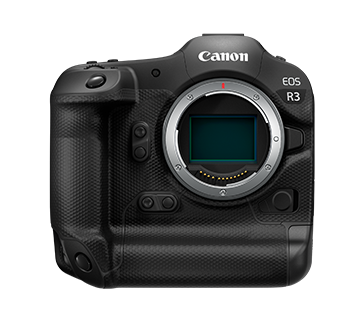
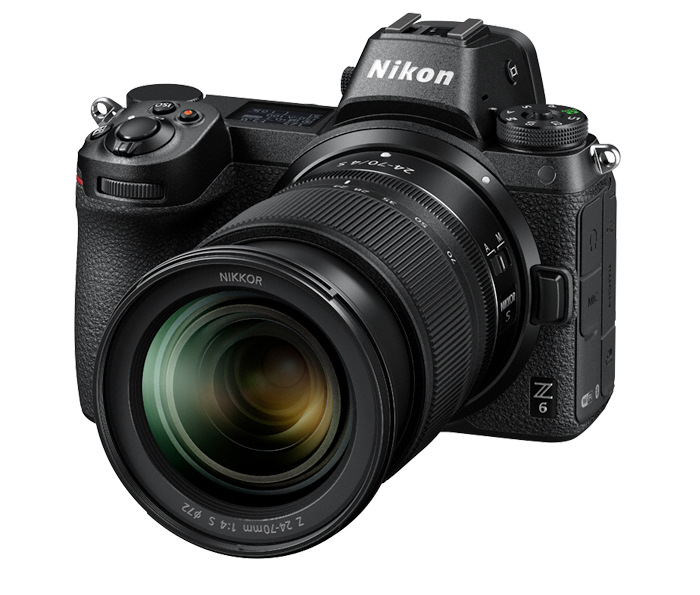
The Canon EOS R3 and the Nikon Z6 are two formidable contenders in the full-frame mirrorless camera market, appealing to both professionals and serious enthusiasts. The EOS R3, released in 2021, is aimed at high-end users who need advanced capabilities, while the Nikon Z6, launched in 2018, provides a more budget-friendly option without sacrificing essential features. Buyers often find themselves choosing between these models based on their specific photography needs, be it sports, wildlife, portraiture, or video production.
Specifications Comparison
Detailed Comparison
Image Quality
Both the Canon EOS R3 and the Nikon Z6 feature full-frame sensors, with the R3 offering a resolution of 24 megapixels and the Z6 slightly edging ahead at 25 megapixels. However, the difference in megapixel count is minimal and not likely to be a deciding factor for most users. What sets them apart is their ISO performance; the R3 provides an impressive native range of 100 to 102400, expandable to 50-204800, allowing for exceptional low-light performance. The Z6, while also capable in low light, has a standard ISO range of 100 to 51200, also expandable, but with less effectiveness in extreme settings. Both cameras produce high-quality images with excellent dynamic range, but the R3 may have a slight edge in challenging conditions due to its superior ISO capabilities.
Autofocus System
The Canon EOS R3 boasts an extraordinary autofocus system with 1053 autofocus points, allowing for quick and precise focusing, especially during fast-paced shooting scenarios. In contrast, Nikon's Z6 offers 273 autofocus points, which is significantly fewer. While the Z6's autofocus is reliable for many applications, it may struggle a bit in dynamic environments, especially in terms of tracking moving subjects. The R3 also includes advanced subject detection technologies, including eye detection for both humans and animals, making it more appealing for wildlife and sports photographers. This gives the R3 a notable advantage in autofocus performance in real-world shooting conditions.
Video Capabilities
Video capabilities are another crucial point of differentiation. The EOS R3 offers impressive 4K video recording at up to 120 frames per second, making it suitable for high-frame-rate applications and professional videography. On the other hand, the Nikon Z6, while capable of recording 4K video, is limited to 30 frames per second, which may not suffice for users looking to produce high-quality, slow-motion footage. Moreover, the R3 includes advanced features like 10-bit 4:2:2 internal recording, which enhances color depth and overall video quality. The Z6 also has its merits, such as in-body stabilization, but when strictly evaluating video capabilities, the R3 firmly leads.
Build & Ergonomics
In terms of build quality and ergonomics, both cameras are weather-sealed and designed for durability, essential for professional use. The EOS R3 is bulkier and heavier at 1015 grams compared to the Z6's 675 grams, making the Z6 potentially more comfortable for extended handheld shooting sessions. However, the R3's design prioritizes a robust feel, which can be advantageous in demanding environments. Both cameras feature 3.2-inch touch screens, but the R3's screen boasts a higher resolution of 4,150,000 dots versus the Z6's 2,100,000 dots, providing better viewing clarity in various lighting situations. However, the size and weight may affect portability for certain users.
Battery & Storage
When it comes to battery performance, the Canon EOS R3 shines with approximately 760 shots per charge, significantly outpacing the Nikon Z6's 310 shots. This advantage not only enhances the convenience for photographers shooting over long periods but also reduces the need for constant battery swapping, which can be crucial during events or shoots without easy access to power sources. Additionally, both models support dual card slots; however, the R3's advanced speed may unlock more intensive storage performance, particularly for 4K recording, addressing concerns for high-throughput users.
Value for Money
In terms of value for money, the Nikon Z6 presents a compelling argument, coming in at $1995, significantly less than the Canon EOS R3's price of $5999. For enthusiasts and semi-professionals, especially those working within a budget, the Z6 offers excellent performance and solid features that may satisfy most practical needs, making it a fantastic option for those not requiring the highest specs of a pro-level camera. Conversely, the EOS R3, while expensive, is tailored for professionals who demand the latest technology, superior autofocus, and high video capabilities. Ultimately, the choice boils down to whether the additional investment in the R3 translates into value for your specific needs.
Our Verdict
Overall, the Canon EOS R3 is the winner in this comparison due to its advanced specifications, particularly in autofocus, image quality, and video capabilities, making it ideal for professionals and serious enthusiasts alike. However, the Nikon Z6, with its relatively low price point and solid performance, remains an excellent choice for those who prioritize value for money and do not need the high-end features offered by the EOS R3. Each camera excels in different scenarios, and buyers should evaluate their specific requirements to choose the camera that best aligns with their shooting style and budget.
Canon EOS R3
Nikon Z6
Also Compare
Frequently Asked Questions
Which camera is better for sports photography?
The Canon EOS R3 is generally better for sports photography due to its superior autofocus system and higher frame rate capability.
Is the Nikon Z6 good for video work?
Yes, the Nikon Z6 offers excellent video features, but the Canon EOS R3 provides more advanced options, particularly for high frame rate recording.
What is the battery life like for both cameras?
The Canon EOS R3 has a much longer battery life, offering around 760 shots per charge, compared to the Nikon Z6, which only provides about 310 shots.
Are both cameras weather-sealed?
Yes, both the Canon EOS R3 and the Nikon Z6 are weather-sealed, making them suitable for outdoor photography.
Which camera has a better autofocus system?
The Canon EOS R3 has a significantly better autofocus system with 1053 points compared to the Z6's 273 points.