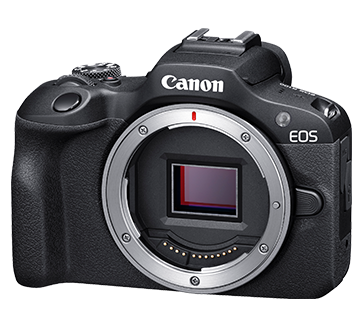
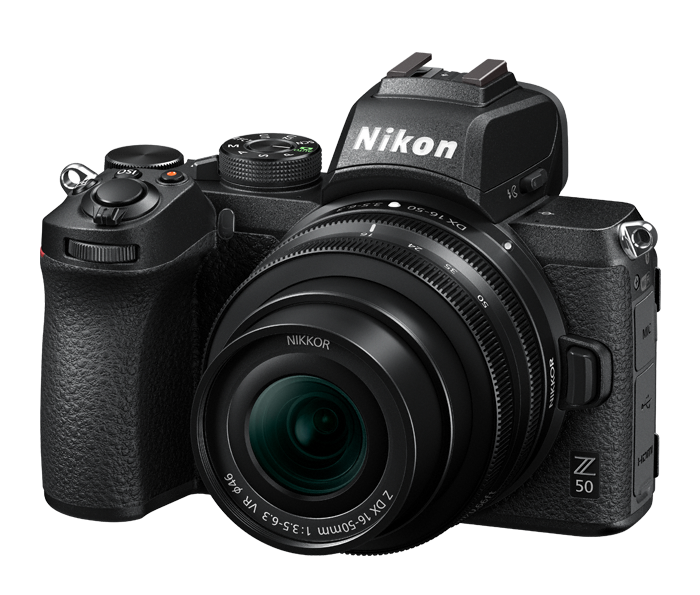
The Canon EOS R100 and Nikon Z50 are both mirrorless cameras designed for enthusiasts and beginners looking to step up their photography game. With their appealing specifications and price points, these two models are often compared by those who want quality without delving into the more expensive professional tiers. The Canon EOS R100, released in 2023, is an affordable entry into Canon's RF mount system, while the Nikon Z50, launched in 2019, boasts a strong feature set, particularly with its rapid shooting speed and extensive ISO range. Buyers commonly weigh their options based on factors such as image quality, autofocus capabilities, and overall versatility.
Specifications Comparison
Detailed Comparison
Image Quality
The Canon EOS R100 provides a 24-megapixel APS-C sensor, which offers slightly higher resolution than the Nikon Z50's 21-megapixel sensor. This difference could be notable for photographers who plan to make large prints or crop their images significantly. Both models feature good performance across a wide range of lighting conditions; however, the Z50 has an extended ISO range that goes up to 51,200 (expandable to 204,800), compared to the R100's maximum of 12,800. This allows Z50 users more flexibility in low-light scenarios, though the R100 might produce slightly sharper images at its highest resolution. Nonetheless, for the majority of general photography needs, both cameras deliver excellent image quality with vibrant colors and decent dynamic range.
Autofocus System
In terms of autofocus, the Nikon Z50 takes the lead with its 209 AF points, compared to the Canon EOS R100's 143 AF points. This broader focus coverage allows the Z50 to be more versatile in tracking fast-moving subjects and maintaining focus during dynamic conditions. Both cameras utilize on-sensor phase-detection technology; however, the Z50's greater number of points typically leads to better performance in action shots and video. While the R100's autofocus is competent for most use-cases, including portraits and landscapes, the Z50's system demonstrates superior speed and accuracy under varied conditions, which is essential for wildlife or sports photography.
Video Capabilities
When considering video specifications, the Nikon Z50 offers 4K recording at up to 30 frames per second, which makes it a strong contender for videographers looking to incorporate high-resolution footage. In contrast, the Canon EOS R100 lacks any specified video resolution, hinting that it may prioritize still photography over video capabilities. The choice here will largely depend on the user's intent; for those who want to create high-quality videos, the Z50 provides compelling features. Additionally, both cameras have electronic viewfinders, but the lack of stabilization in both models means users may need to invest in stabilizing equipment separately for smooth footage.
Build & Ergonomics
The Nikon Z50 features a weather-sealed design, providing extra protection against elements, which is a significant advantage for outdoor photographers. The Canon EOS R100 is lighter at 356g compared to the Z50's 450g, making it more portable for travel. Furthermore, the design of both cameras is user-friendly, but the larger screen on the Z50 at 3.2 inches offers a better viewing experience for composing shots and reviewing images. Ergonomics can be subjective, and both cameras provide comfortable handling, but the additional durability of the Z50 gives it an edge in rugged situations.
Battery & Storage
The Nikon Z50 has a battery life of approximately 320 shots, which is reasonable for mirrorless standards, but the Canon EOS R100's battery life specifics haven't been as prominently featured. In terms of storage, both cameras use SD cards, but it's important to consider the UHS-II support in the Z50 for faster read/write speeds, providing better performance for burst shooting and 4K video. Given the growing demand for substantial storage solutions in modern photography, the Z50's storage capabilities give it a distinct advantage, especially for users who regularly shoot high-resolution video and burst photography.
Value for Money
At a price point of $480, the Canon EOS R100 represents an attractive entry-level option for beginners looking to explore photography. With its higher megapixel count, it appeals to those who prioritize still image quality. However, at $859, the Nikon Z50 is costlier but comes packed with features including advanced autofocus, better video capabilities, and enhanced durability. For photographers who plan to utilize both stills and video effectively, the Z50's offerings justify the higher cost. Nonetheless, the R100 provides a fantastic value for casual shooters focused primarily on still photography, balancing affordability with solid performance.
Our Verdict
Overall, while each camera has its strengths, the Nikon Z50 emerges as the winner in this comparison due to its superior autofocus system, video capabilities, and build quality. It caters well to users looking for a robust and versatile camera that can handle a variety of photography and videography situations. On the other hand, the Canon EOS R100 stands out as an excellent option for beginner photographers focused mostly on stills, who prioritize ease of use and value for entry-level photography. Depending on the intended use, potential buyers can make a choice that aligns with their specific photography needs.
Canon EOS R100
Nikon Z50
Also Compare
Frequently Asked Questions
Which camera is better for beginners?
The Canon EOS R100, with its simpler interface and lower price point, is generally more beginner-friendly.
Does the Nikon Z50 support 4K video?
Yes, the Nikon Z50 supports 4K video recording at 30p, making it a great choice for videographers.
What should I consider for low-light photography?
The Nikon Z50 offers a wider ISO range, making it better suited for low-light conditions compared to the Canon EOS R100.
Is the build quality important for outdoor photography?
Absolutely, the weather-sealed design of the Nikon Z50 offers much-needed protection in turbulent environments, an advantage over the R100.
How important is autofocus for wildlife photography?
Autofocus is crucial in wildlife photography, and the Nikon Z50's superior autofocus system makes it a better choice for capturing fast-moving subjects.