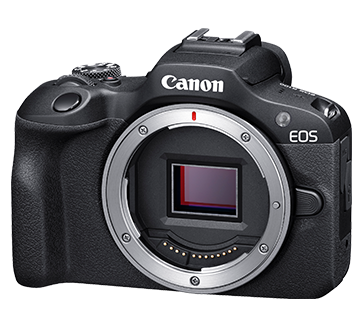
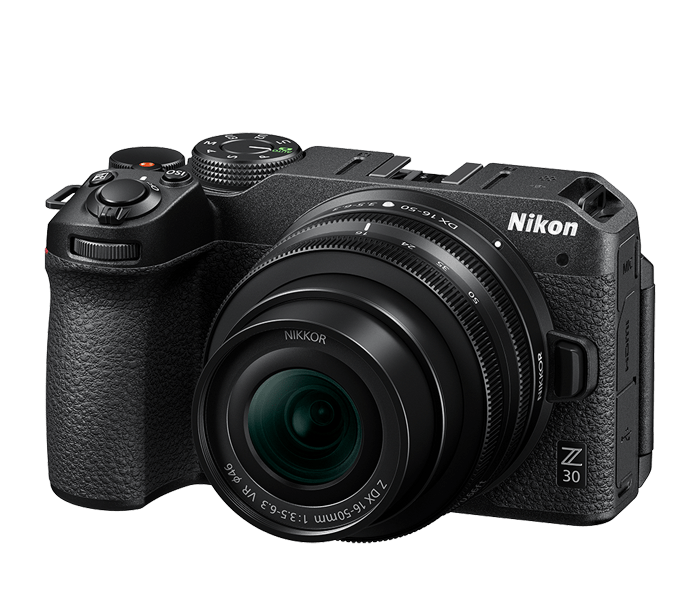
The Canon EOS R100 and Nikon Z30 are entry-level mirrorless cameras that cater to photography enthusiasts and content creators looking for quality performance in a compact size. Both brands have established a strong reputation in the camera industry, making the choice between them crucial for potential buyers. This comparison focuses on several key differentiators: sensor quality, autofocus capabilities, video performance, build quality, battery life, and overall value for money, ensuring buyers can make an informed decision based on their needs and preferences.
Specifications Comparison
Detailed Comparison
Image Quality
The Canon EOS R100 features a 24-megapixel APS-C sensor, which generally offers higher resolution images compared to the Nikon Z30's 21-megapixel APS-C sensor. This difference can be significant for photographers who wish to print their images in larger formats or crop images substantially without losing detail. Additionally, the Canon's sensor has the advantage of producing sharper photos at lower ISO levels due to its higher pixel count.
On the other hand, the Nikon Z30 presents an impressive ISO range that allows for shooting at a maximum sensitivity of 51200, expandable to 204800. This capability could lead to better noise performance in extremely low-light conditions, giving the Nikon an edge for nighttime photography.
While both cameras feature a similar screen resolution of 1,040,000 dots, the R100 has a slight edge in terms of megapixel advantage. Still, it's essential to consider that image quality is also impacted by lens choices, lighting conditions, and post-processing techniques.
Overall, both cameras deliver excellent image quality, but the higher resolution of the R100 gives it a slight advantage in versatility for various shooting scenarios.
Autofocus System
Autofocus technology is crucial for capturing sharp images and videos, especially in dynamic settings. The Canon EOS R100 has 143 autofocus points, which helps it achieve focus quickly and accurately in most situations. Factoring in face and eye detection capabilities, the R100 is well-equipped for portrait photography.
In contrast, the Nikon Z30 boasts 209 autofocus points, allowing for a broader and more precise focus coverage across the frame. This number could potentially lead to better tracking of fast-moving subjects, making it more suitable for action or wildlife photography.
Both cameras lack in-body stabilization, which may affect autofocus performance when shooting handheld in less-than-ideal conditions. However, the Z30's more advanced autofocus system suggests it would be better suited for capturing fleeting moments, enhancing its appeal to vlogger and event shooters.
Given the Nikon's superior autofocus point count, it takes the lead in fast-paced shooting scenarios.
Video Capabilities
When it comes to video, the Nikon Z30 shines by providing 4K video recording at 30p, making it a strong choice for vloggers and content creators. The capability to produce high-quality video in various settings can greatly influence the selection for users focused on video production.
On the other hand, while the Canon EOS R100 does not specifically highlight its video capabilities in the provided specifications, it does cater to general video needs with its photographic capabilities. The absence of high frame rate 4K recording in the R100 may put it at a disadvantage when compared head-to-head with the Z30.
Both cameras are capable of delivering high-quality still images, but in a world leaning increasingly toward video content, the Z30 ultimately appeals more to those who prioritize video functionality.
With its dedicated 4K video capabilities, the Nikon Z30 clearly emerges as the better choice for videographers.
Build & Ergonomics
Ergonomics and build quality are essential aspects when selecting a camera, especially for extended use. The Canon EOS R100 is slightly lighter at 356g, making it easier to carry around for long shoots. Its dimensions are also compact, which may appeal to those favoring portability.
However, the Nikon Z30 is weather-sealed, providing an additional level of protection against the elements, which is a crucial feature for outdoor photographers or videographers working in variable conditions. It's heavier at 405g and slightly larger in size, which could influence comfort during prolonged use.
Additionally, the Z30's larger grip may offer better handling, especially with larger lenses. Though the R100 wins on weight and compactness, the added durability of the Z30 creates a significant advantage in rugged conditions.
In terms of durability and handling, the Nikon Z30 takes the lead due to its weather-sealing and ergonomics.
Battery & Storage
Battery life is a critical aspect for photographers and videographers who cannot afford to miss a shot due to power constraints. The Nikon Z30 has a stated battery life of approximately 330 shots, which is decent but not extraordinary. Its overall performance in this regard will depend on usage techniques and settings.
While Canon often does not publicize battery life extensively for their models, the R100's lower weight suggests it may have a slightly lesser battery capacity. Users may want to consider that the EOS R100 would encourage frequent battery swaps or additional power banks when shooting extensively.
Both cameras use different storage methods; Canon supports the RF mount, while Nikon uses the Z mount system. This choice will affect lens availability and overall system expansion in the long run, aligning with user preference for either brand.
Here, the Nikon Z30 slightly edges out in battery life and overall storage capability, making it the preferred choice for extensive shooting.
Value for Money
The Canon EOS R100 retails at approximately $480, making it a compelling option for those on a budget who still desire quality performance. It provides exceptional value for photography enthusiasts and those just starting out, considering its higher resolution sensor and lighter body.
On the contrary, the Nikon Z30 is priced higher at $710, which may make it less appealing for entry-level users. However, it justifies its price with features like superior autofocus, higher video capabilities, and weather-sealing, which could benefit more serious photographers and videographers.
Value can be subjective based on user needs; inexperienced users may find the R100's offerings sufficient, while those looking for more advanced features might resonate with the price of the Z30. When considering overall price-to-feature ratios, the EOS R100 provides an attractive entry point, while the Z30 is better suited for dedicated users with higher demands.
Ultimately, when it comes to value perception, the Canon EOS R100 stands out for beginners, while the Nikon Z30 serves those seeking advanced specifications.
Our Verdict
In summary, the Nikon Z30 emerges as the overall winner when factoring in critical aspects like autofocus performance, video capabilities, and build quality, making it the better choice for aspiring vloggers and more serious photographers. However, the Canon EOS R100 provides exceptional value for money, particularly appealing to beginners or casual users who prioritize image quality and overall ease of use. Users need to consider their specific needs-if low-light performance and advanced features are paramount, the Z30 is the superior option. On the other hand, for those starting their photography journey, the R100 remains an excellent choice.