
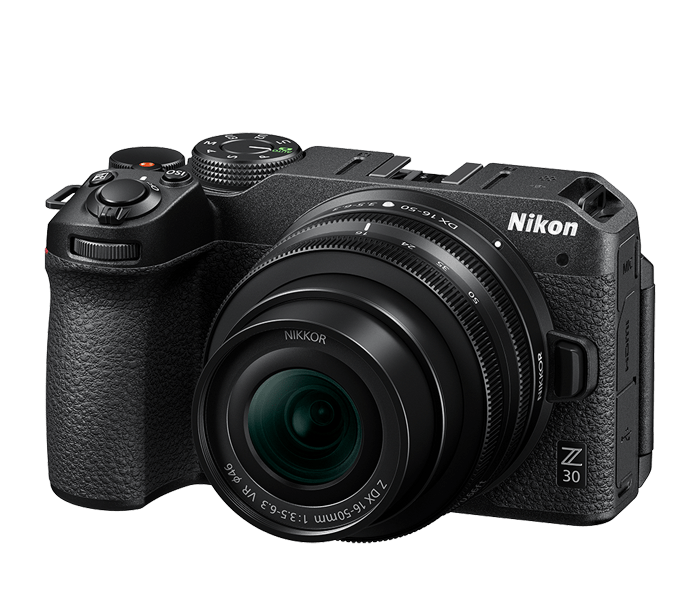
The Fujifilm X100VI and Nikon Z30 are two popular options for photographers who value portability without compromising on image quality. The X100VI is a compact camera favored by street photographers and enthusiasts looking for an all-in-one solution, while the Z30 targets vloggers and content creators seeking flexibility with video capabilities. Both cameras are equipped with APS-C sensors and have similar sizes, but they differ significantly in features and target audience. Understanding these differences is crucial for potential buyers aiming to make an informed decision based on their specific needs.
Specifications Comparison
Detailed Comparison
Image Quality
The Fujifilm X100VI boasts a significant advantage in resolution with its 40-megapixel sensor compared to the 21 megapixels of the Nikon Z30. This higher pixel count allows for more detailed images and greater cropping flexibility without substantial loss of quality. Additionally, the X100VI offers a wider ISO range from 64 to 51,200, providing greater low-light performance. In contrast, the Z30, despite having an impressive ISO range up to 204,800, may not yield the same level of detail and dynamic range at lower ISO settings due to its lower resolution. The X100VI's film simulations also allow photographers to achieve varying aesthetics directly in-camera, a feature that is particularly appealing to photographers looking for versatility in their images. The Z30, while still producing good-quality images, may not meet the same artistic desires.
Autofocus System
Autofocus systems play a critical role in capturing sharp images, and here the Fujifilm X100VI again leads with its 425 autofocus points compared to the Z30's 209 points. The broader coverage of the X100VI enhances its ability to lock focus quickly and accurately across the frame, making it especially beneficial for dynamic subjects. Moreover, the X100VI's hybrid viewfinder combines both electronic and optical options, providing real-time feedback on focus performance. The Z30, designed primarily with video in mind, has a simpler autofocus system that may suffice for most vlogging scenarios but does not match the complexity and performance of the X100VI. For pure photography applications, the Fujifilm's superior autofocus makes it a better choice.
Video Capabilities
The Nikon Z30 shines particularly in its video capabilities, offering 4K video at 30p, making it an ideal choice for content creators. The lack of stabilization in the Z30 is mitigated by its design geared towards stable video shooting, particularly when combined with compatible lenses that may offer optical stabilization. The X100VI, while capable of producing high-quality video, offers no 4K recording options and is primarily focused on still photography. As such, if video quality and production are paramount for the user, the Z30 undoubtedly takes the lead in this aspect. However, depending on the usability of video features needed, those focused primarily on still photography will find the X100VI more suitable.
Build & Ergonomics
The build quality of both cameras caters to different user preferences. The Fujifilm X100VI has a retro-inspired design that appeals to photographers who appreciate aesthetics along with functionality. Its dimensions make it compact while still being comfortable in hand, and the addition of an optical viewfinder appeals to traditionalists. In contrast, the Nikon Z30 lacks a viewfinder but is more lightweight at 405g, making it easier to carry for extended periods, which is advantageous for vloggers or travelers. Additionally, the Z30 features weather sealing, providing more resilience against outdoor conditions. Users focusing on portability and a rugged build may lean toward the Z30, while those valuing ergonomics and a classic feel may prefer the X100VI.
Battery & Storage
In terms of battery life, the Fujifilm X100VI offers a robust 450 shots per charge, nearly 120 shots more than the Nikon Z30's 330 shots. This performance makes the X100VI a more reliable choice for long shooting sessions, particularly for street photography where battery changes may be cumbersome. However, it's worth noting that the Z30 utilizes modern SD card storage options and offers USB-C charging, enhancing flexibility during shoots. While the Z30's endurance may be sufficient for most users, the X100VI's superior battery life stands out as a clear advantage for photographers seeking prolonged use without the worry of running out of power.
Value for Money
Price-wise, the Fujifilm X100VI comes in at $1,599, while the Nikon Z30 is considerably more affordable at $710. This pricing difference reflects the distinct audiences each camera aims to serve. The X100VI's higher price tag corresponds to its advanced features, notably in image quality and autofocus, making it suitable for serious photographers. Conversely, the Z30 provides a strong entry-point for those beginning their content creation journey without significant financial investment, offering essential features for video and photography. Ultimately, value for money depends on user priorities; enthusiasts may find the X100VI worth the investment, while beginners or budget-conscious users might opt for the Z30.
Our Verdict
Overall, the Fujifilm X100VI emerges as the winner of this comparison, excelling in image quality, autofocus performance, and battery life, making it a great choice for serious photographers. It offers exceptional detail and creativity options appealing to those focused on still photography. However, for video creators, the Nikon Z30 provides significant value with its 4K capabilities and a lower price point, making it an excellent choice for entry-level vloggers or those prioritizing video over stills. Each camera excels in its respective field, but photography enthusiasts will likely lean towards the X100VI.