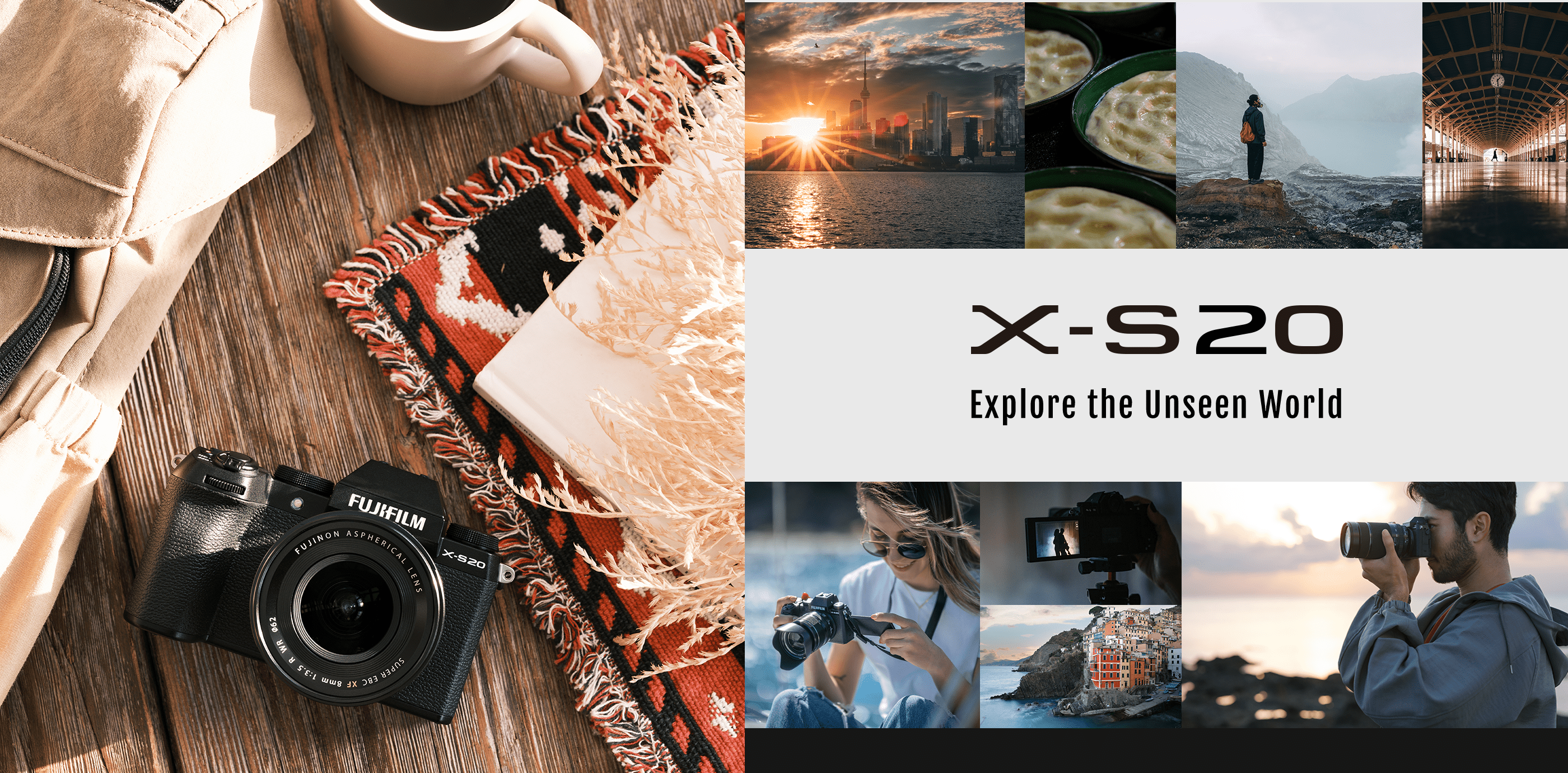

The Fujifilm X-S20 and the Fujifilm X100VI are two compelling options for photographers, each targeting slightly different segments of the market. The X-S20 is a versatile mirrorless camera aimed at enthusiasts and semi-professionals who appreciate a flexible, interchangeable lens system. In contrast, the X100VI is a fixed-lens camera appealing to street and portrait photographers who value portability and a fast, high-quality lens. The key differentiators lie in their specifications and intended use cases, making them popular options among both hobbyists and professionals alike.
Specifications Comparison
Detailed Comparison
Image Quality
In terms of image quality, the Fujifilm X100VI has an edge with its 40-megapixel sensor compared to the 26 megapixels of the X-S20. This high resolution provides exceptional detail, especially useful for cropping or large prints. Both models feature the same APS-C sensor size, which means they perform similarly in terms of depth of field and low light capabilities. However, while the X100VI offers greater pixel count, the X-S20's lower megapixels can sometimes translate to slightly better low-light performance with less noise at high ISO settings. Additionally, both cameras expand their ISO range, with X-S20 extending from 80-51200 and X100VI from 64-51200, resulting in competitive high ISO performance.
Autofocus System
Both the Fujifilm X-S20 and X100VI are equipped with a robust autofocus system featuring 425 autofocus points, ensuring accuracy and speed. However, the X-S20 outperforms with its ability to shoot at a maximum of 20 frames per second (fps) compared to the X100VI's 11 fps. This advantage makes the X-S20 a better candidate for fast-moving subjects, such as action sports or wildlife photography. Despite this, the X100VI's autofocus system is still very capable, particularly in a fixed lens context where slower speeds may not be as crucial. Overall, for those who prioritize swift autofocus in fast-paced environments, the X-S20 holds the advantage.
Video Capabilities
When it comes to video recording capabilities, the Fujifilm X-S20 takes the lead with its ability to shoot 4K video at 60fps, appealing to content creators looking for high-quality footage. In contrast, the X100VI lacks the same video capabilities, making the X-S20 a more versatile option for videographers. Additionally, the X-S20 features in-body stabilization of up to 7 stops, effectively reducing shake when filming, while the X100VI includes 6 stops of stabilization, offering decent performance but falling short of the X-S20's capabilities. Overall, for users focused on both photography and videography, the X-S20 proves to be the superior choice.
Build & Ergonomics
In terms of build quality, both cameras feature robust, well-crafted designs typical of Fujifilm's premium offerings. However, their form factors differ significantly; the X100VI is slightly more compact and lightweight, ideal for street photography and casual use. The X-S20, while a little bulkier, offers additional ergonomic features such as a better grip for prolonged use. Each camera employs an electronic viewfinder, but the X100VI also includes an optical 'tunnel' viewfinder, allowing users to choose their preferred viewing method. This additional feature can be beneficial for those who wish to have a more traditional shooting experience while enjoying modern electronic capabilities.
Battery & Storage
When comparing battery life, the Fujifilm X-S20 clearly excels, achieving approximately 750 shots on a single charge, while the X100VI provides around 450 shots. This extended battery life can be crucial, particularly for photographers on the go who may not have the opportunity to recharge frequently. Both cameras utilize SD cards, but given the increased megapixel count of the X100VI, users may find that the faster write speeds of newer SD cards are essential for optimal performance. Ultimately, if extended shooting sessions without frequent battery swaps are a concern, the X-S20 is the more suitable choice.
Value for Money
In terms of pricing, the Fujifilm X-S20 is priced around $1299, while the X100VI commands a higher price at approximately $1599. For the features offered, especially in regard to video capabilities and battery life, the X-S20 presents a stronger value proposition. Moreover, the ability to change lenses adds versatility that the X100VI lacks. However, those seeking the unique blend of a fixed lens with higher resolution for specific photography needs might justify the X100VI's higher price despite its shortcomings in other areas. Therefore, for versatility and price, the X-S20 is the winner, but for unique photographic experiences, the X100VI has its merit.
Our Verdict
Overall, the Fujifilm X-S20 emerges as the winner when taking into account versatility, video capabilities, and battery life, making it an excellent choice for a wide range of photographic needs, including action photography and content creation. Conversely, the Fujifilm X100VI offers exceptional image quality and the allure of a fixed-lens system, appealing primarily to street and portrait photographers who may prioritize image quality over flexibility. For buyers weighing their options, the choice ultimately depends on whether they value high resolution and a fixed lens versus adaptability and robust all-around features.
Fujifilm X-S20
Fujifilm X100VI
Also Compare
Frequently Asked Questions
Which camera is better for street photography?
The Fujifilm X100VI is often preferred for street photography due to its compact size and fixed lens, which is tailored for this type of shooting.
Is the video quality better on the X-S20?
Yes, the X-S20 can shoot 4K at 60 fps, providing superior video capabilities compared to the X100VI.
What camera has better battery life?
The X-S20 has significantly better battery life, rated at approximately 750 shots compared to the X100VI's 450 shots.
Which camera has a better autofocus system?
The X-S20 has a faster autofocus system with a shooting speed of 20 fps, outperforming the X100VI's 11 fps.
How do the prices compare?
The X-S20 is priced around $1299, while the X100VI costs approximately $1599, making the X-S20 a better value for many buyers.