
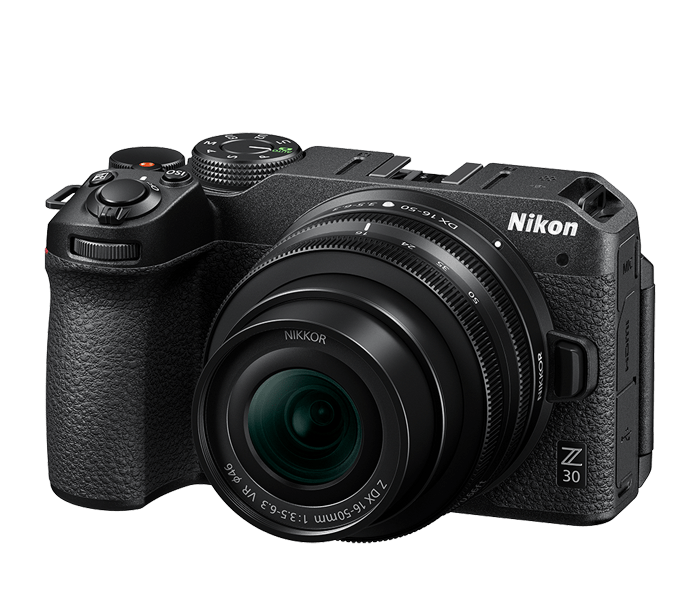
The Fujifilm X-H2S and the Nikon Z30 are two popular APS-C mirrorless cameras that cater to different markets but often find themselves compared by potential buyers. The X-H2S is aimed at enthusiast and professional photographers, while the Z30 targets vlogging and casual content creators looking for a compact and budget-friendly option. This comparison will focus on performance attributes, user experience, and value to help buyers understand which camera suits their needs better.
Specifications Comparison
Detailed Comparison
Image Quality
When it comes to image quality, the Fujifilm X-H2S, with its 26-megapixel sensor, generally outshines the Nikon Z30's 21-megapixel offering. The higher resolution of the X-H2S provides greater detail, which can be particularly beneficial for large prints or extensive cropping. Additionally, the ISO performance of the X-H2S is slightly more versatile, allowing for a native range from 160-12800, expandable to 51200, while the Z30 ranges from 100-51200, expandable to an impressive 204,800. This makes the X-H2S a better choice for low-light photography. However, the Z30's extreme ISO expansion could appeal to those who prioritize versatility over absolute image resolution. Overall, for pure image quality, the Fujifilm X-H2S takes the lead.
Autofocus System
The autofocus capabilities of the Fujifilm X-H2S are superior, featuring 425 autofocus points compared to the Nikon Z30's 209 points. This enables faster and more accurate focusing, especially in dynamic shooting conditions. Additionally, the X-H2S supports advanced tracking technologies, which are crucial for capturing fast-moving subjects like wildlife or sports. In contrast, the Z30's autofocus system is adequate for general use but may struggle in challenging lighting scenarios. Overall, the more robust autofocus system of the X-H2S makes it a better choice for serious photographers who require precise focus.
Video Capabilities
Both cameras offer impressive video specifications, but they cater to different needs. The Fujifilm X-H2S excels with 4K video at 60 frames per second, making it suitable for high-frame rate video production and providing greater flexibility in post-processing. The added stabilization, rated at 7 stops, further enhances its usability, especially when shooting handheld. Conversely, the Nikon Z30 offers 4K video at only 30 frames per second, which may be limiting for those looking to create high-action videos. Therefore, while both cameras can capture high-quality video, the X-H2S clearly stands out in terms of capability and features.
Build & Ergonomics
Both cameras have solid build quality and are weather-sealed, making them reliable choices in various shooting conditions. However, the Fujifilm X-H2S feels more substantial in hand, with a weight of 660g compared to the Z30's 405g. This additional heft can be beneficial for stability, especially when using larger lenses. The dimensions of the X-H2S also allow for a more extensive grip, making it comfortable for long shooting sessions. On the other hand, the Z30's smaller size and weight make it easier to transport, catering well to vloggers and travelers. While both cameras are well-designed, the X-H2S is more tailored for extensive use, while the Z30 benefits those prioritizing portability.
Battery & Storage
The Fujifilm X-H2S offers a much better battery life, rated for approximately 580 shots compared to the Z30's 330 shots. This makes the X-H2S more suitable for longer shoots without the need for frequent battery changes. Furthermore, the dual card slots of the Fujifilm camera facilitate better storage options, particularly for photographers and videographers needing high-capacity storage for high-resolution files. In contrast, the Z30 has a single card slot, which could be a disadvantage for those who often swap cards in the field. Overall, for battery efficiency and storage capabilities, the X-H2S is the clear winner.
Value for Money
The Nikon Z30 is significantly more affordable at $710, making it an attractive option for beginners and content creators on a budget. Its features are adequate for casual shooting and vlogging, providing excellent value for entry-level customers. In contrast, the Fujifilm X-H2S, priced at $2499, targets more serious photographers and videographers who will appreciate its advanced capabilities and professional-grade performance. While the X-H2S offers more in terms of features, the substantial price difference makes the Z30 a good option for those who may not need the high-end features of the X-H2S. Therefore, considering the price-to-performance ratio, the Z30 wins in terms of value for casual users.
Our Verdict
Overall, the Fujifilm X-H2S emerges as the better camera, excelling in image quality, autofocus performance, video capabilities, and battery life. It is well-suited for serious photographers and filmmakers who require high performance in various conditions. Conversely, the Nikon Z30 is an excellent choice for those who are new to photography or seek a compact solution for vlogging without stretching their budget. The choice ultimately comes down to the intended use; if you prioritize professional features, the X-H2S would serve you better, while the Z30 fits perfectly for casual, on-the-go content creation.
Fujifilm X-H2S
Nikon Z30
Also Compare
Frequently Asked Questions
Is the Fujifilm X-H2S worth the higher price over the Nikon Z30?
If you are a professional or an enthusiastic photographer needing advanced features and superior image quality, the Fujifilm X-H2S's benefits justify the price. On the other hand, if your needs are more casual, the Z30 provides sufficient quality at a much lower price.
Which camera is better for video?
The Fujifilm X-H2S is better suited for video, offering 4K 60p, advanced stabilization, and a more robust autofocus system, while the Z30 is limited to 4K 30p.
How does the lens ecosystem compare?
Both Fujifilm and Nikon have extensive lens options. However, Fujifilm lenses are generally praised for their quality, particularly in the premium segment. For Nikon Z mount, you may find fewer options, but they are expanding rapidly.
Can the Nikon Z30 handle low-light conditions?
While the Z30 performs reasonably well in low-light conditions at ISO 51200, it does not have the same level of noise control and image quality as the X-H2S, which operates even better at lower native ISO settings.
Is the X-H2S more durable?
Yes, the X-H2S is built with a more robust body and offers extensive weather sealing, making it better suited for harsher climates and professional use.