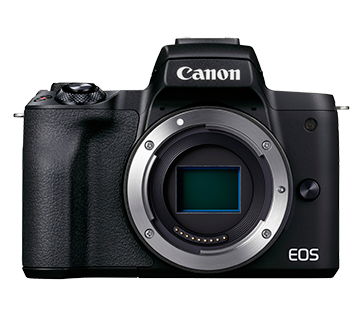
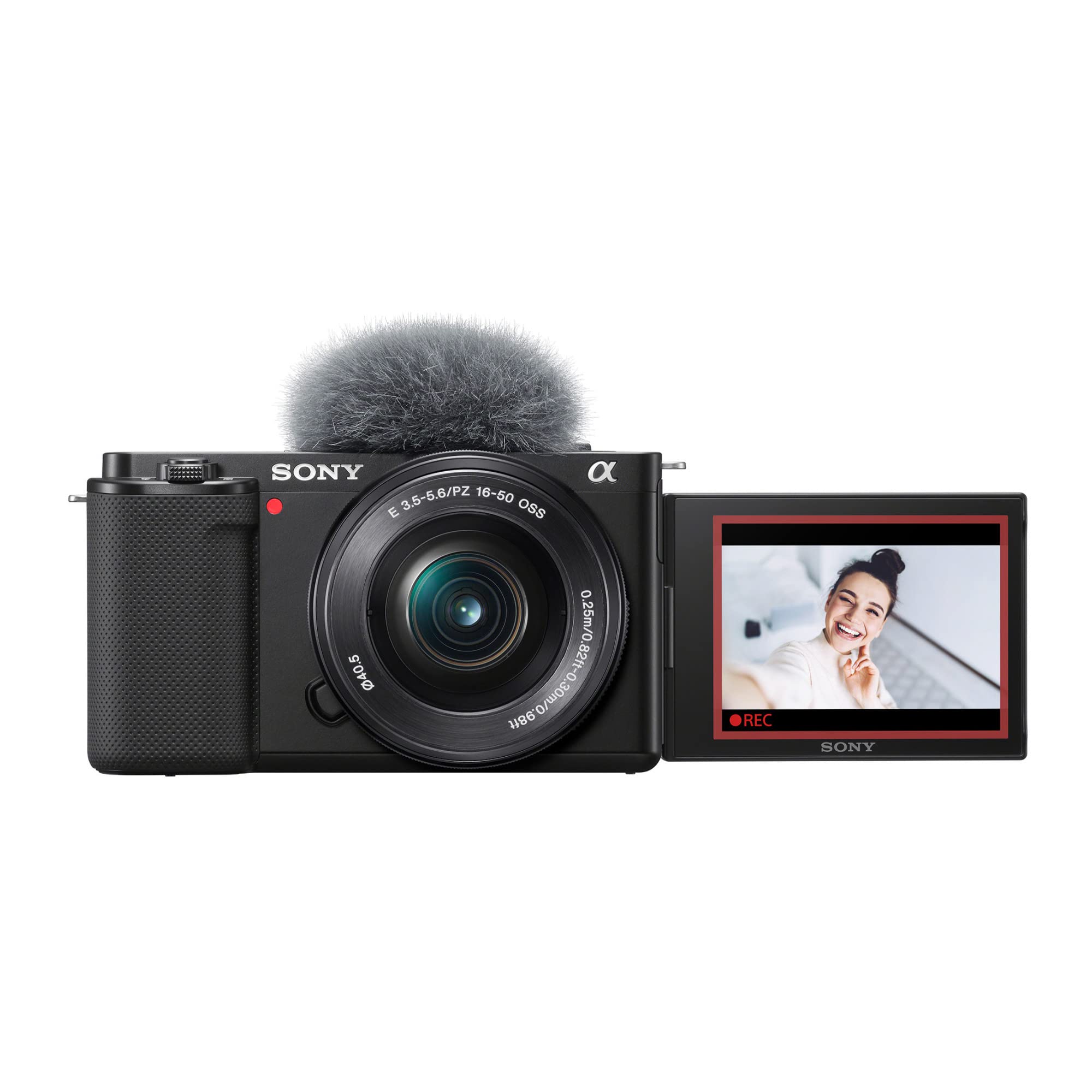
The Canon EOS M50 Mark II and the Sony ZV-E10 are two of the most popular entry-level mirrorless cameras, appealing especially to content creators, YouTubers, beginners, and vloggers. Both offer compact bodies, large APS-C sensors, and vari-angle touchscreens, making them excellent choices for users stepping up from smartphones or older compact cameras. The Canon M50 Mark II attracts those who prefer a traditional shooting experience, while the Sony ZV-E10 targets content creators who prioritize video features and high-speed autofocus in a lightweight package.
These cameras are frequently compared due to their close price points, similar sensor sizes, and marketing focus on vlogging and hybrid shooting. Buyers choosing between them often weigh factors such as image quality, autofocus sophistication, lens ecosystem, and video-centric features. Key differentiators include Sony's advanced autofocus with 425 AF points, superior battery life, broader ISO range, and flexible video options, while Canon Tempts with its built-in OLED viewfinder and straightforward ergonomics.
Specifications Comparison
Detailed Comparison
Image Quality
Both cameras house APS-C size sensors of very similar dimensions (Canon: 22.3 x 14.9 mm, Sony: 23.5 x 15.6 mm), and their resolutions are nearly identical: 24.1 MP for the Canon and 24 MP for the Sony. In real-world shooting, both deliver comparable detail, dynamic range, and low-light performance, suitable for everything from portraits to landscapes.
However, Sony gives you a slightly broader ISO range (up to 32,000 native, expandable to 51,200), helping in especially low-light scenarios where noise becomes an issue. Canon's ISO tops out at 25,600 (expandable), which is ample for most users but falls a bit short compared to Sony's flexibility. Nonetheless, image quality between the two is effectively a tie for most practical purposes, with differences visible only at extreme settings and when pixel-peeping. Both support RAW and JPG shooting with good color science.
If you edit photos heavily or frequently shoot in dim conditions, the ZV-E10's nominally higher ISO performance may be slightly advantageous. Color rendition is subjective-Canon is often praised for pleasant, natural skin tones, while Sony provides excellent detail and clarity. For most users, the difference is minimal.
Autofocus System
Autofocus is a differentiator between these cameras. The Sony ZV-E10 boasts a sophisticated system with 425 on-sensor phase-detect points, combined with Sony's Real-time Eye and Face Tracking for both stills and video. This system is particularly effective for fast-action, tracking moving subjects, or keeping presenters sharply in focus during video work.
The Canon EOS M50 Mark II employs Dual Pixel CMOS AF with improved face and eye tracking over its predecessor, offering a generally fast and responsive experience. However, the number of focus points is lower, and coverage is not as wide or dense as Sony's. Canon's eye-detection in video is good, but Sony's implementation is more advanced and reliable, particularly for continuous subject tracking, making it more suitable for vloggers, event shooters, and those who regularly record themselves.
In day-to-day use, both autofocus systems are easy for beginners but Sony's is industry-leading at this tier for tracking and consistency. For stills, both are reliable, but Sony holds a high ground in tricky or fast-paced situations.
Video Capabilities
Both cameras target video creators, but Sony leads in several areas. The ZV-E10 is designed as a vlogging and streaming camera, with specific features like advanced autofocus during video, a fully articulated LCD, microphone input, and no recording time limit. It supports 4K video at up to 30 fps and 1080p up to 120 fps for slow-motion, offering more flexibility to creators wanting higher frame rates.
The Canon M50 Mark II supports 4K recording but with notable limitations: a significant 1.5x crop and loss of Dual Pixel AF during 4K (switching to slower contrast detect), which can make vlogs and hand-held shooting less predictable. In 1080p, Canon offers Dual Pixel AF, but Sony's video specs are simply more modern. Another point is live streaming-both cameras offer clean HDMI and webcam support, but Sony's setup is typically easier and more robust.
Both have external mic ports and fully articulated screens, but Sony's combination of higher frame rates, uncropped 4K, stronger AF, and dedicated video tools cater more directly to content creators.
Build & Ergonomics
The Canon EOS M50 Mark II feels substantially more like a traditional camera-it has an OLED electronic viewfinder, deeper grip, and time-tested Canon menus often regarded as intuitive for beginners. Its body is compact yet solid, and the fully articulated touchscreen is bright and responsive. For those who regularly shoot stills, the presence of a viewfinder is a major functional advantage in bright daylight or for composing detailed shots.
The Sony ZV-E10 is distinctly compact and lightweight (343g vs. Canon's 387g), designed for portability and ease of use during handheld video. However, it lacks a built-in viewfinder-potentially a deal-breaker for photographers who prefer this compositional tool. Its screen is sharp and fully articulated, but the physical controls are somewhat limited and streamlined, having been tailored mainly for video use.
For ergonomics and handling, especially for those taking a lot of photos and working in varied lighting, the Canon edges out with its more conventional shape, EVF, and tactile controls. The Sony prioritizes compactness and video-first usability.
Battery & Storage
Sony wins on battery life, delivering about 440 shots per charge versus Canon's 305 (CIPA rated), making it more practical for travel, long video sessions, or extended shoots without backups. Both use standard SD cards; however, the ZV-E10 can operate while charging over USB-C, making it suitable for streaming or very long shoots.
Canon's battery life is adequate but considered below average for mirrorless cameras. For vlogging or event shooting, the difference is notable in practice-Sony needs fewer battery swaps and supports longer continuous operation. Both allow on-the-go charging with power banks, but Sony's implementation is more robust and modern due to its USB-C power options.
Value for Money
With both cameras hovering around the $700 mark (body only), value is tightly matched. The Sony ZV-E10 offers newer technology-including its autofocus, battery life, and video functionality-making it an excellent all-rounder at its price. Its compatibility with a large range of E-mount lenses and video accessories further boosts value for those investing in a long-term system.
The Canon EOS M50 Mark II is competitively priced for stills shooters and those who value a traditional feel and built-in EVF. However, the limitations in 4K video and Canon's smaller EF-M lens ecosystem impact its future-proofing. Still, it remains one of the best starter mirrorless cameras within its budget, especially for those prioritizing still photography.
Lens Ecosystem
Sony's E-mount lens lineup is one of the largest and fastest growing among mirrorless systems. Sony offers native APS-C and full-frame lenses, plus strong third-party support from Sigma, Tamron, and others. This gives users significant system growth options, from wide-angle primes to telephoto zooms.
Canon's EF-M lens lineup is notably limited, with fewer native lenses and less third-party support. While adapters allow use of Canon's DSLR (EF/EF-S) lenses, this adds bulk and may reduce compactness-the M50 Mark II's key advantage. For users who plan to build a lens collection, Canon's options are somewhat restrictive compared to Sony. Those deeply invested in Canon glass may not mind, but newcomers get more flexibility with Sony.
Our Verdict
The Sony ZV-E10 emerges as the overall winner in this comparison, thanks to its stronger autofocus, advanced video capabilities without major cropping or autofocus limitations, longer battery life, and access to a broader native lens ecosystem. It is a purpose-built hybrid camera designed for content creators and video-centric users, providing an excellent balance of portability, performance, and future expansion. The Canon EOS M50 Mark II retains notable strengths: it offers comfortable ergonomics, an easy-to-use interface, and a built-in EVF-making it a superb choice for beginners and photographers who prioritize still images. However, it feels less future-proof for those needing advanced video recording or seeking lens upgrades. For pure still photography and those who want a classic shooting experience in a modern mirrorless, the Canon continues to appeal. But for versatile hybrid creators, vloggers, and users wanting more longevity from their camera system, the Sony ZV-E10 is the best buy.
Canon EOS M50 Mark II
Sony ZV-E10
Also Compare
Frequently Asked Questions
Which camera is better for vlogging and YouTube content?
The Sony ZV-E10 is purpose-designed for vlogging and YouTube, offering uncropped 4K video, fast and reliable autofocus with advanced tracking, excellent battery life, and a lightweight body. Its lack of a recording limit in video and easy USB-C charging also make it more practical for creators. The Canon EOS M50 Mark II works fairly well for vlogging but is hampered by a heavy crop in 4K and slower autofocus in that mode.
Does either camera have in-body image stabilization?
No, neither the Canon EOS M50 Mark II nor the Sony ZV-E10 offers in-body image stabilization (IBIS). Both rely on digital stabilization or lens-based optical stabilization (if available). For handheld video work, consider lenses with built-in OIS or using a gimbal for smoother footage.
Is the Canon M50 Mark II's viewfinder a big advantage?
For photographers who shoot a lot of stills, yes-the Canon's built-in EVF is a significant advantage, especially in bright sunlight or for careful composition. The Sony ZV-E10 does not have a viewfinder, which can be limiting if you often shoot photos outdoors or want a traditional camera-feel.
Which has better lens options-Canon M50 Mark II or Sony ZV-E10?
Sony ZV-E10 wins clearly here. The E-mount lens system is vast, with many native APS-C and full-frame options from Sony and third-party makers. Canon's EF-M system is much smaller and less supported, making Sony the superior choice for users wanting more lens choices and long-term versatility.
Can I use these cameras for live streaming?
Yes, both cameras can be used for live streaming. The Canon EOS M50 Mark II supports clean HDMI output and webcam functionality through Canon's EOS Webcam Utility. The Sony ZV-E10 offers UVC/UAC support, making it easy to use as a plug-and-play webcam over USB-C, plus clean HDMI. Sony's implementation is typically more straightforward and stable for long sessions.
Are both beginners-friendly?
Absolutely. Both cameras are designed with beginners and enthusiasts in mind, featuring intuitive menus, easy-to-use touchscreens, and guided interfaces. Canon's menu system and more conventional controls may appeal slightly more to first-timers or those with DSLR experience, but Sony's streamlined controls ease the learning curve, especially for video creators.