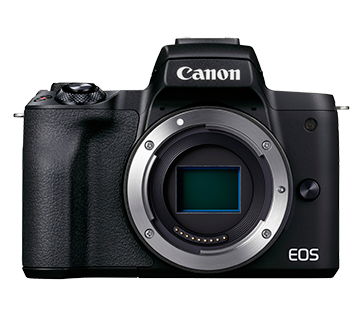
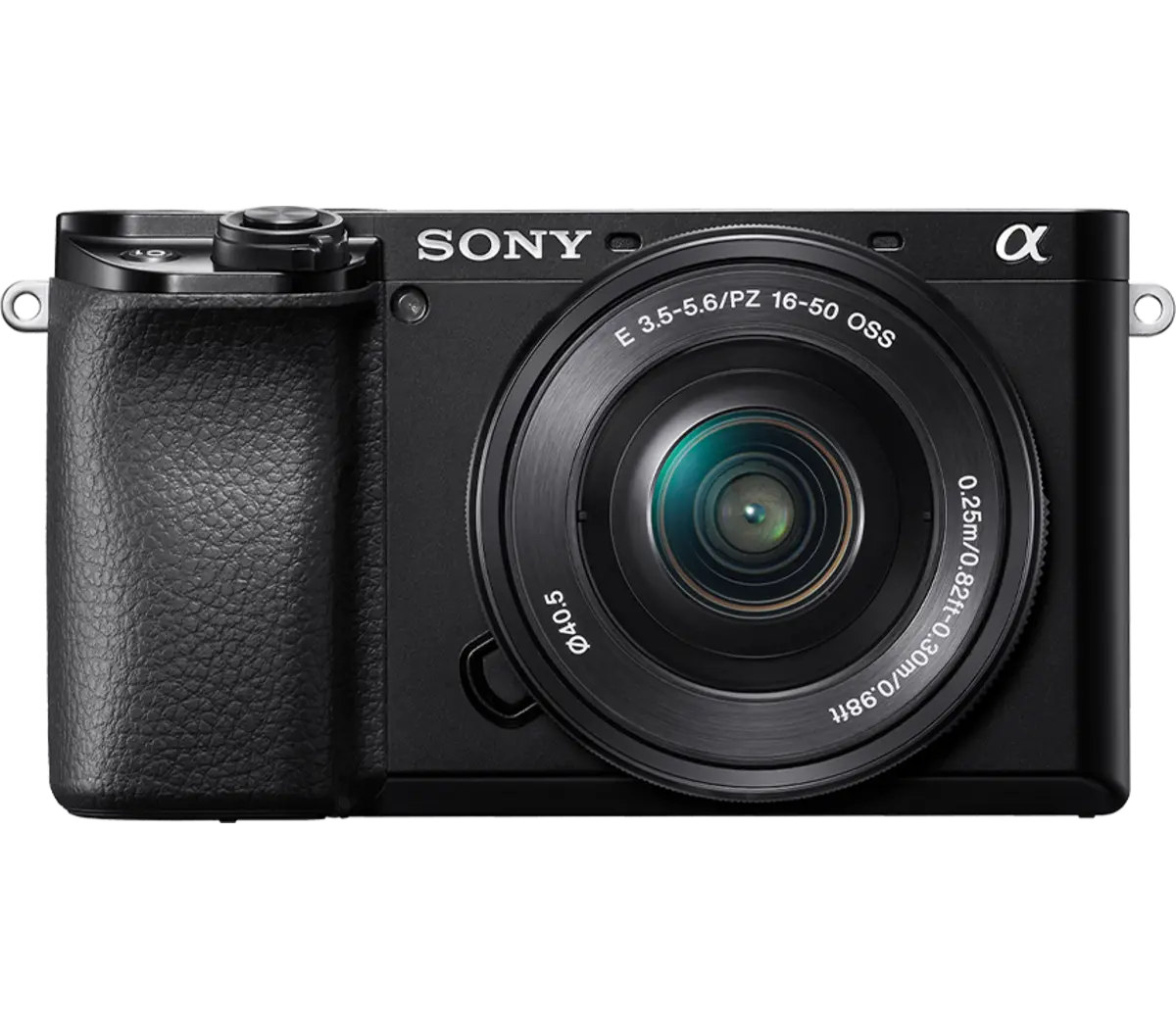
The Canon EOS M50 Mark II and Sony A6100 are two of the most popular entry-to-mid-level mirrorless cameras, frequently favored by vloggers, content creators, and amateur photographers. Their similar price points, compact bodies, and user-friendly features make them direct competitors for those upgrading from smartphones or compact cameras. Shoppers often weigh these two due to Canon's renowned color science and ergonomics versus Sony's autofocus technology and broader lens ecosystem.
The key differentiators between the Canon EOS M50 Mark II and Sony A6100 are their autofocus capabilities, video specs, lens mounts, and battery performances. Creators who prioritize fast, reliable autofocus or advanced video might lean toward Sony, while those valuing a fully articulating screen and friendly interface might gravitate to Canon. Understanding each camera's strengths is essential for finding the best fit for a user's shooting style and needs.
Specifications Comparison
Detailed Comparison
Image Quality
Both the Canon EOS M50 Mark II and Sony A6100 sport APS-C sensors with similar resolutions-24.1MP for Canon and 24MP for Sony. The difference in sensor size is marginal (Canon: 22.3 x 14.9 mm; Sony: 23.5 x 15.6 mm), resulting in nearly identical real-world performance in terms of detail, low-light handling, and dynamic range for most uses.
However, Sony's sensor does offer a slightly wider ISO range, with expandability up to 51,200 versus Canon's expandable 25,600, making the A6100 marginally stronger in extreme low-light scenarios. In practical terms, both deliver high-quality stills suitable for prints, web use, and moderate cropping, with Canon sometimes preferred for its out-of-camera color science.
Differences in image processing also play a part; Canon's JPEGs are praised for pleasing skin tones, while Sony files offer a more neutral foundation preferred by those who like to post-process.
Ultimately, the performance is so close that for most users, image quality will not be a decisive difference.
Autofocus System
Autofocus distinguishes these cameras most notably. The Sony A6100 offers a class-leading autofocus system with 425 phase-detect points covering much of the frame, and renowned Real-Time Eye AF for both people and animals. This ensures fast, accurate, and continuous subject tracking-ideal for action, events, and unpredictable movement.
Canon's Dual Pixel CMOS AF is very good, providing quick and reliable autofocus in most scenarios, especially when shooting live view or video. The M50 Mark II improves eye detection, but its coverage and tracking capabilities are not as comprehensive or as sticky as Sony's-especially for fast-moving subjects.
For those who prioritize advanced autofocus, such as sports, wildlife, or children's photography, the Sony system offers a clear advantage in terms of both breadth and sophistication.
Video Capabilities
Video is central to both cameras, but there are notable differences. The Sony A6100 records 4K at up to 30p without pixel binning for sharp, detailed footage. Meanwhile, the Canon EOS M50 Mark II can also shoot 4K, but does so with a significant crop factor, which limits its wide-angle capabilities and slightly reduces image quality.
Both models feature microphone inputs and screen articulation, but Canon's fully-articulating touchscreen is more versatile for self-shooting and vlogging. Sony's screen, while tiltable to face forward, isn't as flexible in various shooting angles.
Autofocus during video again favors Sony thanks to its real-time tracking, though Canon remains highly usable for most vlogging or talking-head scenarios. Serious videographers will appreciate Sony's superior autofocus and cleaner 4K; casual users will benefit from Canon's user-friendly touchscreen and interface.
Build & Ergonomics
Both cameras are compact and lightweight, suiting on-the-go shooting. The Canon EOS M50 Mark II offers a more rounded grip and intuitive control layout, generally regarded as more comfortable-especially for those with larger hands or beginners seeking simplicity. Its fully articulated screen is a major benefit for vloggers and creative compositions.
The Sony A6100 is slightly more compact and lighter (396g), with a minimalist design. While the grip is less pronounced, it offers a solid build and better electronic viewfinder quality, which is favorable for stills shooters. The menu system, while powerful, is less intuitive than Canon's for new users.
For portability, Sony holds a small edge, but for comfort and versatility, Canon's ergonomics and touch interface shine.
Overall, it comes down to personal preference, but Canon's handling and screen flexibility will likely suit a broader range of users.
Battery & Storage
Sony pulls ahead in battery performance, delivering up to 420 shots per charge compared to Canon's 305 (CIPA rating). This makes a notable difference for travel, events, or extensive shooting sessions where power outlets are scarce.
Both cameras use single SD UHS-I card slots, with no dedicated slots for backup or high-speed writing. Neither body provides robust weather sealing, so demanding conditions may require careful handling.
Users who regularly exhaust multiple batteries in a day will appreciate the A6100's longevity. Canon's runtime is average for its class and may require carrying one or more spares during a shoot.
Value for Money
The Sony A6100 comes in at about $750 USD, positioning itself competitively given its advanced autofocus and strong video specs. The Canon EOS M50 Mark II is often found at a similar or slightly lower price, especially in kit configurations with a lens.
Considering feature-to-price ratio, Sony offers better future-proofing for users intending to progress into advanced photography or videography, particularly with its autofocus and lens ecosystem. However, Canon's approachable interface, color science, and lower entry price with lenses make it an excellent value for beginners and vloggers focused on ease of use.
Both offer excellent bang for the buck, but Sony edges out with its more advanced feature set at a modest extra cost.
Lens Ecosystem
Lens selection strongly influences a camera system's versatility. The Sony A6100 uses the Sony E mount, which has a broad and mature selection of both first-party and third-party APS-C and full-frame lenses. This flexibility gives users access to a wider variety of primes, zooms, and specialty lenses at all price points.
Canon's EF-M mount, while supported by several good lenses, is more limited, especially in fast primes and professional-grade glass. Third-party lens support is not as extensive as Sony's, and there are questions about Canon's commitment to expanding EF-M offerings, as the company shifts focus to RF mount.
Users who plan to invest heavily in lenses and grow with their system will find Sony's ecosystem more supportive for long-term needs.
Our Verdict
The Sony A6100 is the overall winner in this comparison, owing to its superior autofocus system, higher battery performance, more flexible lens ecosystem, and stronger video options. Its future-proof features make it an ideal choice for those seeking to explore advanced photography or videography. The additional investment pays dividends in reliability and versatility, particularly for users who expect their camera to keep pace as their skills and demands grow. However, the Canon EOS M50 Mark II shines for beginners and vloggers prioritizing ease of use, out-of-camera color, and touchscreen convenience. Its fully articulating screen and intuitive controls are major draws for those new to interchangeable-lens cameras. In scenarios centered around casual photography, family events, or straightforward vlogging, the M50 Mark II is an excellent-and often more affordable-choice.
Canon EOS M50 Mark II
Sony A6100
Also Compare
Frequently Asked Questions
Which camera is better for beginners?
The Canon EOS M50 Mark II is generally considered more beginner-friendly due to its simple interface, fully articulating touchscreen, and helpful guides. The controls and menu system are intuitive, particularly for users transitioning from smartphones.
Which is better for vlogging or YouTube?
Both cameras are popular for vlogging, but the M50 Mark II's fully articulating touchscreen offers more flexibility for self-shooting and framing. However, the Sony A6100 provides cleaner 4K video and superior autofocus, making it better for dynamic scenes or when reliable tracking is important.
Does either camera have in-body image stabilization?
No, neither the Canon EOS M50 Mark II nor the Sony A6100 feature in-body image stabilization. For stabilized video or low-light handheld shooting, users should look for stabilized lenses or use a gimbal.
Which camera has better autofocus for tracking moving subjects?
The Sony A6100 leads in autofocus performance, with 425 phase-detect points and real-time tracking for both eyes and faces. It is highly effective for sports, kids, pets, and any situation with unpredictable movement.
Is the lens selection better for one system over the other?
Yes. The Sony E-mount system has a larger and more diverse selection of lenses compared to Canon's EF-M. This includes a wider choice of third-party lenses, as well as high-quality glass for future growth.
How does battery life compare between the two?
The Sony A6100 delivers longer battery life, with up to 420 shots per charge versus Canon's 305. This can make a difference for travel, events, or all-day shooting, where you may need fewer spare batteries with Sony.