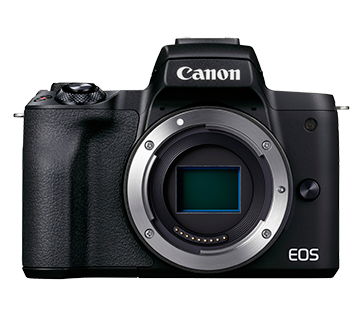
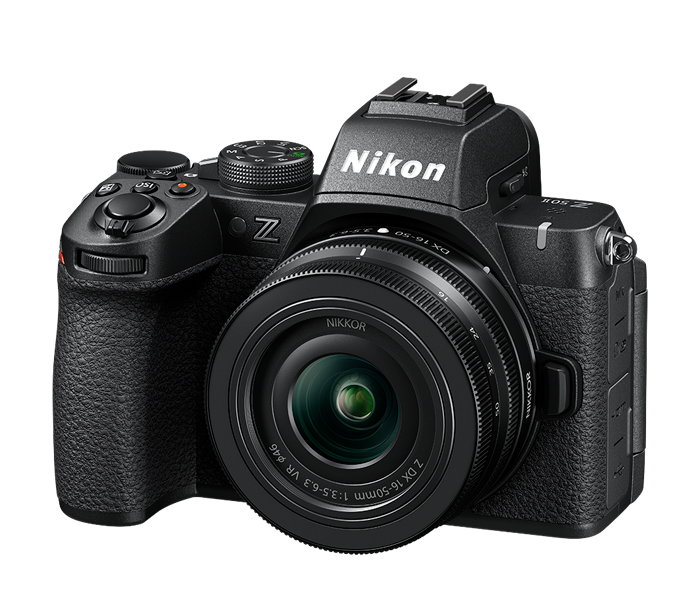
The Canon EOS M50 Mark II and the Nikon Z50II are both compact, crop-sensor mirrorless cameras targeting enthusiasts, vloggers, and travelers seeking advanced features without the bulk or cost of full-frame models. Buyers weighing these two are often looking for a lightweight, versatile camera that handles both photography and video well, fits easily into everyday carry, and offers room to grow with interchangeable lenses.
These two cameras are commonly compared due to their similar pricing, target market, and feature sets, but they stand apart with distinctly different approaches to sensor size, autofocus, ergonomics, and system maturity. The key differentiators include Nikon's newer generation autofocus and higher maximum ISO, while Canon delivers a fully articulated touchscreen and a proven, user-friendly interface. Each camera brings unique strengths, suiting different priorities-performance, portability, or lens ecosystem.
Specifications Comparison
Detailed Comparison
Image Quality
Both cameras are built around APS-C sensors, but there are nuanced differences. The Canon EOS M50 Mark II features a 24.1MP sensor (22.3 x 14.9 mm), delivering slightly higher resolution than the Nikon Z50II's 21MP APS-C (23.5 x 15.7 mm) sensor. In practice, this means marginally more detail from the Canon in well-lit conditions, while each produces vibrant color and good dynamic range typical of modern APS-C bodies.
Where the Nikon Z50II stands out is in its ISO range: native up to ISO 51,200 and expandable to 204,800, compared to the Canon's ISO 25,600 (expandable higher). This extra latitude gives the Nikon better low-light capability and cleaner results at high ISOs, a real-world benefit for event, indoor, or night shooters. However, neither camera features in-body image stabilization (IBIS), so results will rely on lens stabilization and your shooting technique.
Overall, both cameras produce pleasing images with comparable noise levels at moderate ISOs, but the Nikon's edge at higher ISO settings and marginally larger sensor size make it more versatile for low-light photography.
Autofocus System
The Nikon Z50II is equipped with a 231-point autofocus (AF) system, leveraging advanced on-sensor phase-detection technology. This results in fast, accurate subject tracking and reliable focus across nearly the entire frame-particularly valuable for sports, wildlife, and active subjects. In comparison, Canon's EOS M50 Mark II employs a contrast/phase-detect hybrid AF system, which has seen improvements in face and eye detection but still lags behind modern competitors in speed and tracking sophistication.
Real-world use shows the Nikon Z50II acquires focus faster, is more adept at tracking moving subjects, and offers greater flexibility with wide coverage. The Canon is good for stills, general-purpose photography, and casual video, but advanced users or those shooting in challenging conditions will find Nikon's AF more dependable.
That being said, the M50 Mark II's Eye Detect AF works well for vlogging and portraits, but for sheer focus performance, Nikon takes the lead.
Video Capabilities
The Canon EOS M50 Mark II is well-known among vloggers for its fully articulated touchscreen and straightforward interface, making self-shooting and composing in tricky angles very easy. The camera offers 4K video, but with a significant crop and slower autofocus, which can be limiting. Full HD performance is excellent, with reliable autofocus and minimal rolling shutter, making it suitable for most YouTube creators.
The Nikon Z50II shoots 4K video with the full width of its sensor and minimal crop, and it sports fast, accurate autofocus during video capture. Its larger, higher-resolution screen (3.2" vs. Canon's slightly smaller offering) also enhances composition and review. However, neither camera offers in-body stabilization, so users must rely on stabilized lenses or external support.
In short, Canon offers blogging-friendly ergonomics and screen articulation, but for image quality, uncropped 4K, and AF performance in video, Nikon provides a stronger overall video experience.
Build & Ergonomics
The Nikon Z50II steps forward with a robust, weather-sealed body-a significant advantage for photographers who work outdoors or travel frequently. The larger handgrip and thoughtful control layout cater to larger hands and provide a secure grip during extended shoots. At 550g, it's a bit heavier than the M50 Mark II, but the added solidity is often welcomed by serious enthusiasts.
Canon's EOS M50 Mark II, while not weather sealed, is notably compact and lightweight, making it highly portable and easy to use for casual shooting and travel. Its fully articulated touchscreen is a big plus for vloggers and selfie shooters. Ergonomics are comfortable for small hands and quick operation, but some advanced users may miss extra dials and a deeper grip.
For those prioritizing portability and ultra-light weight, Canon stands out. However, for those needing durability, all-weather reassurance, and a more substantial handhold, the Nikon Z50II is clearly the better built and more ergonomic camera.
Battery & Storage
Battery life can often be a deciding factor when shooting on the go. The Nikon Z50II delivers an average of 250 shots per charge, which is about typical for mirrorless cameras in this class. There is no published battery life for the M50 Mark II in this comparison, but user reports indicate roughly 250-320 shots per charge-similar performance between both models.
Both cameras rely on SD cards for storage, and neither offers dual card slots. There are no significant advantages for either model in this department, as both deliver acceptable, but not class-leading, endurance and storage flexibility. Users relying on extended sessions should plan to carry spare batteries for either system.
Value for Money
Value rests not only on price, but also the features, system support, and long-term utility you receive. The Canon EOS M50 Mark II is a more affordable entry point, often bundled with kit lenses and extensive user-friendly features. For casual shooters, vloggers, or those entering mirrorless for the first time, it delivers a strong feature set for the price-particularly with its articulating screen and approachable controls.
The Nikon Z50II, as a more recent release, commands a higher price but delivers advanced autofocus, weather sealing, better low-light capabilities, and robust construction. Its lens ecosystem, though newer, is growing quickly and offers modern optics. For those wanting more camera to grow into, especially for fast-action photography or challenging environments, the Nikon is a more future-proof investment.
Overall, for budget-conscious shooters, Canon represents solid value, while Nikon asks for a little more investment in exchange for advanced performance and durability.
Lens Ecosystem
The Canon EF-M mount has a more mature set of native lenses and is well-established with affordable, compact options, though it has seen diminishing development with Canon's focus shifting to their RF mount. Despite a modest native selection, adapters allow access to Canon's vast EF and EF-S legacy glass, albeit with size and AF performance trade-offs.
Nikon's Z-mount is rapidly expanding, though at present the APS-C-dedicated lens lineup is more limited. That said, all Z-mount lenses, including the high-quality full-frame options, are compatible with the Z50II, future-proofing the system and allowing access to new, technologically advanced glass as the line grows. Adapters also exist for F-mount lenses.
Users seeking compact, affordable native lenses may prefer Canon, while those valuing future compatibility and access to continually improving high-end glass may prefer Nikon. The ecosystem landscape is evolving for both brands.
Our Verdict
Overall, the Nikon Z50II edges out the Canon EOS M50 Mark II in most technical aspects, especially in autofocus performance, weather sealing, low-light ability, and uncropped 4K video. If your shooting style demands advanced autofocus, plans for challenging environments, or you anticipate growth into higher-end glass, Nikon's system offers better long-term value and performance. However, the Canon offers unbeatable portability, arguably better ease-of-use for true beginners, and a more plentiful selection of compact native lenses. For vlogging, travel, or users on a tighter budget, it provides excellent value and user appeal. Both are strong contenders, but the Nikon Z50II's modern capabilities and build give it the overall edge for most enthusiasts and advanced shooters.
Canon EOS M50 Mark II
Nikon Z50II
Also Compare
Frequently Asked Questions
Which camera is better for low-light photography?
The Nikon Z50II is superior for low-light photography thanks to its higher native and expandable ISO range (up to 204,800) and advanced autofocus, which both result in cleaner images and more reliable focusing in dim environments.
Which camera is better for vlogging?
The Canon EOS M50 Mark II is a popular choice among vloggers due to its fully articulated touchscreen, compact build, and easy operation. However, the significant 4K crop and slower AF in 4K may be limiting; the Nikon Z50II, while offering uncropped 4K and better autofocus, lacks the fully articulating screen that many solo creators rely on.
How do the lens selections compare between EF-M and Z-mount?
Canon EF-M has a more established selection of compact, affordable native lenses, but development has slowed as Canon pivots to the RF mount. Nikon's Z mount is newer with a smaller APS-C lens lineup, but all Z-mount lenses, including future high-end options, are compatible, making it a more future-proof system.
Do either of these cameras have in-body image stabilization?
Neither the Canon EOS M50 Mark II nor the Nikon Z50II features in-body image stabilization. You'll need to use stabilized lenses or other support methods for steady shots, especially when shooting handheld in low light or during video.
Which camera is more beginner friendly?
The Canon EOS M50 Mark II is generally considered more beginner friendly, offering a straightforward menu system, extensive guided modes, and an intuitive touchscreen interface. Nikon's Z50II appeals to those with slightly more advanced needs, but both can be learned by committed new users.
Is either camera weather-sealed?
The Nikon Z50II is weather-sealed and more robustly built, making it suitable for outdoor or harsh shooting conditions. The Canon EOS M50 Mark II lacks weather sealing, so care is needed in inclement environments.