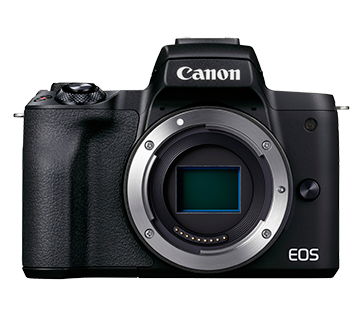
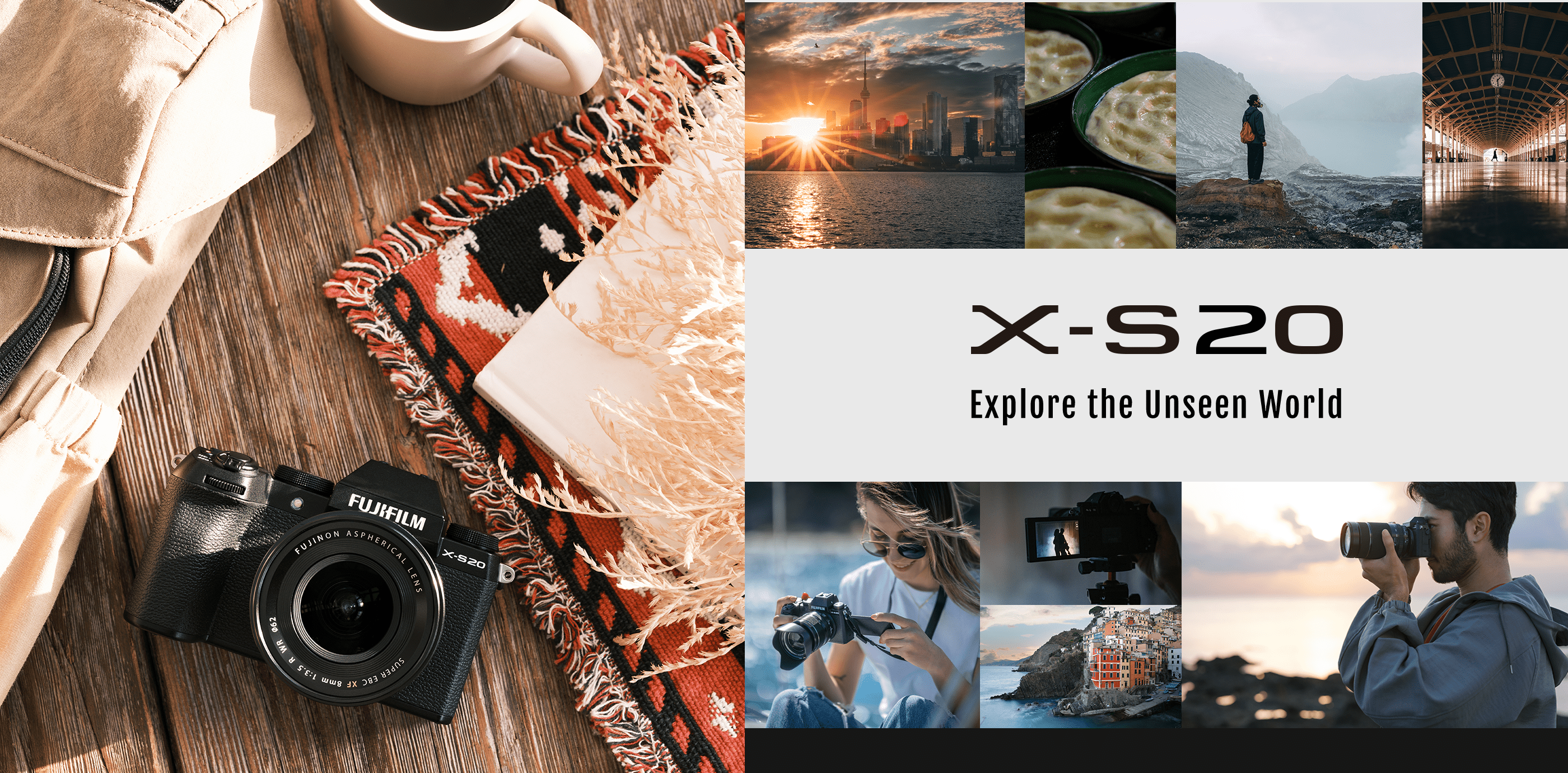
The Canon EOS M50 Mark II and the Fujifilm X-S20 are often compared by photographers and videographers seeking a compact, mirrorless camera that bridges excellent image quality, portability, and affordability. Both are popular among enthusiasts, vloggers, travelers, and content creators who want more than what a smartphone offers, but without the bulk of a full-frame setup.
Their similar APS-C sized sensors and approachable designs place them in direct competition for users upgrading from entry-level cameras or stepping up to mirrorless for the first time. Key differentiators include the Fujifilm X-S20's modern autofocus system, in-body stabilization, extended battery life, advanced video features, and a more mature lens ecosystem. The Canon EOS M50 Mark II, however, counters with its user-friendly interface, lower price, lighter weight, and Canon's color science, making it attractive for budget-conscious creators.
Specifications Comparison
Detailed Comparison
Image Quality
Both cameras sport APS-C sensors, but the Fujifilm X-S20 has a slight edge at 26 megapixels compared to the Canon EOS M50 Mark II's 24.1 megapixels. In practical terms, this resolution difference will be negligible for most users, though the X-S20 provides a bit more leeway for cropping and large prints.
The real differentiator is Fujifilm's X-Trans sensor technology and its color science, which is praised for producing exceptionally clean files with pleasing color reproduction, especially when paired with Fujifilm's film simulation modes. The Canon's sensor, while capable, is slightly older and tends to offer less dynamic range and low-light performance compared to newer APS-C designs.
The ISO range is broader on the Fujifilm X-S20, offering an expandable range from 80 to 51,200, whereas the M50 Mark II maxes out at an expanded 25,600. Both cameras perform well at moderate ISO settings, but the X-S20 maintains better detail and less noise at higher ISOs.
Overall, users prioritizing pure image quality, dynamic range, and flexibility will find the X-S20 to be a more modern, capable option.
Autofocus System
Autofocus is an area where the generational gap is most apparent. The Fujifilm X-S20 boasts a state-of-the-art phase detection AF system with 425 autofocus points, providing near-instant subject tracking, advanced face and eye detection, and reliable fast focusing across the frame. This makes it particularly strong for action, wildlife, or hectic environments.
The Canon EOS M50 Mark II, while improved over its predecessor and utilizing Canon's respected Dual Pixel CMOS AF, is limited by both its hardware and the smaller number of focus points. Face and eye detection is supported, but tracking speed and reliability can lag behind Fujifilm, especially with moving subjects.
For stills, casual portraits, and vlogging, the EOS M50 Mark II's autofocus system is adequate and accurate, but for critical or fast-paced scenarios, the X-S20's smart autofocus system is noticeably superior.
If autofocus performance is a top priority-especially for video or action photography-the Fujifilm X-S20 shines.
Video Capabilities
The Fujifilm X-S20 is a clear leader in video functionality. It offers 4K recording at up to 60p, advanced video features (including F-Log and 10-bit recording with external devices), and 7 stops of in-body image stabilization (IBIS), massively improving handheld video smoothness. This IBIS system also benefits stills shooters relying on slower shutter speeds or shooting in low light.
The Canon EOS M50 Mark II, while popular among vloggers (thanks to its fully articulated screen and clean HDMI out), caps out at 4K 24p-and with a significant 1.6x crop and slower autofocus in this mode. Full HD modes are solid, but overall, the camera lags in both features and usability depth for advanced video users.
Audio options are competitive, with both cameras supporting external mics, but the X-S20's additional features, higher bitrates, and superior stabilization make it a much more versatile video production tool.
The X-S20 decisively wins for users prioritizing video content creation.
Build & Ergonomics
Both cameras are built with an eye to portability, but the X-S20 is slightly larger and heavier at 491g versus the M50 Mark II's lighter, more compact design. The Canon is advantageous for travelers or those who want a lighter kit for all-day carrying.
The handling departments, however, differ significantly. The X-S20's deeper grip, larger and higher-resolution viewfinder, and higher-detailed 3-inch rear touchscreen (1.84 million dots) contribute to a more comfortable, robust shooting experience, especially with larger lenses. Canon's fully articulated touchscreen is easy to use and reliable, but the screen resolution and overall hand feel are less premium.
Neither camera is weather-sealed; both are solidly constructed for entry- to mid-level bodies. Fujifilm's improved ergonomics and more substantial grip edge it ahead for frequent, extended use, but those prioritizing lowest weight may prefer Canon.
While both bring strengths, the X-S20's usability enhancements tip the balance.
Battery & Storage
Fujifilm makes a significant leap forward with the X-S20's NP-W235 battery, delivering up to 750 shots per charge (CIPA), which is excellent for an APS-C mirrorless camera in this class. This makes it a reliable companion for longer shooting sessions, travel, or extensive video work.
In contrast, the Canon EOS M50 Mark II's smaller form factor comes with more limited battery life-typically around 250 to 320 shots per charge in real-world use. Users will likely need to carry spares for full-day outings or shooting events.
Both use single SD card slots, which is a limitation for high-volume shooters or professionals seeking redundancy, but typical for their market segment. For most enthusiast needs, this will not be a dealbreaker.
The dramatic difference in battery performance makes the X-S20 the distinctly better camera for those who shoot extensively or want to minimize downtime and battery changes.
Value for Money
The Canon EOS M50 Mark II is priced considerably lower than the Fujifilm X-S20. As of its release, the M50 Mark II was one of the best values in its segment, providing solid image quality, Canon's familiar color profiles, and a strong feature set for entry-level content creators, all at a budget-friendly price.
The Fujifilm X-S20 carries a premium price ($1299 USD body only) but provides significantly more advanced technology, future-proofed features, and higher performance across almost every metric. For those who need its advanced capabilities, the cost can be easily justified, but it may be overkill for hobbyists or occasional content creators.
For buyers seeking the most features and performance per dollar, the M50 Mark II is hard to beat. However, for those with more demanding needs, the X-S20's more advanced offerings can be worth the investment.
Ultimately, this is dependent on user priorities: budget-constrained buyers will find hard value in the Canon, while performance seekers get what they pay for with Fujifilm.
Lens Ecosystem
The Canon EOS M50 Mark II relies on the EF-M mount, which, while supported by a handful of native Canon lenses and select third-party options, is noticeably more limited than Canon's full EF and RF mounts. Adaptation is possible, but autofocus performance often drops, and options for fast primes or pro-level zooms are comparatively sparse.
The Fujifilm X-S20 uses the Fujifilm X mount, which has flourished with a comprehensive lineup of high-quality prime and zoom lenses, both from Fujifilm and respected third-party manufacturers. The depth and diversity of this ecosystem give creators many more pathways to expand their creative toolset, whether they prioritize compactness, optical quality, or specialty lenses.
If future system growth and lens availability are core considerations, the X-S20 stands out. The M50 Mark II remains limited, with uncertain future support for EF-M mount development.
Thus, system longevity and creative flexibility favor Fujifilm in this section.
Our Verdict
The Fujifilm X-S20 emerges as the overall winner, thanks to its advanced sensor, far superior autofocus system, robust in-body stabilization, class-leading video features, impressive battery life, and access to a rich lens ecosystem. It is a significant upgrade for serious enthusiasts, hybrid shooters, or anyone wanting a camera platform that will grow with their skills and creative ambitions. However, the Canon EOS M50 Mark II remains a strong contender for its price class. Its approachable interface, compact size, and strong still image quality make it an excellent starter or travel camera for casual users, beginners, or those on a tighter budget. It satisfies most needs for everyday photography and vlogging, especially if advanced video or autofocus requirements are not paramount. In summary, the X-S20 commands a higher investment but delivers uncompromising performance, while the M50 Mark II excels as a value-driven entry into mirrorless with Canon's hallmark usability.
Canon EOS M50 Mark II
Fujifilm X-S20
Also Compare
Frequently Asked Questions
Which camera is better for video, especially vlogging?
The Fujifilm X-S20 is the superior choice for video, with 4K 60p recording, robust in-body stabilization, and advanced autofocus tracking. However, the Canon M50 Mark II is still a good, budget-friendly option for basic vlogging, especially in Full HD.
Is there a significant difference in image quality?
The X-S20 offers better dynamic range, higher usable ISO, and slightly higher resolution, with Fujifilm's highly regarded color science. However, both deliver excellent results for social media or prints up to moderate sizes.
Which camera has better battery life?
The Fujifilm X-S20 is far ahead, rated for up to 750 shots per charge, while the Canon M50 Mark II generally lasts for around 300 shots. For travel or long shooting days, the X-S20 is the practical choice.
Can I use a wide selection of lenses with either camera?
The Fujifilm X-S20 benefits from a much broader native lens lineup, including many primes and high-end zooms. The EF-M lens selection for the Canon is far more limited, though adapters can add some flexibility-with potential compromises.
Which is better for beginners?
The Canon EOS M50 Mark II is better for beginners due to its intuitive menus, lighter weight, and lower cost. It is an easy, approachable step up from smartphones or basic point-and-shoots.
How do the autofocus systems compare for moving subjects?
The X-S20 outperforms the M50 Mark II with more AF points and advanced subject tracking, making it more reliable for sports, wildlife, or any situation with movement.