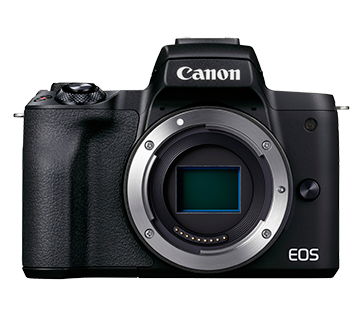
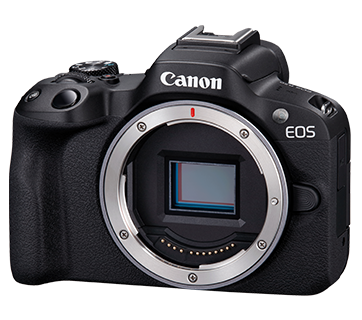
The Canon EOS M50 Mark II and the Canon EOS R50 are two of Canon's most popular entry-level mirrorless cameras, and they are frequently compared by beginners and enthusiasts seeking value, portability, and solid image quality. These models appeal to vloggers, hybrid shooters, and anyone upgrading from smartphone photography due to their compact size, user-friendly controls, and competitive feature sets.
While both cameras feature an almost identical APS-C sensor dimension and similar megapixel counts, the EOS R50 represents Canon's push towards its newer RF mount system and brings several improvements in autofocus, speed, and video capabilities. Meanwhile, the M50 Mark II leverages the established EF-M ecosystem and remains a tried-and-true option for budget-conscious users or those who already own EF-M lenses. The key differentiators come down to autofocus performance, video specs, lens mount ecosystem, and ergonomic refinements.
Specifications Comparison
Detailed Comparison
Image Quality
Both the Canon EOS M50 Mark II and the EOS R50 provide 24-megapixel APS-C images from a sensor measuring 22.3 x 14.9 mm, ensuring a high level of detail and dynamic range for stills. In practical use, the image quality between the two is extremely similar, with very little to distinguish in terms of sharpness, color rendition, or high-ISO noise characteristics. Both cameras support RAW shooting and Canon's versatile Picture Styles.
However, the EOS R50's newer image processor promises optimized color science and potentially marginally improved high-ISO noise performance, especially when paired with the newer RF lenses, which exhibit slightly better resolution and contrast due to improved glass designs. The higher native ISO range (up to 32,000 vs 25,600 on the M50 Mark II) also suggests the R50 can handle low-light scenarios a bit better, though such differences are subtle and most pronounced at extreme settings.
Ultimately, for most users and everyday shooting, both cameras deliver comparable image quality. The real-world differences will largely depend on lens choice and post-processing habits, not on core sensor performance.
Autofocus System
A major step forward for the EOS R50 is its autofocus system. The R50 boasts a whopping 651 autofocus points with Canon's Dual Pixel CMOS AF II, offering fast, accurate, and subject-detecting focusing across nearly the entire frame. This advanced AF system is well-suited for tracking moving subjects, face/eye detection in both stills and video, and reliable operation in various lighting conditions.
By comparison, the Canon EOS M50 Mark II, while decent for its class, uses an earlier version of Dual Pixel AF with significantly fewer focus points and less advanced subject tracking. In busy scenes or fast-paced situations, the R50's superior focus coverage and tracking yield a tangible improvement in keeper rate, especially for action and vlogging.
If you plan to shoot sports, wildlife, or any fast action-or want reliable face and eye detection for video and self-portraits-the R50 is a clear winner in this respect.
Video Capabilities
The Canon EOS R50 makes clear strides in video performance over the M50 Mark II. The R50 supports full-width uncropped 4K recording at 30p, delivering higher resolution and detail for modern content creation. In comparison, the M50 Mark II offers 4K video but with a pronounced crop and less effective autofocus in this mode, which greatly limits wide-angle and vlogging applications.
Additionally, the R50's superior AF system improves video focus reliability, with smoother transitions and better subject tracking. Both cameras offer fully articulated touchscreens, a crucial feature for vloggers and solo shooters. However, the R50 records 4K at 30p, while the M50 Mark II is limited to 24p in 4K.
While neither camera offers in-body image stabilization, the R50 is better suited for hybrid shooters and video creators who want crisp, uncropped 4K and confident AF performance. Slow motion is available on both via 1080p 120p on the R50, while the M50 Mark II offers up to 60p in Full HD.
For online content creators, YouTubers, and hobbyist filmmakers, the R50 is indisputably ahead.
Build & Ergonomics
Both cameras are designed for portability, featuring lightweight polycarbonate bodies. The M50 Mark II, being marginally smaller due to its EF-M mount, weighs just slightly less than the R50, but the difference (375g for the R50) is minimal in daily use.
The EOS R50, being a newer model, introduces some improvements in handling: it has a more refined grip, a high-resolution 3-inch touchscreen with 1,620,000 dots, and greater overall tactile feedback. The R50's electronic viewfinder is similar in size and usability to the M50 Mark II, ensuring familiarity for upgraders.
Both cameras sport fully articulating touchscreens (versatile for vlogging and selfies), though the R50's higher resolution display is noticeable for reviewing images and precise touch control. Overall build quality is solid for both, though neither are weather-sealed.
In terms of real-world use, both are comfortable and intuitive, but the R50's improved touchscreen and newer design give it a slight edge.
Battery & Storage
Both the Canon EOS M50 Mark II and R50 rely on similar-sized batteries, providing average battery life expected of entry-level mirrorless cameras-enough for about 250-350 shots per charge depending on usage. Neither has standout stamina compared to competitors or higher-end Canon bodies.
The M50 Mark II uses the LP-E12 battery, which is widely available and compatible across several EF-M bodies. The R50 uses the LP-E17, which is common with many of Canon's newer mirrorless cameras. Battery life differences are not significant between these two models.
Both cameras record to a single SD card slot supporting UHS-I speeds. No dual card slots or major storage embellishments distinguish either. For people frequently shooting long events or video, keeping spare batteries and fast SD cards is essential regardless of which you choose.
On the whole, battery and storage capabilities are nearly identical.
Value for Money
As of 2024, the EOS M50 Mark II continues to be offered at a slightly lower price than the R50 and can often be found at discounts or as part of kit bundles. This makes it an appealing choice for budget-conscious buyers, students, or those already invested in EF-M lenses.
However, the R50-with a launch price of $679 USD-offers a genuinely improved feature set: better autofocus, uncropped 4K, faster burst shooting (up to 12fps vs about 10fps on the M50 Mark II), and access to the expanding RF lens system. Given these enhancements, it represents superior long-term value, especially for users interested in video, fast-paced photography, or future-proofing with the RF mount.
If upfront cost is your primary concern and you just want a solid stills camera with basic video, the M50 Mark II remains a great bargain. For virtually everyone else, the R50 is the smarter investment, offering more technology and upgrade potential for the price.
Lens Ecosystem
The Canon EOS M50 Mark II uses the EF-M mount, which, over the years, has assembled a respectable selection of compact prime and zoom lenses. However, Canon has signaled that development for EF-M lenses is winding down, and third-party support is limited.
Conversely, the EOS R50 uses the RF mount, Canon's future-facing platform. While the RF lens line is rapidly expanding with both high-end L series and affordable RF-S lenses designed for APS-C bodies, it is, as of now, somewhat more expensive and less extensive than the long-established EF/EF-M options.
Both cameras can adapt Canon EF and EF-S DSLR lenses via official adapters, expanding usable lens choices considerably. Nonetheless, the R50's RF mount is better positioned for long-term growth and lens innovation, giving it the edge for users who plan to build a modern mirrorless kit over time.
Our Verdict
The Canon EOS R50 emerges as the overall winner, thanks to its improved autofocus, superior video performance, future-proof RF mount, and enhanced ergonomics. While both cameras offer nearly identical image quality and similar compactness, the R50's technological leaps and ecosystem promise better longevity and versatility for most users. However, the Canon EOS M50 Mark II still holds real value for budget shooters, beginners, and those with an existing investment in EF-M lenses. For photographers focused purely on stills or seeking the most affordable entry point, the M50 Mark II remains a practical choice. Meanwhile, users wanting to maximize autofocus, video capabilities, and long-term growth should confidently choose the R50.
Canon EOS M50 Mark II
Canon EOS R50
Also Compare
Frequently Asked Questions
Can I use my EF and EF-S DSLR lenses on both the M50 Mark II and R50?
Yes, both cameras can use Canon EF and EF-S DSLR lenses via their respective adapters (EF-EOS M for the M50 Mark II, EF-EOS R for the R50). Autofocus performance and exposure control are generally retained, though the balance and size can be less ideal on these smaller bodies.
Is the Canon EOS M50 Mark II still a good choice for beginners?
Absolutely. The M50 Mark II offers excellent image quality, straightforward controls, and a flip-out touchscreen ideal for starting photographers and vloggers. If you find it at a lower price and only need its basic feature set, it remains a fantastic budget-friendly pick.
Which camera is better for vlogging and online video content?
The EOS R50 is much better suited for modern content creation, thanks to its uncropped 4K video, vastly superior autofocus with advanced subject tracking, and higher frame rates. The M50 Mark II's heavy 4K crop and older autofocus system make it less flexible for demanding video work.
Will the EF-M lens system be supported in the future?
Canon has largely shifted R&D focus to the RF mount, with limited new EF-M lens releases expected. While existing EF-M lenses will continue to work, future upgrades and a growing selection are far more likely with RF-mount cameras like the R50.
How important is the difference in autofocus between these models?
The EOS R50's advanced 651-point Dual Pixel CMOS AF II system provides much more reliable subject tracking, eye detection, and speed-especially in video and dynamic scenes. This is a substantial improvement over the M50 Mark II for anyone shooting action, people, or vlogs.
Is there image stabilization in either model?
Neither camera features in-body image stabilization (IBIS). Both rely on optically stabilized lenses or digital stabilization in video mode, so using stabilized lenses (IS) is recommended for handheld work.