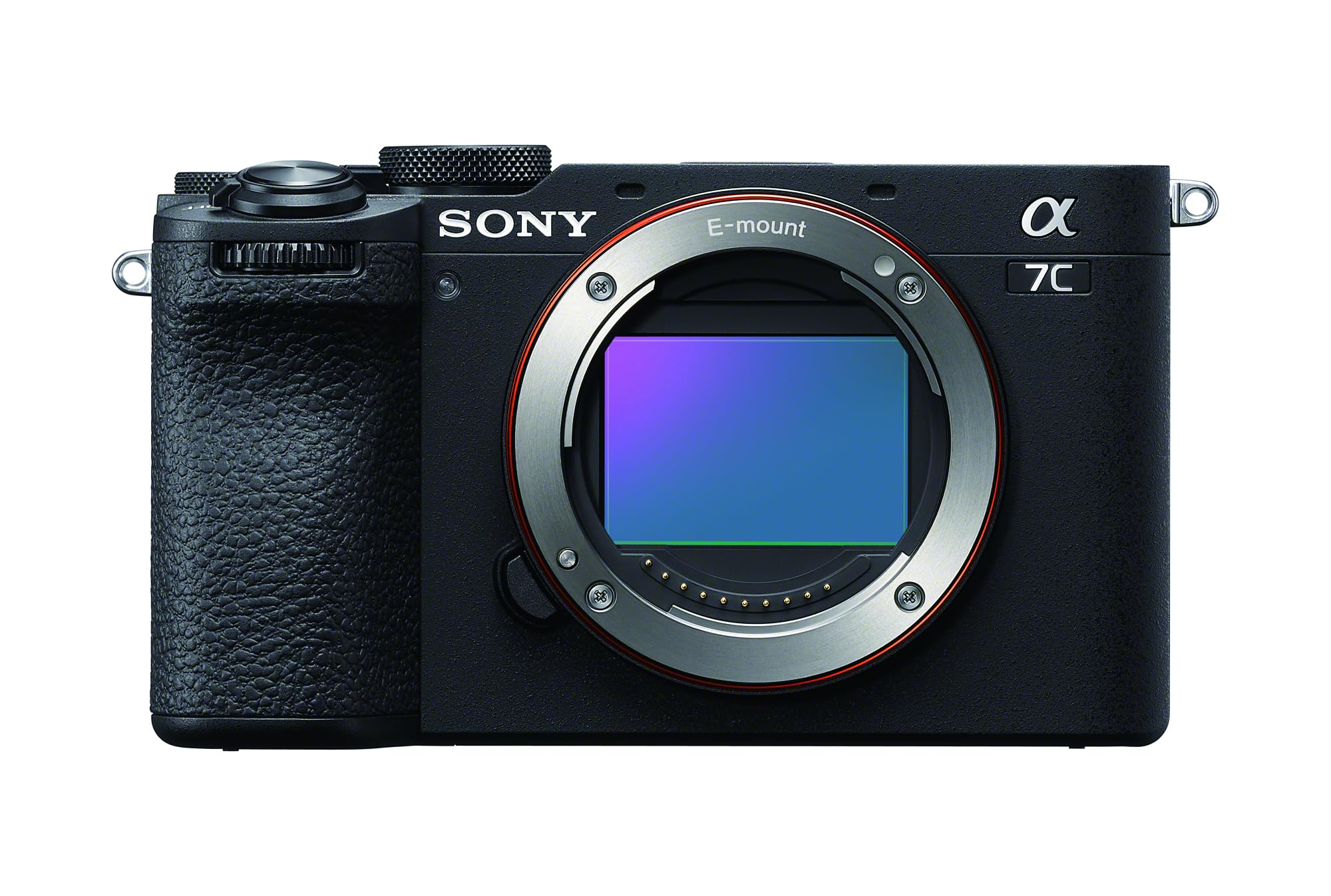

The Sony A7C II and Sony A9 II are both formidable contenders in Sony's lineup of full-frame mirrorless cameras, appealing to both enthusiasts and professionals. The A7C II, released in 2023, brings modern features and a compact design, while the A9 II, launched in 2019, is known for its speed, making it a favorite among sports and wildlife photographers. Buyers typically consider these cameras based on their shooting style: whether they prioritize high-resolution images, autofocus performance, video capabilities, or overall portability. The key differentiators between these two models will influence the decision-making process, such as the sensor resolution, continuous shooting speeds, and video features.
Specifications Comparison
Detailed Comparison
Image Quality
Regarding image quality, the Sony A7C II boasts a higher resolution sensor with 33 megapixels compared to the 24 megapixels of the A9 II, allowing for larger prints and more detail in high-resolution work. Both cameras utilize the same full-frame sensor size (35.6 x 23.8 mm), but the increased pixel count of the A7C II can capture additional information in shadows and highlights, especially when composing images in challenging lighting. The ISO performance is also quite comparable, with both models featuring an ISO range that expands to 50-204800, ensuring excellent low-light capabilities.
However, in practical terms, the A9 II may render slightly better colors and dynamic range due to its dedicated design for high-speed shooting, which often involves optimized processing of image data. Thus, while the A7C II has the edge in resolution, the differences in real-world scenarios may favor the A9 II in professional environments, particularly in action scenarios where speed and responsiveness are paramount. Given these factors, image quality can be subjective and dependent on the specific use case.
In conclusion, while the A7C II takes the lead in sheer resolution, the real-world performance under varying conditions can tip this comparison in favor of the A9 II. It's a close contest, reflecting differing goals among photographers.
Autofocus System
The autofocus systems of both cameras are advanced, but they have notable distinctions. The A7C II features 759 autofocus points that cover a significant area of the frame, ensuring good coverage for portrait and general photography. In contrast, the A9 II, with 693 autofocus points, offers slightly fewer overall but has an impressive tracking performance that excels in fast-paced scenarios. The A9 II is designed specifically for sports and wildlife photography, which means its autofocus system is adept at maintaining focus on moving subjects, providing faster and more reliable tracking in dynamic situations.
Additionally, the A9 II benefits from its impressive burst rate of 20 frames per second, which allows it to maintain autofocus tracking effectively even during high-speed shooting sessions. The A7C II's maximum burst rate of 10 frames per second, while robust, does not measure up to the A9 II's performance.
For photographers prioritizing fast-moving subjects, the A9 II's autofocus system is likely to be more beneficial due to its proven capabilities in real-action environments. While the A7C II provides robust performance for general photography, when it comes to tracking and speed, the A9 II stands out as the clear winner.
Video Capabilities
In the realm of video capabilities, the A7C II clearly outperforms the A9 II, delivering 4K video at 60 frames per second, which is highly sought after for high-quality video production. This enables videographers to create smoother footage and better slow-motion options. The A9 II is limited to 4K at 30 frames per second, which, while still competent, does not match the versatility offered by the A7C II. Furthermore, the A7C II benefits from advanced features like S-Cinetone and improved color science, which are essential for cinematic video work.
Both models provide electronic viewfinders and fully articulating screens, but the A7C II's upgraded screen resolution offers enhanced clarity for video shooting. Additionally, the A7C II features superior in-body image stabilization rated at 7 stops compared to the A9 II's 5.5 stops, enabling smoother handheld shooting. This can significantly improve the quality of handheld video footage, especially in lower light situations or with longer focal lengths.
For creators focused on high-quality video content, the A7C II makes for a more compelling choice based on its enhanced video specifications and features. The A9 II may still appeal to sports photographers who occasionally shoot video but lacks the video-oriented enhancements of the A7C II.
Build & Ergonomics
In terms of build quality and ergonomics, both the A7C II and the A9 II are weather-sealed, making them durable options for various shooting conditions. However, the A7C II is more compact, measuring 124 x 71 x 63 mm and weighing 514 grams, which enhances its portability, ideal for travel and street photography. The smaller size may also appeal to photographers who prefer a lighter kit.
Conversely, the A9 II, which is slightly larger at 129 x 96 x 76 mm and weighs 678 grams, feels more substantial in hand, which can enhance ergonomics during prolonged usage. The A9 II has a more extensive grip designed for better handling, particularly when mounted with larger lenses, catering to professionals who often require robust handling characteristics.
Ultimately, the choice between these two cameras in terms of ergonomics comes down to personal preference: whether the user prioritizes the lightweight nature of the A7C II or the substantial feel and grip of the A9 II. While both cameras are well-built, the differences in size and weight may cater to different types of photographers.
Battery & Storage
Examining the battery life of both models, the Sony A9 II comes out ahead with an impressive capacity for approximately 690 shots on a single charge, compared to the A7C II's 540 shots. This extended battery life can be especially beneficial for photographers on long shoots or those who do not wish for frequent interruptions to change batteries. In terms of storage options, both cameras support dual slots for SD cards, ensuring ample storage for continuous shooting sessions and flexibility in workflow management.
While the A9 II's better battery performance makes it more favorable for professionals who require extended shooting times, the A7C II's modern features cater well to a broader audience, including videographers who might appreciate the balance of both performance and battery endurance. The A7C II may require careful planning for extended shoots, but it offers modern conveniences that make it versatile for everyday use.
In a practical sense, both cameras meet the needs of their target demographics. Hence, while the A9 II has a tangible advantage, the user experience with battery and storage will be satisfactory in both models, depending on the specific usage.
Value for Money
When it comes to value for money, the A7C II is priced at $2200, which represents a significantly lower investment compared to the A9 II's $4500. For many users, this discrepancy can be a critical factor. The A7C II's combination of excellent still capabilities along with impressive video specifications makes it a compelling choice for both photographers and videographers alike at a more accessible price point.
The A9 II, while more expensive, brings an exceptional autofocus system, higher burst rate, and superior build that are designed for professional sports and action photography. This specificity in design and performance can justify its premium price for those who need its specialized features-however, for a general audience, such an investment may seem unwarranted due to its steep price tag.
Ultimately, individuals who engage in serious photography or videography may find better value in the A7C II due to its lower price, offering high performance without the substantial financial commitment required by the A9 II. Therefore, for cost-conscious buyers or those who aim for a versatile camera for a range of uses, the A7C II is an attractive option.
Our Verdict
Overall, the Sony A7C II emerges as the winner, striking a commendable balance between performance, portability, and pricing. While the A9 II excels in its autofocus and burst shooting capabilities, it also comes with a significantly higher price tag that may not be justifiable for all users. The A7C II's enhanced video features and excellent image quality, combined with its affordability, make it a perfect choice for a broad range of photographers and videographers, particularly those who value versatility and performance in a compact body. Conversely, the A9 II is ideal for sports professionals and those needing rapid shooting and tracking, justifying its premium price for specific use cases.
Sony A7C II
Sony A9 II
Also Compare
Frequently Asked Questions
Which camera has better image resolution?
The Sony A7C II offers a resolution of 33 megapixels, surpassing the A9 II's 24 megapixels, making it the better choice for high-resolution image work.
Is the A9 II worth the extra cost?
The A9 II is tailored for high-speed photography and excels in autofocus performance, making it worth the extra cost for professional sports and wildlife photographers.
What are the video capabilities of each camera?
The A7C II records 4K video at 60p, while the A9 II is limited to 4K at 30p, giving the A7C II an advantage for videographers.
How does battery life compare between the two models?
The A9 II features better battery life, with approximately 690 shots, compared to the A7C II's 540 shots, making it preferable for extended shoots.
Which camera is more portable?
The A7C II is lighter and more compact at 514 grams, making it a more portable option for travel and street photography compared to the A9 II.