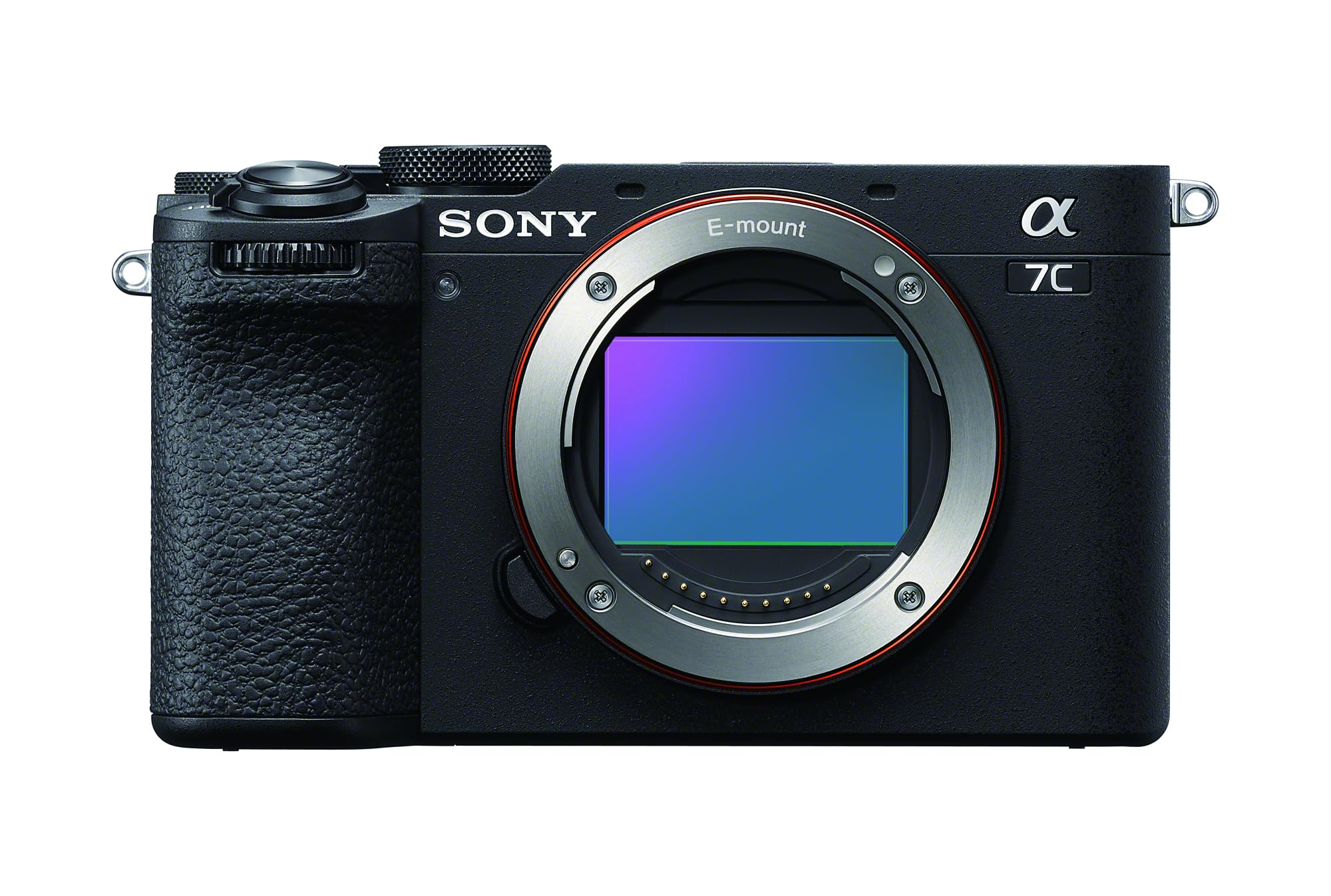

The Sony A7C II and A7S III are two powerful mirrorless cameras that often attract attention from photographers and videographers alike. While both belong to Sony's esteemed Alpha series and share similar full-frame sensor architecture, they cater to different audiences with distinct needs. The A7C II is aimed at hybrid shooters who prioritize versatility, balance, and a lighter frame, while the A7S III is tailored for professionals who focus seriously on video performance and low-light capabilities. Understanding the differences between these two models is essential for potential buyers deciding which camera suits their specific creative pursuits.
Specifications Comparison
Detailed Comparison
Image Quality
The Sony A7C II features a 33-megapixel sensor, which allows for capturing highly detailed images with expanded dynamic range. Its higher resolution is particularly useful for landscape and studio photographers who wish to crop or print their work at large sizes without losing quality. In contrast, the A7S III has a 12-megapixel sensor, tailored for video production; however, this lower resolution can still produce stunning images under various conditions. The A7S III excels in high ISO situations, yielding cleaner images with less noise at extreme settings, owing to its larger individual pixel size designed for optimal light capture.
When it comes to natural color reproduction, both models show strong performance; however, the higher megapixel count of the A7C II provides more latitude for adjustments in post-processing. Each camera handles a variety of lighting scenarios competently, but the A7S III shines when shooting in extremely low-light environments, thanks to its dedicated design for videography. Overall, while both cameras offer excellent image quality, the choice between them may depend on whether high resolution or low-light performance is more critical for the user's needs.
Autofocus System
Both the Sony A7C II and the A7S III use an advanced autofocus system with 759 phase-detection points, ensuring rapid and precise focusing across a vast area of the frame. This robust autofocus performance is well-suited for both still photography and video work. The A7C II also benefits from Real-Time Eye autofocus for humans and animals, which is a significant advantage for portrait and wildlife photographers.
On the other hand, the A7S III incorporates additional features for videographers, such as touch tracking and customizable focus transitions, making it an exceptional choice for filmmakers who require precision during dynamic shooting scenarios. The A7S III is designed to perform reliably in low-light shooting situations, enhancing its autofocus performance even further. While both cameras offer similar autofocus points, user needs may vary depending on their primary focus area - stills or video.
Video Capabilities
The video capabilities of these two cameras diverge significantly, as the A7S III has specialized features that cater to serious videographers. It supports 4K video recording at up to 120 fps, allowing for high frame rate slow-motion footage that is often sought after in film production. Furthermore, the A7S III offers 16-bit RAW output and has multiple gamma settings (including S-Cinetone), enhancing color grading and flexibility in post-process workflows.
On the other hand, while the A7C II can record 4K video at 60 fps, it lacks some of the advanced video features of the A7S III. However, for many casual and hybrid users, the A7C II's performance is more than adequate for vlogging, making content creation accessible to a broader audience. For serious filmmakers who value high bit rates and detailed slow motion, the A7S III takes the lead with its superior video specifications.
Build & Ergonomics
The Sony A7C II is notably smaller and lighter than the A7S III, weighing in at 514 grams compared to the 699 grams of the A7S III. This compact design makes the A7C II an attractive option for travelers and street photographers who require mobility. Additionally, the A7C II provides an easy-to-use interface and a fully articulating screen, allowing for versatile shooting angles that benefit vlogging and selfies.
Conversely, the A7S III boasts a more rugged build with a slightly larger grip, which may feel more comfortable during extended shooting sessions, particularly for those accustomed to higher-end models. Both cameras are weather-sealed, offering protection against dust and moisture-essential for outdoor shooting. Ultimately, personal preference for size and ergonomics will play a significant role in deciding between the two, as both are well-built but cater to different requirements.
Battery & Storage
In terms of battery life, the A7C II offers a notable lifespan of approximately 540 shots per charge, whereas the A7S III has a slightly higher rating of 600 shots. However, both cameras utilize the NP-FZ100 battery, which provides long-lasting performance compared to many competitors. This higher battery life is advantageous for extended shooting sessions on location or during events.
Concerning storage options, both cameras support dual card slots, which can accommodate CFexpress Type A and SD UHS-II cards. This provides flexibility for professional users who may require simultaneous recording or faster write speeds for high-resolution video. The A7S III's advanced video capabilities may lead to a larger file size, so those focusing on video should consider this aspect when incorporating storage solutions.
Value for Money
When considering price, the A7C II is positioned at a significantly lower price point of $2200, compared to the A7S III's $3499. For many hybrid shooters or content creators who appreciate both image and video capabilities without demanding the absolute best in video specifications, the A7C II presents excellent value, offering a comprehensive package of features at a more accessible price.
The A7S III, while more expensive, justifies its cost with exceptional video features and low-light performance preferred in professional filmmaking. Buyers need to weigh their primary requirements against their budget, determining whether the added capabilities of the A7S III warrant the additional investment. For casual photographers/videographers, the A7C II stands out as a more budget-conscious choice, while serious video professionals may find value in the advanced features offered by the A7S III.
Our Verdict
In conclusion, the Sony A7C II is a versatile option that excels in value for hybrid shooters, offering a higher resolution and a more compact form factor, making it suitable for both photography and casual video projects. Conversely, the A7S III is designed primarily for filmmakers, with robust video capabilities and superior low-light performance. Potential buyers should consider their primary shooting needs and whether they prioritize high-quality stills, advanced video functionalities, or both when making their final decision.
Sony A7C II
Sony A7S III
Also Compare
Frequently Asked Questions
Which camera is better for low-light photography?
The Sony A7S III is significantly better for low-light photography due to its larger pixel size, designed specifically for capturing detailed images with minimal noise in poorly lit environments.
Can I use the same lenses on both cameras?
Yes, both cameras use the Sony E mount, allowing you to use the same lenses across both models without any compatibility issues.
Is the A7C II suitable for professional video work?
While the A7C II can handle video well, it lacks some of the pro-level features found in the A7S III, such as 120 fps recording and advanced gamma color profiles, making the A7S III the preferred choice for professional videographers.
What are the main advantages of the A7C II over the A7S III?
The A7C II offers a higher resolution of 33 megapixels compared to the A7S III's 12 megapixels, making it suitable for detailed photography and better value for hybrid shooters who need versatility and portability.
How do the battery lives compare?
The A7C II has a battery life of around 540 shots while the A7S III is rated for approximately 600 shots. Both use the same battery type and provide excellent lifespan for extensive shooting.