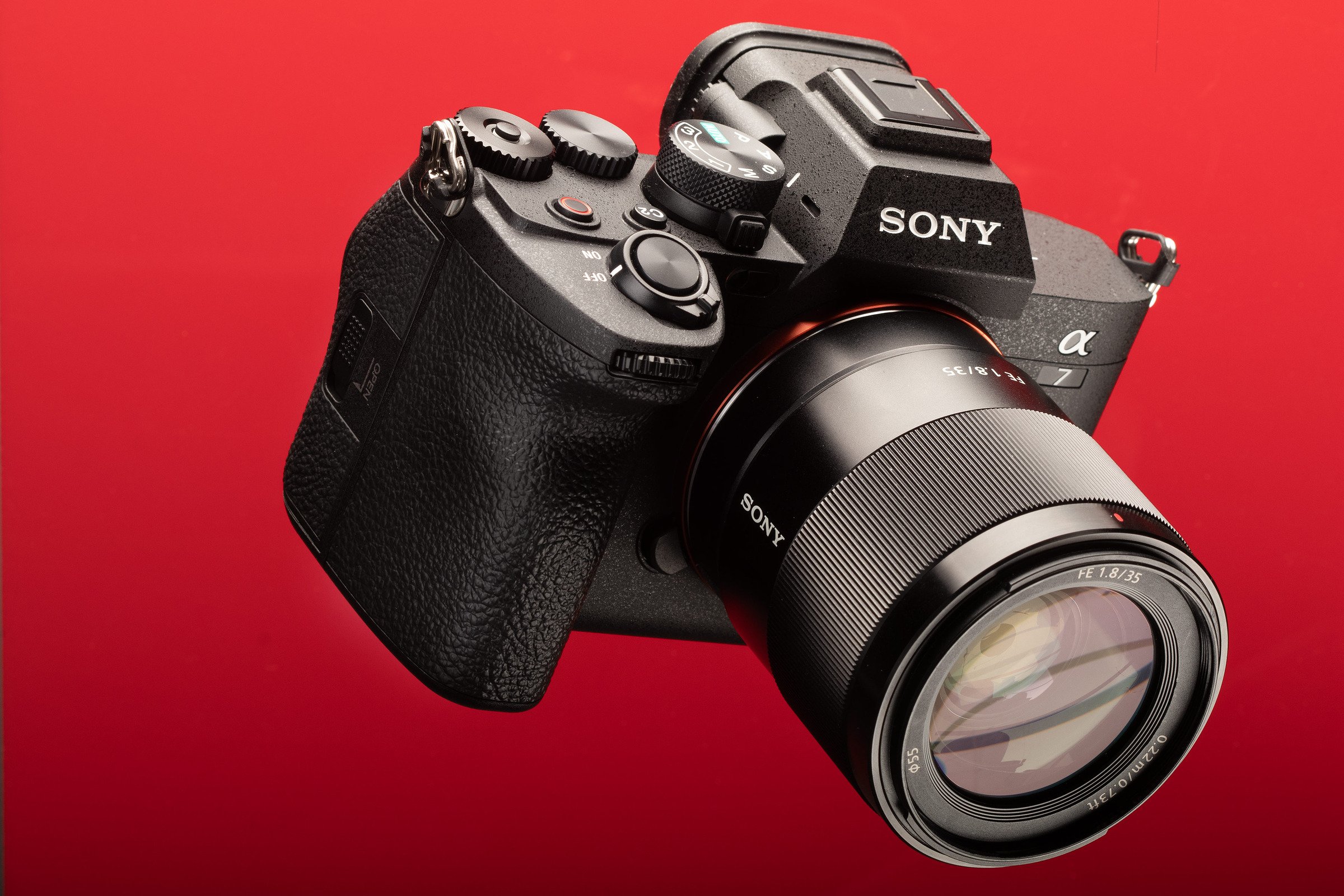

The Sony A7 IV and A7S III are two noteworthy entries in Sony's highly regarded Alpha series of full-frame mirrorless cameras, both of which cater to distinct user needs while sharing many core features. These cameras are often compared by enthusiasts and professionals alike who seek high-quality imaging and video capabilities. The A7 IV appeals to those who prioritize high resolution and versatility across various types of photography, while the A7S III is targeted primarily at videographers and low-light shooters seeking superior performance in those areas. Key differentiators include sensor resolution, video frame rates, and overall performance in different lighting conditions.
Specifications Comparison
Detailed Comparison
Image Quality
The Sony A7 IV boasts a 33-megapixel sensor, which allows for remarkably detailed images that can hold their own in prints or cropping scenarios. This higher resolution gives the A7 IV an edge in landscapes and studio photography, where detail is paramount. In contrast, the A7S III has a lower 12-megapixel count, which might seem limiting at first glance. However, this design choice results in larger individual pixels on the sensor, allowing for better low-light performance and less noise at high ISO settings. For example, the A7 IV's ISO range expands to a maximum of 204800, whereas the A7S III can reach up to 409600, indicating its superior handling of challenging lighting conditions.
In real-world use, users may find that the A7 IV maintains excellent detail in daylight shooting while allowing for more creative freedom in post-processing due to its higher resolution. Conversely, when shooting in dim environments, the A7S III often produces significantly cleaner images at high ISO levels, making it a go-to for night photography and events. Thus, the image quality can often be subjective based on the user's requirements; if resolution is paramount, the A7 IV wins, while the A7S III excels in low-light and dynamic scenarios.
Autofocus System
Both the Sony A7 IV and A7S III utilize an advanced autofocus system featuring 759 phase-detection points, allowing for fast and accurate focusing under a wide range of circumstances. This sophisticated autofocus system supports real-time eye tracking and animal eye tracking, making both models exemplary choices for portrait and wildlife photography. However, there are subtle distinctions in how they handle performance regarding subject tracking and focus transitions.
The A7S III is optimized for video applications, offering superior autofocus performance when recording moving subjects in video mode, thanks largely to its fast hybrid autofocus system. This makes it particularly appealing for filmmakers who require precise focus pulls during shoots. Meanwhile, the A7 IV's autofocus can be slightly slower under certain conditions due to its prioritization of still images, though it still performs remarkably well.
For typical photography, both systems can deliver reliable focusing results. Depending on specific user needs, either model's autofocus can be preferred: the A7S III for motion-centered video work or the A7 IV for more static photographic compositions.
Video Capabilities
In the realm of video performance, the A7S III clearly leads the pack, offering 4K recording up to 120 frames per second, allowing users to create smooth slow-motion footage, which is critical for high-level professional work. It also supports 10-bit 4:2:2 internally, enhancing color grading capabilities. The A7 IV, while delivering high-quality 4K video at 60 frames per second, lacks the same slow-motion options as its counterpart, which can limit creative possibilities for some videographers.
The A7S III goes a step further with its ability to record in various formats including S-Log3, making it essential for professional videographers who require extensive post-production manipulation. The A7 IV, while it does support S-Log, is typically better suited for those who want an all-rounder camera that can also handle solid video performance without delving too deep into the cine features.
If your primary focus is on high-quality video, particularly for filmmaking, the A7S III is the clear choice. However, for mixed usage, the A7 IV provides a great balance offering good video capabilities alongside its photography strengths.
Build & Ergonomics
Both cameras share a similar robust build quality, designed for professional use. They come with weather sealing that allows for shooting in less than ideal environments, which is a boon for outdoor photographers and filmmakers alike. However, there are slight variations in weight and dimensions; the A7 IV is slightly lighter at 659g compared to the 699g of the A7S III, which can be a factor when considering handheld shooting for extended periods.
In terms of ergonomics, both cameras feature an appealing grip, though users may find the A7 IV a touch more comfortable due to its small size and weight. The A7S III has a more detailed screen with 1,440,000 dots versus the A7 IV's 1,036,800 dots, resulting in a clearer view when monitoring footage and settings. Additionally, the touch functionality on both models enhances usability, but the A7S III's screen tends to offer superior visibility in varying lighting conditions.
Overall, both models provide excellent build quality and user-friendly designs; however, the A7 IV may appeal more to on-the-go photographers while the A7S III is tailored for film professionals who prioritize screen quality.
Battery & Storage
The Sony A7 IV provides a battery life rated for 580 shots per charge, which is slightly less than the A7S III's 600-shot life. However, the difference is marginal, and both models use Sony's NP-FZ100 battery, which is reliable for long sessions. When it comes to memory storage, both cameras support CFexpress Type A and SD UHS-II cards, promoting versatile options for high-speed data transfer. This is essential for video shooting where large file sizes can slow down standard SD cards.
While storage options are identical, users considering a heavy video workflow may find that the A7S III's capabilities warrant the slight increase in battery endurance during extended shooting sessions. For photography-focused users, both retain the same level of efficiency and adaptability concerning storage management.
In summary, both models are competent in terms of battery life and storage capacity, ensuring minimal interruptions during shooting. Users who focus solely on battery longevity may find the A7S III advantageous, while still retaining their choice with the A7 IV.
Value for Money
When evaluating price points, the Sony A7 IV comes in at $2,499, making it a more economical option compared to the A7S III, which is priced at $3,499. For those who prioritize versatility without sacrificing quality, the A7 IV offers a strong case with its higher megapixel count and decent video performance for a lower investment. It serves well for both stills and video, catering to a broader audience, making it a better value for general users.
On the other hand, the A7S III's higher price tag reflects its specialized feature set focusing on cinematography. This camera is designed with professional videographers in mind who may justify the higher cost for its advanced video capabilities and excellent low-light performance. The investment thus aligns with the niche it serves, and potential buyers need to assess whether their primary use case justifies the extra expense.
Ultimately, for users seeking a versatile camera that handles both photography and video adeptly, the A7 IV presents superior value. In contrast, the A7S III remains ideal for dedicated video work and can be seen as a worthwhile investment in high-end filmmaking.
Our Verdict
Overall, while both the Sony A7 IV and A7S III have strengths tailored to different types of users, the A7 IV edges out as the better all-around option, particularly for those who engage in both stills and video. It offers a well-rounded feature set for its price that appeals to a broader audience, especially enthusiasts and semi-professionals. However, for dedicated videographers whose work demands exceptional video capabilities and low-light performance, the A7S III remains an unparalleled choice despite its higher price tag.
Sony A7 IV
Sony A7S III
Also Compare
Frequently Asked Questions
Which camera is better for low-light photography?
The Sony A7S III is better for low-light photography due to its larger pixels, low-noise performance, and superior ISO range.
Can the A7 IV record 4K at 120fps like the A7S III?
No, the A7 IV can only record 4K at up to 60fps, while the A7S III can handle 4K at up to 120fps.
Is the A7 IV a good choice for video production?
Yes, the A7 IV is a strong choice for video production but is better suited for those who also want excellent still photography capabilities.
How do the battery lives compare between the two models?
The A7 IV has a battery life of 580 shots, while the A7S III is slightly higher at 600 shots, but both use the same battery type.
Which camera offers better value for money?
The Sony A7 IV offers better overall value for money, providing more versatility for the price compared to the A7S III.