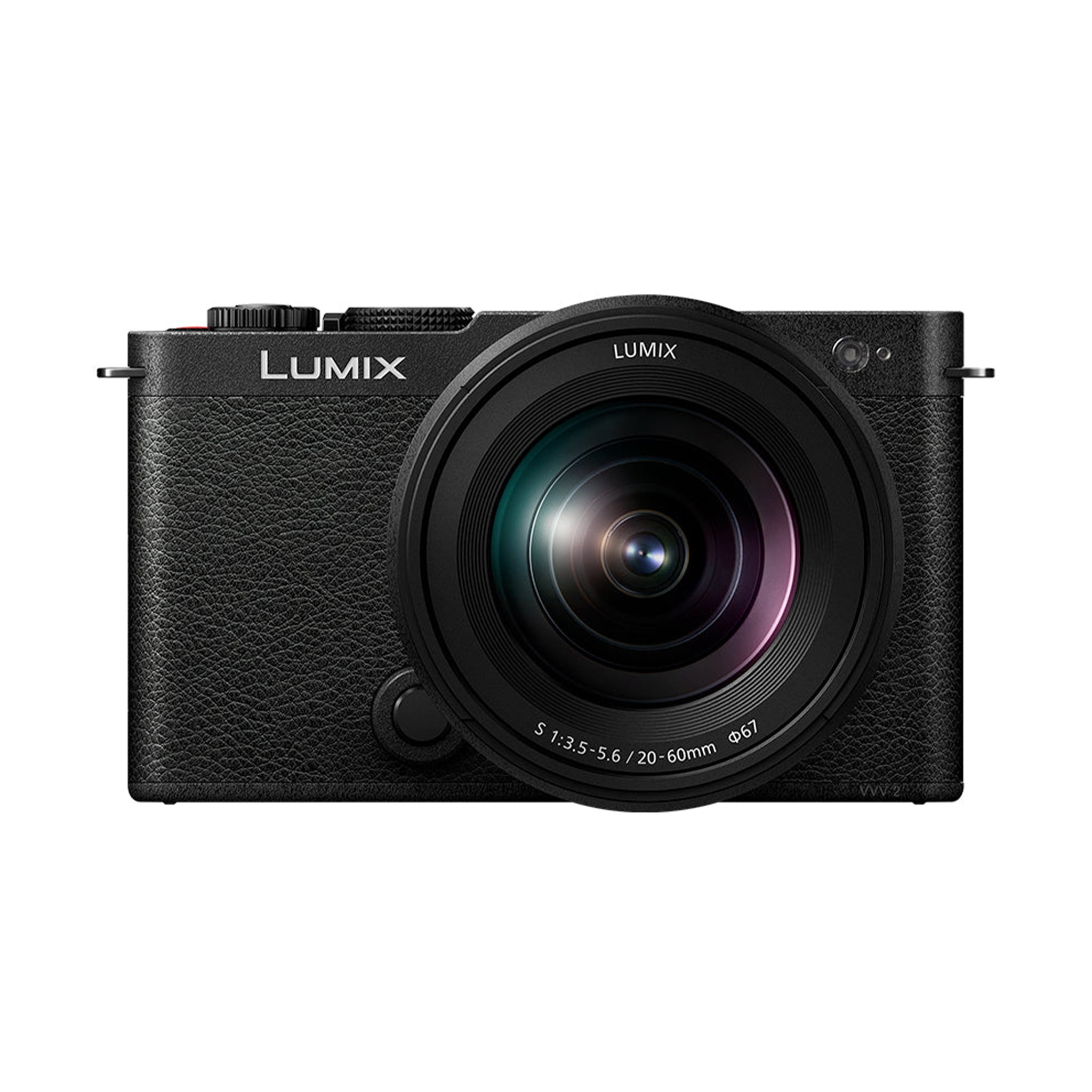

The Panasonic S9 and Sony A9 III are two full-frame mirrorless cameras that have garnered attention from photographers and videographers seeking high-performance tools. Commonly compared within the professional and enthusiast photography communities, both cameras offer robust feature sets but cater to slightly different priorities. Buyers might find themselves choosing between the Panasonic S9's impressive video capabilities and image stabilization versus the Sony A9 III's superior autofocus and speed capabilities, making it a challenging decision depending on individual shooting needs.
Key differentiators include the Panasonic S9's groundbreaking video resolution of up to 5.9K and 5-axis stabilization, ideal for cinematographers and vloggers. In contrast, the A9 III excels with a maximum of 120 frames per second, making it ideal for sports and wildlife photographers. When comparing these two models, potential buyers must evaluate their primary use cases, whether they lean more toward videography, high-speed photography, or a balance of both.
Specifications Comparison
Detailed Comparison
Image Quality
Both the Panasonic S9 and the Sony A9 III deliver excellent image quality, but their output characteristics differ subtly. The S9 features a 24-megapixel sensor, while the A9 III offers a slightly higher resolution with 25 megapixels. However, both cameras perform exceptionally well in low-light scenarios due to their full-frame sensor designs. The dynamic range is another critical factor; both cameras offer competitive performance, although user reviews often highlight the tonal gradation in images produced by the S9 during post-processing.
In terms of color science, Panasonic typically delivers vivid colors suitable for landscapes and vibrant scenes, while Sony's approach tends to prioritize realistic skin tones, which may appeal more to portrait photographers. Users looking for a subtle preference in color rendition may find themselves leaning toward one camera over the other based on their photographic style.
Thus, while both systems produce stunning quality images across various settings, the S9 might have a slight edge for certain genres, such as landscapes and dynamic scenes, due to its color depth and processing capabilities. However, the differences are minimal and largely subjective based on personal preference.
Based on these considerations, the section winner is: tie.
Autofocus System
Autofocus capabilities can make or break a camera for professional use. The Sony A9 III boasts an impressive autofocus system with up to 693 phase-detection points and 425 contrast-detection points, enabling it to achieve rapid and precise autofocus, even with fast-moving subjects. This performance is bolstered by its high frame rate, allowing photographers to capture critical moments with consistent accuracy.
On the other hand, the Panasonic S9 features a respectable autofocus system but falls short in comparison to the A9 III. With fewer points and a slower acquisition, the S9 is suitable for static and moderately dynamic subjects but may struggle under high-speed scenarios. It's important to note that the S9 is designed with a different user demographic in mind, and for general photography, its system is adequate for most users.
When it comes to tracking and capturing fast-action shots, the A9 III's capabilities will cater far better, particularly for sports and wildlife photographers who require pinpoint focus under varying conditions. Therefore, this section is clear-cut in favor of the A9 III.
In this comparison, the winner is: b.
Video Capabilities
Video production is one of the standout features of the Panasonic S9. It can capture a remarkable 5.9K video footage, making it one of the most compelling options for videographers who need high-resolution output. Additionally, the inclusion of 5-axis image stabilization ensures smooth footage even in dynamic situations, which is a significant advantage for handheld shooting.
Conversely, the Sony A9 III focuses on 4K video recording, maxing out at 120 frames per second. While this frame rate is impressive for slow-motion video, the resolution does not match the S9's capabilities. However, the A9 III benefits from Sony's extensive video-centric features, including better heat management for longer recording sessions, which is a considerable factor for professional users.
The vast array of features tailored to video on the S9 makes it ideal for content creators prioritizing video quality, while the A9 III shines in speed and usability for shooting action sequences. Given the variation in preferences for video resolution versus frame rate, potential buyers must consider their primary focus.
Considering the advantages each camera holds, the winner in video capabilities is: a.
Build & Ergonomics
Build quality is a crucial aspect of any professional camera, and both the Panasonic S9 and Sony A9 III present robust designs. The S9 is slightly smaller and lighter, which can be an advantage for extended shooting sessions where weight is a consideration. Weighing in at 486g, it allows for easier mobility without sacrificing performance.
Meanwhile, the A9 III, at 617g and larger dimensions, feels more substantial in the hand. It is designed with ergonomics in mind, featuring a well-placed grip and important controls that provide a comfortable shooting experience. The inclusion of a high-resolution electronic viewfinder as an optional feature is notable, catering to various user preferences for composing shots.
However, the A9 III does have a solid advantage when it comes to weather sealing and durability, earning it a reputation for withstanding harsher conditions. Users who frequently find themselves shooting in adverse weather conditions may prefer the A9 III for its sturdiness, whereas casual shooters may appreciate the compactness of the S9.
Ultimately, while both are well-built, the more robust and substantial feel of the Sony A9 III gives it a slight edge in this category. Therefore, the winner here is: b.
Battery & Storage
Battery life is always an essential factor for photographers and videographers. The Panasonic S9 includes a battery that allows for an approximate lifespan of 350 shots, which is respectable. It uses the L-Mount system, which also allows for compatibility with various lenses.
On the other hand, the Sony A9 III utilizes a larger battery that excels in longevity, offering around 600 shots per charge. This makes it preferable for extended events, such as weddings or outdoor shooting, where changing batteries frequently may pose a challenge. Additionally, the A9 III supports dual card slots, allowing users to easily manage storage during high-volume shoots or backup footage in real-time.
In the ever-demanding field of photography, not needing to swap out cards or batteries as often can be a game-changer, particularly for professionals. Thus, the ability of the A9 III to handle storage and battery life outstrips the S9 significantly, and as such, the winner for this section is: b.
Value for Money
In terms of value for money, both the Panasonic S9 and Sony A9 III are premium offerings, but they cater to slightly different markets. The S9, priced competitively given its advanced video capabilities and substantial image quality, provides excellent value, especially for videographers looking for versatility without breaking the bank.
Conversely, the A9 III, with its higher price tag, is targeted more towards sports and wildlife photographers who require rapid shooting capabilities and excellent autofocus. This camera's strengths justify its cost for professional users whose work demands the utmost in speed and reliability.
When assessing value, one must consider the intended use. For those heavily invested in video, the S9 offers features that can justify a purchase at a lower price point compared to the A9 III. However, for fast-action photographers working in demanding conditions, the A9 III represents an invaluable investment due to its performance reliability.
In this sense, there is a split; the S9 offers better value for those focused on video, while the A9 III delivers in performance, justifying its cost for photographers. Given the diverse user bases, we can conclude this section as a tie.
Our Verdict
Overall, the Sony A9 III emerges as the winner in this comparison, primarily due to its exceptional autofocus system, excellent battery life, and robust build quality. It's the better choice for sports and wildlife photographers who need to capture fast-moving subjects with precision and reliability. Meanwhile, the Panasonic S9 shines for videographers, especially due to its superior resolution for video recording. Ultimately, a potential buyer's specific needs regarding speed, image quality, battery life, and videography should dictate their choice; the A9 III is optimal for speed and tough conditions, while the S9 offers remarkable value primarily for video-focused creators.
Panasonic S9
Sony A9 III
Also Compare
Frequently Asked Questions
Which camera is better for video shooting?
The Panasonic S9 excels for video shooting with its ability to record in 5.9K resolution and features 5-axis stabilization, making it ideal for filmmakers and content creators focused on high-quality video production.
Is the autofocus system on Sony A9 III worth the price?
Yes, the autofocus system on the Sony A9 III is exceptional, featuring a vast number of focus points and rapid tracking capabilities, making it highly suitable for photographers who shoot fast-paced action.
How do the battery lives compare between the two cameras?
The Sony A9 III offers a significantly longer battery life, capable of up to 600 shots per charge, compared to the Panasonic S9's approximately 350 shots, making it a better choice for prolonged shooting sessions.
What are the weight differences between the Panasonic S9 and Sony A9 III?
The Panasonic S9 is lighter at 486 grams, while the Sony A9 III weighs 617 grams. This difference might influence your choice depending on your shooting style and endurance requirements.
Can I use the same lenses on both models?
No, the Panasonic S9 utilizes the L-Mount system, while the Sony A9 III employs the Sony E-mount. Therefore, lenses are not interchangeable between the two models.