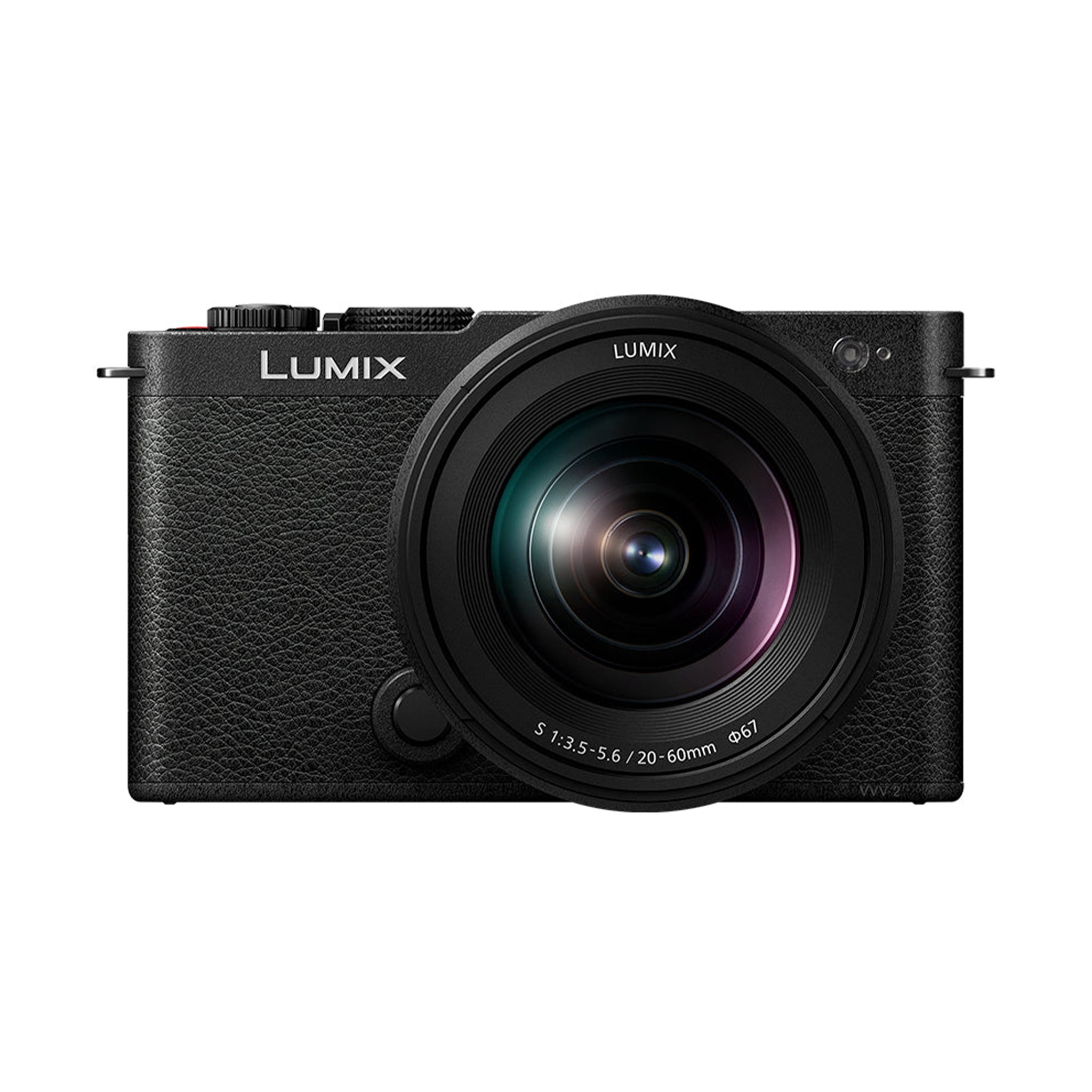

The Panasonic S9 and the Sony A7S III are two formidable mirrorless cameras that often attract attention from professional videographers and photographers seeking excellent performance. The choice between these two models hinges on their respective specialties: the S9, with its higher resolution and newer release date, positions itself as a versatile option for a range of shooting conditions, while the A7S III is renowned for its impressive low-light performance and exceptional video capabilities. Photographers and videographers alike may find themselves weighing image quality, autofocus performance, and video resolutions as they decide on the right camera for their needs.
Specifications Comparison
Detailed Comparison
Image Quality
The Panasonic S9 boasts a 24-megapixel full-frame sensor, which offers higher resolution images compared to the Sony A7S III, which is equipped with a 12-megapixel sensor. While the higher megapixel count of the S9 allows for greater detail and cropping flexibility, the A7S III is designed for exceptional low light performance due to its larger individual pixel size. This design makes it favorable for night scenes, events, and scenarios where high ISO settings are frequently used. In terms of dynamic range, both cameras have been praised, but the A7S III slightly edges in low-light responsiveness and noise handling at higher ISO levels, thanks to its impressive ISO range expanding from 40-409600.
Autofocus System
The autofocus system on the Sony A7S III is one of its standout features, with 759 autofocus points that allow for reliable and fast acquisition, even in challenging lighting conditions. The S9, with its contrast-detect autofocus, offers effective focusing but might be slower in high-motion scenarios compared to the A7S III's phase-detect system. The A7S III also excels with real-time Eye AF for humans and animals, propelling its capability in portrait and wildlife photography. While the S9's autofocus is competent, it does not quite match the robustness of the A7S III, particularly in dynamic environments, making it less suited for fast-moving subjects.
Video Capabilities
When it comes to video performance, the Panasonic S9 impressively supports resolutions up to 5.9K, and offers options like UHD 4K and DCI 4K, making it a great choice for content creators who need high-resolution footage. On the other hand, the Sony A7S III excels in 4K video at 120 fps, offering beautiful slow-motion capabilities. The A7S III's 10-bit 4:2:2 internal recording provides greater flexibility for post-production color grading, a feature coveted by professionals. In terms of stabilization, the S9's 5-axis image sensor shift is compelling, but the A7S III's 5.5 stops of stabilization give it a practical edge for handheld shooting. Both cameras are formidable, but the specific needs for resolution versus frame rate will significantly influence the buyer's choice.
Build & Ergonomics
In terms of build quality, the A7S III is noted for its robust weather-sealing and ergonomic handling, which is particularly beneficial for outdoor shooting in varied conditions. Its slightly larger size and weight (699g) allow it to feel more substantial in hand. The Panasonic S9 is more compact at 486g and is designed with portability in mind, potentially appealing to travel photographers. However, this comes at the expense of some ergonomics; the A7S III's larger grips and button layout provide a more intuitive experience for prolonged usage. The sturdy construction of the A7S III might lead users to prefer it for long-term, demanding shoots, while the S9 works well for those valuing weight and compactness.
Battery & Storage
Battery life is another important aspect where the Sony A7S III excels, delivering around 600 shots per charge compared to the S9, whose battery life is less established but likely less capable given its newer release. Additionally, the A7S III is equipped to handle more demanding tasks thanks to its ability to record high-quality video without rapid battery drainage. Storage on both cameras offers robust solutions, and while both are capable of using SD cards, the A7S III supports CFexpress Type A for faster read/write speeds that suit its high-end video capabilities. This enables a more seamless recording experience, especially for high-resolution videos.
Value for Money
When evaluating price, the currently set price for the A7S III is at $3499, reflecting its high-performance capabilities. Despite the potential higher price point, the robust video features, extensive lens ecosystem, and proven reliability can justify the investment for serious professionals. Meanwhile, the Panasonic S9 is positioned as a more competitively-priced option, particularly appealing to those who need higher resolution and versatile video capabilities without opting for an intensive investment. The value proposition of the S9 appears strong for those primarily interested in still photography and moderate video work, while the A7S III may attract those focused on high-end video production.
Our Verdict
Overall, while the Panasonic S9 offers exceptional resolution and value for still photography, the Sony A7S III emerges as the overall winner due to its superior autofocus, video capabilities, and ergonomics. If your focus is primarily on versatile video production, especially in low light, or if you need a camera that excels in fast-paced environments, the A7S III is the better choice. On the other hand, if high-resolution stills and budget considerations are paramount, and you do not mind the slower autofocus, then the S9 can certainly cater to your needs.
Panasonic S9
Sony A7S III
Also Compare
Frequently Asked Questions
Which camera is better for low-light photography?
The Sony A7S III is generally better for low-light photography due to its lower resolution sensor that allows for larger pixel sizes and a wider ISO range.
Can both cameras shoot 4K video?
Yes, both the Panasonic S9 and the Sony A7S III can shoot 4K video, but the A7S III offers higher frame rates at 4K, making it more suitable for high-speed videography.
How do the autofocus systems compare?
The Sony A7S III has a more advanced autofocus system with 759 points and real-time tracking, surpassing the S9's system in speed and accuracy, especially in dynamic environments.
Is the Panasonic S9 more portable?
Yes, the Panasonic S9 is lighter and more compact than the Sony A7S III, making it a better option for travel photographers and those looking for a more manageable setup.
What are the key differences in battery life?
The Sony A7S III offers a longer battery life, rated at approximately 600 shots, compared to the Panasonic S9, which although not explicitly rated, is expected to last less under similar conditions.