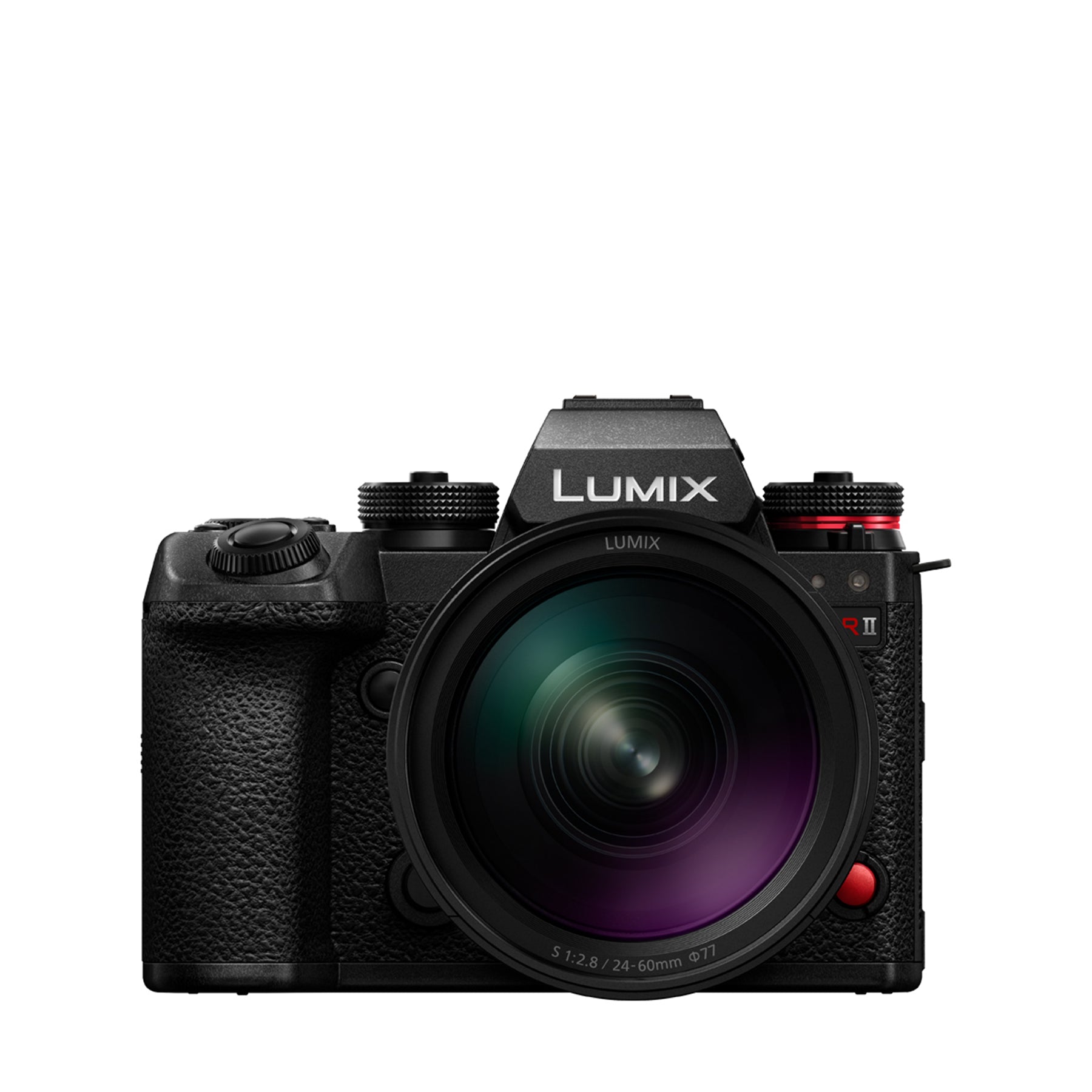

The Panasonic S1R II and Sony A9 II are both top-tier full-frame mirrorless cameras that cater to professional photographers and videographers. These models are often compared due to their advanced features aimed at capturing high-quality images and video, but they target slightly different types of users. The S1R II is geared more towards photographers who prioritize resolution and image quality, while the A9 II appeals to users who need outstanding speed and autofocus performance, particularly in fast-paced environments like sports photography. Understanding their key differentiators can help potential buyers select the camera that best aligns with their specific needs.
Specifications Comparison
Detailed Comparison
Image Quality
The Panasonic S1R II boasts an impressive 44.3 megapixels, enabling it to capture stunningly detailed images suitable for large print applications or extensive cropping. Its full-frame sensor excels in low-light conditions, thanks to a more advanced noise control system paired with its high-resolution sensor. This allows for a dynamic range that benefits landscape and portrait photographers seeking depth and detail in their images. In contrast, the Sony A9 II has 24 megapixels, which may be less appealing for those prioritizing ultimate resolution. However, its sensor still delivers excellent image quality, with vibrant colors and good dynamic range. The A9 II is especially effective at shooting at high ISO levels, making it a suitable option for low-light performances despite the lower pixel count. When it comes to overall image quality, the S1R II has the upper hand due to its higher resolution, making it the ideal choice for detailed imagery. It is particularly beneficial for landscape, studio, and portrait photographers who value high detail and post-processing flexibility, while the A9 II serves well for action shots where ultimate color and detail precision may be less critical.
Autofocus System
The autofocus system in the Sony A9 II shines with its impressive 693 phase-detection autofocus points, allowing for fast and accurate focusing across a wide image area. This advanced system offers real-time Eye Autofocus for both humans and animals, which is ideal for portrait and wildlife photography in dynamic conditions. The A9 II also features a tracking system that works effectively even at high frame rates, making it a top choice for sports and action photographers. On the other hand, the Panasonic S1R II employs a contrast-based autofocus system that, while reliable and accurate, doesn't match the speed of the A9 II. The S1R II's autofocus can struggle in low-light scenarios or while tracking fast-moving subjects. While it offers features like face and eye detection, it simply doesn't compete with the A9 II's breadth of autofocus capabilities. Thus, while the S1R II provides satisfactory autofocus for general use, it does not cater to the needs of those who require lightning-fast focus for fast-paced shooting. In summary, for autofocus performance, the A9 II is the clear winner, especially for action-heavy situations where quick and accurate focusing is essential.
Video Capabilities
The Panasonic S1R II stands out in video capabilities, supporting impressive 8K resolution at 30 fps and 4K at 120 fps, providing professional videographers with versatility and outstanding video quality. Its advanced video features, such as V-Log support, enhance its capability to deliver cinematic visual storytelling and post-production flexibility, allowing for exceptional color grading and dynamic range adjustments. The Sony A9 II, while it can shoot 4K video, is limited to 30 fps and lacks 8K capabilities. However, it excels in providing high-quality 4K output with excellent color science and a good range of frame rates for slow-motion work. It is a reliable option for vloggers and low-budget filmmakers but does not match the versatility seen in the S1R II for those requiring high-end video recording options. In this comparison, the S1R II clearly leads in video capabilities, making it an excellent choice for those who prioritize both photography and high-end videography.
Build & Ergonomics
The Sony A9 II features a compact and robust design, weighing in at 678g, making it lightweight for a full-frame camera, while its durable build includes weather sealing. This means that it can withstand harsher conditions, ideal for outdoor photographers who frequently encounter adverse weather. The 3-inch LCD screen with a resolution of 1.44 million dots is sharp and functional, although it does lack the versatility of a fully articulated design. In contrast, the Panasonic S1R II is relatively larger and heavier, offering a more substantial feel that appeals to users who prefer a solid grip. The camera is also weather-sealed, which gives it the durability necessary for outdoor use. However, the S1R II's LCD screen is slightly more advanced in terms of its touchscreen functionality, enhancing usability. Additionally, the S1R II's control layout is designed for a more traditional photographic experience, appealing to those who prefer tactile controls over fully digital interfaces. While both cameras are well-built, the A9 II is designed for practicality and portability, while the S1R II caters to users who prefer a heavier, more robust camera body with better manual control layouts.
Battery & Storage
The A9 II is equipped with a high-capacity battery, providing approximately 690 shots per charge, which is commendable for a mirrorless camera. Its efficient Energy Saving mode helps extend battery life further during extended shooting sessions, making it favorable for event photography or long shoots. Additionally, the A9 II supports dual UHS-II SD card slots, allowing users to manage large quantities of high-resolution images and video efficiently. On the other hand, the Panasonic S1R II may not have an official battery life rating comparable to the A9 II, but it uses a similar battery style that offers endurance. However, the S1R II's dual card slots are also compatible with the UHS-II standard, making it quite efficient in writing large files, like 8K video, to memory quickly. This aspect is essential for professionals who generate vast quantities of data. In terms of battery performance and storage options, the A9 II takes the lead due to its superior battery life, providing reliable support for extensive shooting periods, which is crucial for demanding projects.
Value for Money
The Sony A9 II, priced at around $4500, provides a robust feature set that justifies its cost, especially given its exceptional autofocus performance and video capabilities. Users who engage in sports, wildlife, or fast-action photography may find that the investment is worthwhile for the benefits of speed and responsiveness. The versatility in using the camera for both photo and video applications additionally adds to its overall value proposition. In contrast, the Panasonic S1R II is best suited for those whose main focus is on resolution and image quality while also needing high-quality video capabilities. While the S1R II might appeal to photographers requiring high detail, its higher price point can be seen as less justifiable for those who may not lean toward high-resolution capture or 8K video. However, for artistic and professional usage where image quality is paramount, the investment may still be considered fair. Ultimately, the value proposition largely depends on the user's specific needs, with the A9 II presenting a more versatile option for diverse photography styles while offering a lower barrier to entry for consistent performance.
Our Verdict
Selecting a winner between the Panasonic S1R II and the Sony A9 II effectively comes down to the primary needs of the user. The S1R II emerges victorious for its higher resolution and superior video capabilities, catering excellently to photographers and videographers dedicated to capturing large amounts of detail in their work. Its impressive image quality makes it ideal for studio and landscape photographers. On the other hand, the A9 II excels in speed, autofocus performance, and battery life, making it the preferred choice for fast-action photography. Depending on whether the buyer values resolution or speed in their photography will ultimately dictate which model is better suited for their specific needs.
Panasonic S1R II
Sony A9 II
Also Compare
Frequently Asked Questions
Which camera is better for low-light photography?
While both cameras perform well in low-light, the Panasonic S1R II's higher resolution and advanced noise reduction techniques make it slightly better for capturing excellent detail in dark conditions compared to the A9 II.
Is the Panasonic S1R II more suitable for videography?
Yes, the S1R II offers 8K video recording capabilities and a more extensive range of frame rates that suit professional videography, distinguishing it from the A9 II, which is limited to 4K at 30 fps.
How does the autofocus performance compare in fast-action scenarios?
The Sony A9 II excels in fast-action photography with its advanced autofocus system and high burst rate, making it superior in capturing fast-moving subjects compared to the S1R II's focus performance.
What about the size and weight differences?
The Sony A9 II is lighter and more compact, making it easier to carry for extended periods. The S1R II is bulkier but offers a more substantial feel which some photographers prefer.
Which camera provides better value for casual photographers?
For casual photographers, the Sony A9 II provides a more versatile camera with excellent performance across various shooting scenarios at a comparable price, whereas the S1R II may be better for those specifically focused on high-resolution shooting.