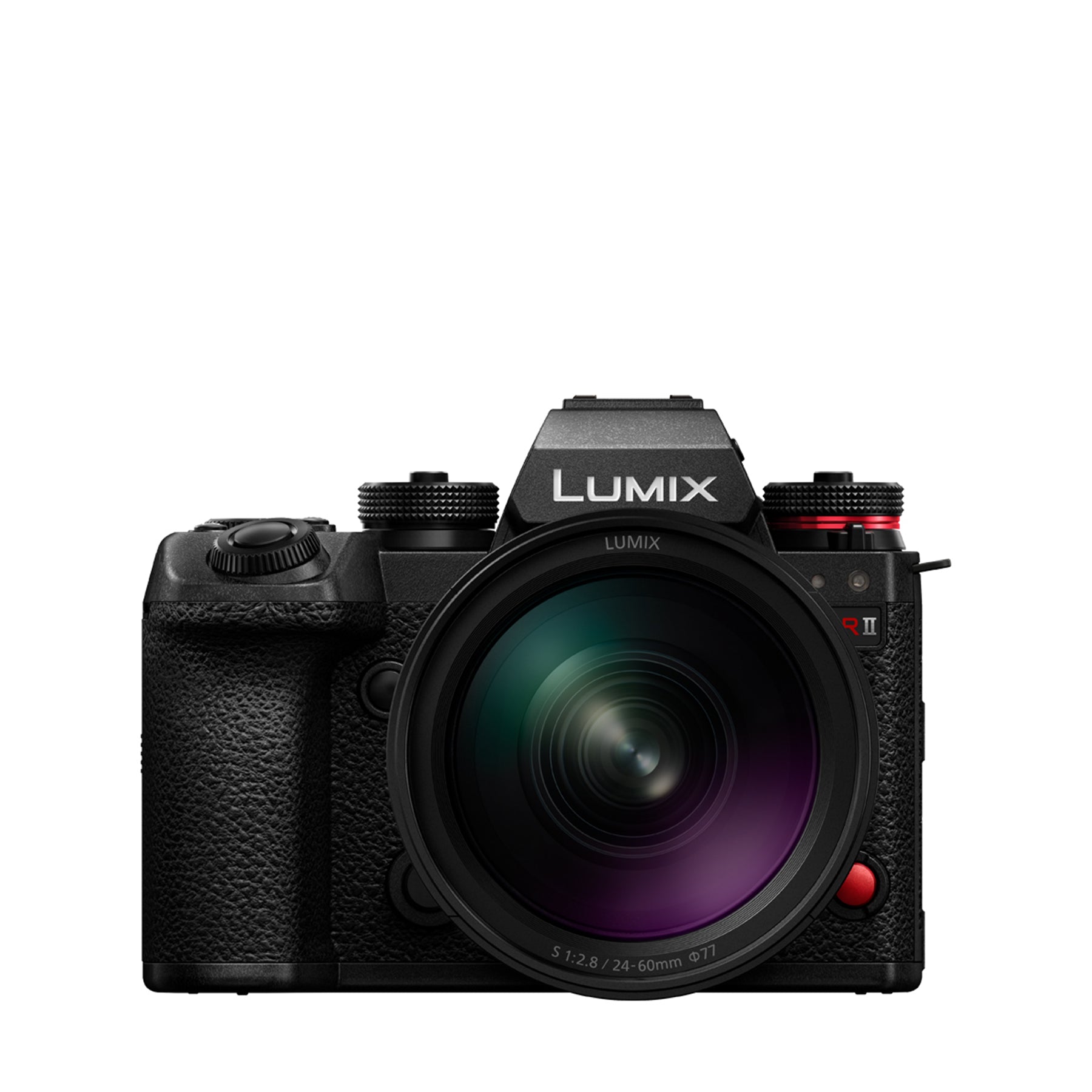
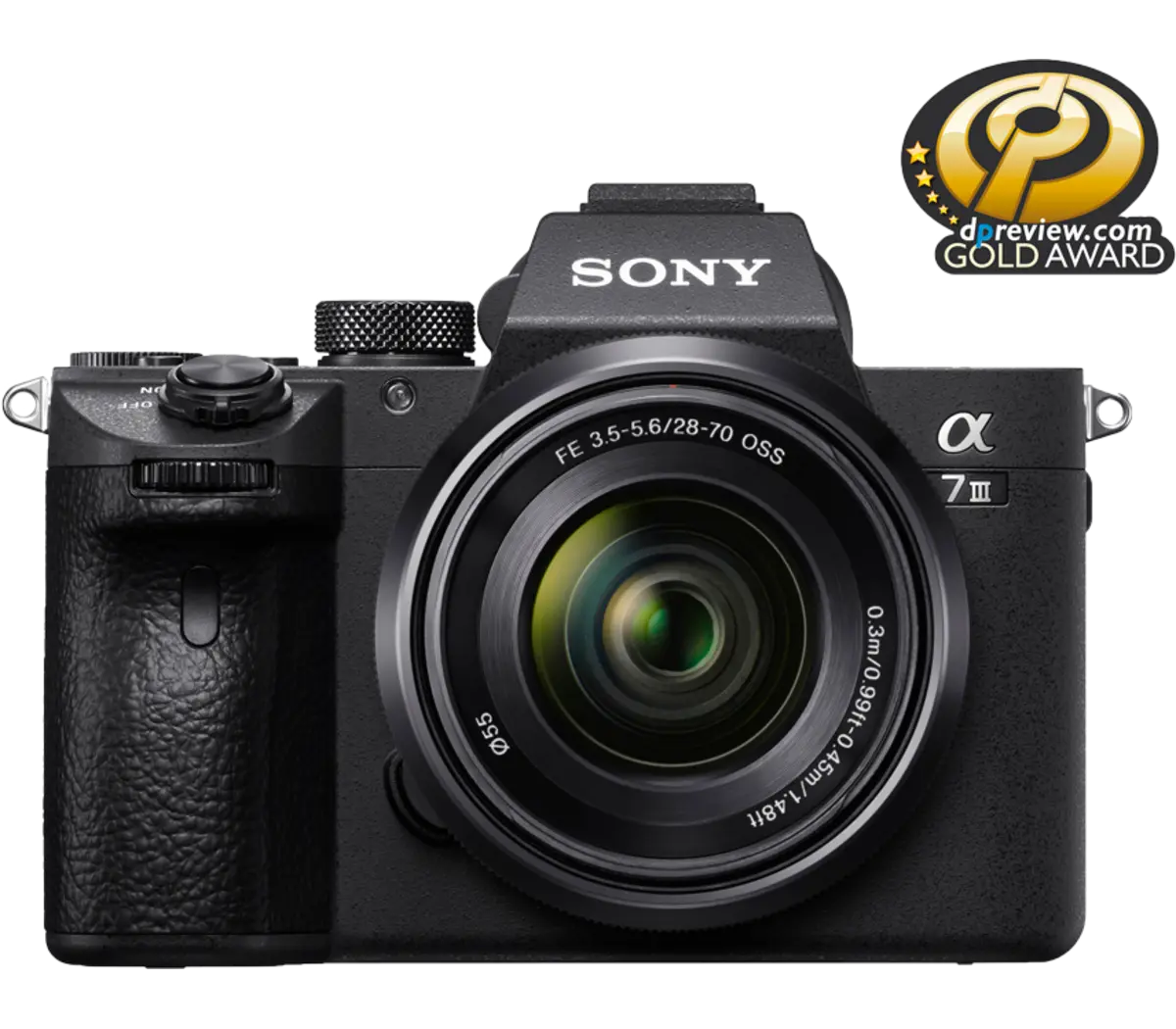
The Panasonic S1R II and the Sony A7 III are two prominent contenders in the full-frame mirrorless camera market, often compared by photographers and videographers seeking high performance and versatility. The S1R II emphasizes high resolution and advanced video capabilities, making it a favorite among professional photographers and videographers who require superior image detail and quality. Conversely, the A7 III stands out with its excellent balance of features, ease of use, and value for money, appealing to both enthusiasts and professionals looking for a reliable all-rounder.
While both cameras offer full-frame sensors, their specifications indicate differing strengths. The S1R II boasts a significantly higher pixel count at 44.3MP compared to the 24MP of the A7 III, making it suitable for large print work and detailed landscapes. However, the A7 III's robust autofocus system and greater battery life make it a great choice for event photography and longer shoots. These key differentiators, along with their respective video capabilities and ergonomics, will guide buyers in choosing the right camera for their needs.
Specifications Comparison
Detailed Comparison
Image Quality
Image quality primarily hinges on sensor performance, resolution, and dynamic range. The Panasonic S1R II, with its 44.3MP sensor, offers remarkable detail and is ideal for large prints and intricate post-processing due to the fine resolution. This makes it particularly appealing for landscape and product photography, where extreme detail is often required. Additionally, it utilizes its full-frame sensor's potential efficiently, providing excellent dynamic range, which aids in capturing images in high-contrast scenarios.
In contrast, the Sony A7 III's 24MP sensor still delivers high-quality images that are more than sufficient for most applications. The images retain a good level of detail and dynamic range, making it capable for various shooting environments. However, for pixel peepers or those needing extensive cropping in post, the S1R II has the upper hand.
Ultimately, photographers aiming for the highest resolution for large prints and detailed work will favor the S1R II, while those for whom sufficient quality is deemed adequate will find the A7 III more than suitable. Therefore, in terms of image quality, the clear winner is the Panasonic S1R II.
Autofocus System
The autofocus system is crucial for capturing sharp images, especially in dynamic environments. The Panasonic S1R II features a contrast-detection autofocus system, which, while effective, doesn't match the speed and efficiency of Sony's phase-detection system found in the A7 III. The A7 III boasts an impressive 693 phase-detection autofocus points which cover a substantial portion of the frame, providing faster focus acquisition and better tracking of moving subjects, making it ideal for sports and wildlife photography.
Sony's real-time Eye Autofocus makes it particularly advantageous for portrait photography, as it can quickly and accurately lock onto a subject's eyes, ensuring sharp focus on the subject's face even in challenging lighting conditions. While the S1R II does have capabilities worth noting, its autofocus system is generally regarded as being less responsive in comparison.
Therefore, photographers requiring rapid and reliable autofocus capabilities will find the A7 III to be significantly superior. As such, in terms of autofocus, the Sony A7 III takes the lead.
Video Capabilities
Video capabilities have become increasingly important for today's hybrid shooters. The Panasonic S1R II supports 8K video recording at 30 frames per second, along with 4K recording at 120 frames per second, providing impressive options for high-resolution video capture and slow-motion footage. This functionality is particularly appealing to professional filmmakers who require the best video quality available, enabling extensive cropping and editing post-shooting due to high resolution.
On the other hand, the Sony A7 III is limited to 4K video recording at 30 frames per second but does deliver high-quality video output with excellent color science and low-light performance. While its video capabilities are commendable, it cannot compete with the S1R II's higher resolutions and frame rates.
In this category, for videographers looking for cutting-edge video features, the Panasonic S1R II is the clear winner thanks to its superior resolution and frame rate capabilities.
Build & Ergonomics
Build quality and ergonomics can significantly influence user experience, especially during long shooting sessions. The Panasonic S1R II features a sturdy and robust design, complete with weather sealing, making it suitable for harsh environmental conditions. Its body typically feels larger and more substantial, which some users may prefer for better handling, particularly when using larger lenses.
Conversely, the Sony A7 III is slightly more compact and lighter, weighing in at 650 grams compared to the S1R II's bulkier design. The smaller form factor may appeal to those who prefer a more portable option. It also features an intuitive interface and good button layout, allowing for a comfortable shooting experience.
While both cameras offer good ergonomic design and durability, the sturdier build of the S1R II is a boon for outdoor photographers, while the A7 III's lighter weight is advantageous for everyday use. Ultimately, this aspect can largely come down to personal preference.
Battery & Storage
Battery life is a critical factor for many photographers, especially in prolonged shooting situations. The Sony A7 III excels in this regard, offering an impressive battery life rated for approximately 710 shots per charge. This extended battery life is invaluable for event photography or long days of shooting, as it allows for sustained use without the need for frequent recharging.
In contrast, while the battery life of the Panasonic S1R II is reasonable, it does not reach the levels of the A7 III. Consequently, photographers may find themselves needing to carry additional batteries for extended shoots. Furthermore, both cameras support dual card slots, but the A7 III's larger market ecosystem offers a wider variety of storage options, making data management easier for users.
Given the substantial difference in battery performance, the Sony A7 III is the clear winner in this department.
Value for Money
When comparing value for money, the price difference between both models is a significant aspect. The A7 III is priced at around $2000, offering extensive features, impressive performance, and great autofocus systems, which translate to excellent value for both amateur and professional photographers. Additionally, its lower resolution sensor may suit many users who prioritize speed and battery life over extreme resolution.
In contrast, the Panasonic S1R II, with its superior specifications including the 44.3MP sensor and 8K video capabilities, is positioned at a higher price point. While it provides exceptional quality, it may be seen as less accessible for more budget-conscious buyers. Users needing the utmost in image quality and video performance may justify this investment.
The decision will largely depend on the buyer's specific needs; however, considering the overall budget and the feature set required, the Sony A7 III provides a more accessible entry point for high-quality photography, making it the winner in value for money.
Our Verdict
Overall, the Panasonic S1R II wins based on its superior image quality and video capabilities, making it an exceptional choice for professional photographers and videographers who demand high resolution and advanced features. On the other hand, the Sony A7 III remains an outstanding all-around camera, especially for users prioritizing autofocus performance, battery life, and value for money. For those who require a robust, versatile system that can handle a variety of shooting scenarios effectively, the A7 III is an excellent option; however, the S1R II's advanced features and resolution make it the preferred choice for high-end professionals.
Panasonic S1R II
Sony A7 III
Also Compare
Frequently Asked Questions
Which camera is better for landscape photography?
The Panasonic S1R II is better for landscape photography due to its higher resolution sensor, providing exceptional detail and dynamic range.
Is the autofocus in the A7 III better than the S1R II?
Yes, the A7 III has a superior autofocus system, with more phase-detection points and real-time Eye Autofocus, making it faster and more reliable.
Which camera has better video features?
The Panasonic S1R II is unmatched for video features, offering 8K recording capabilities, while the A7 III is limited to 4K.
How does battery life compare between the two cameras?
The Sony A7 III offers significantly better battery life compared to the Panasonic S1R II, making it more suitable for long shooting sessions.
Is the price difference between the two cameras justified?
The higher price of the Panasonic S1R II can be justified for users needing its high-resolution sensor and advanced video capabilities, while the A7 III offers great value for those who prioritize performance over pixel count.