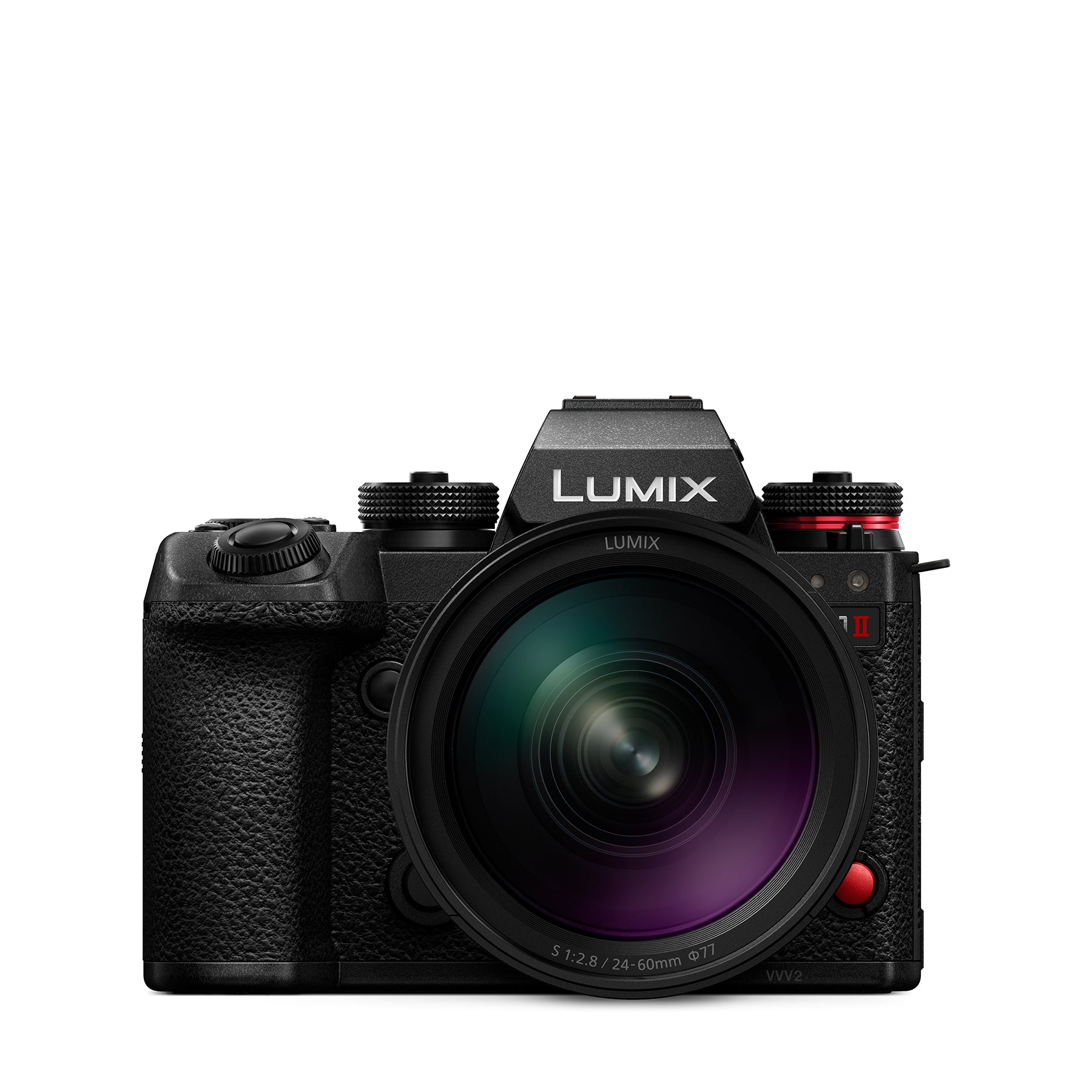

The Panasonic S1 II and Sony A9 III are two powerhouse cameras released in 2023, both targeting professional photographers and videographers looking for high performance in various shooting scenarios. The S1 II is part of Panasonic's LUMIX lineup, known for its robust video capabilities and versatility, while the A9 III continues Sony's reputation for speed, particularly in sports and action photography. Photographers might be choosing between these two options because they want a blend of high-resolution stills and capable video features, making the decision hinge on specific use cases such as photography style, preference for video resolution, or ergonomic design.
Specifications Comparison
Detailed Comparison
Image Quality
Both cameras feature full-frame sensors, with the Panasonic S1 II offering 24.1 megapixels compared to Sony's 25 megapixels. While the difference in megapixels is marginal, the S1 II leverages its sensor for remarkable low-light performance and color accuracy, especially relevant for videographers and portrait photographers. Users have noted the dynamic range in images from the S1 II as capturing more nuanced shadows and highlights, which can be critical for professional work. The Sony A9 III, however, is known for its exceptional speed, enabling continuous shooting at high frame rates that can be beneficial for action scenarios. In terms of raw image quality, users might prefer the smooth tonal transitions and vibrant colors delivered by either, but subjective preferences may sway the decision.
Autofocus System
The Sony A9 III features advanced autofocus systems, employing a phase-detection system with up to 693 points across the frame offering incredibly fast and reliable focusing capabilities, especially in dynamic situations. This camera is particularly favored by sports and wildlife photographers due to its ability to track moving subjects with incredible precision at up to 120 frames per second. On the other hand, the Panasonic S1 II uses contrast-detection alongside dual native ISO, resulting in commendable focus performance. However, it may not match the speed and tracking efficiency of the A9 III in high-action contexts. Thus, for those prioritizing faster autofocus and tracking, the A9 III stands out.
Video Capabilities
The Panasonic S1 II excels in video quality, offering a stunning 5.1K resolution at 60 frames per second. It is equipped with V-Log and HDR capabilities, making it an ideal choice for filmmakers who require versatility in post-production color grading and rich filmic aesthetics. The A9 III, while offering impressive 4K video at up to 120 frames per second, somewhat lags behind in resolution compared to the S1 II. While it offers a credible video performance, users primarily interested in high-resolution video content would find the S1 II to be more advantageous, especially for projects requiring high detail and clarity.
Build & Ergonomics
In terms of design, both cameras are built robustly, suitable for professional use in demanding environments. The Panasonic S1 II has a slightly bulkier design but compensates with a user-friendly interface and excellent weather sealing. This makes it resilient and user-friendly for outdoor shooting conditions. Conversely, the A9 III is designed to be lighter at 617 grams and features a compact form factor, making it easier to handle for longer periods, especially in fast-paced environments. The layout of controls on both cameras caters well to experienced photographers, but those who prioritize weight and compactness may find the A9 III preferable.
Battery & Storage
Battery performance is crucial for any professional camera, and both the S1 II and A9 III excel in this area. The A9 III boasts a slightly better battery life, lasting longer on average than the S1 II's. Moreover, the A9 III is capable of managing high-speed data transfer rates through its older but still reliable dual SD UHS-II slots, making it favorable for those shooting at high frame rates. The S1 II also features dual slots but only reaches maximum performance at a lesser speed due to other prioritizations in features, which might prove significant for shooters capturing an abundance of data in a short time.
Value for Money
Both cameras come in at competitive price points given their specifications. The S1 II, priced for its advanced video capabilities, provides excellent value for content creators focusing on high-quality videography and image quality. Conversely, the A9 III, with a slight premium, appeals primarily to sports and wildlife photographers or anyone requiring ultra-fast shooting speeds. Buyers considering primarily video work may get more utility from the S1 II, but those who need felxible high-speed photography may justify the A9 III's cost.
Lens Ecosystem
The lens ecosystems for both brands are well-established but vary significantly. Sony's E-mount lens lineup is extensive and continuously growing, offering a variety of excellent quality options for virtually all photography needs. Users can select from pro-level glass which seamlessly integrates with their A9 III for optimal performance. Conversely, Panasonic has an impressive range of lenses for the LUMIX line, but in contrast, it is generally deemed slightly less comprehensive than the E-mount options. For photographers who rely heavily on specific lenses for their work, this can be a deciding factor.
Our Verdict
In this detailed comparison, both the Panasonic S1 II and Sony A9 III present compelling arguments for their respective user bases. The S1 II stands out for video capabilities and high resolution, making it ideal for filmmakers and content creators. On the other hand, the A9 III is the choice for photographers prioritizing speed and autofocus technology, especially in action photography scenarios. Ultimately, buyers should assess their primary needs-be it high-end videography or rapid-fire photo capture-to determine which of these exceptional cameras serves them best.
Panasonic S1 II
Sony A9 III
Also Compare
Frequently Asked Questions
Which camera is better for video production?
The Panasonic S1 II offers superior video capabilities with 5.1K resolution, making it more suitable for video production needs compared to the Sony A9 III, which supports 4K video.
How do the autofocus systems compare?
The Sony A9 III excels with a faster and more efficient autofocus system, especially in action scenarios, while the S1 II performs well but may not track moving subjects as quickly.
What are the main ergonomics differences?
The A9 III is lighter and more compact, which may be beneficial for long shoots. The S1 II, while bulkier, is still ergonomically friendly and built for durability in various weather conditions.
What about battery life?
The Sony A9 III generally has better battery life than the S1 II, allowing longer shooting sessions without needing to change batteries.
Which camera has a better lens selection?
The Sony E-mount has a broader and more diverse lens selection compared to the LUMIX lineup for the Panasonic S1 II, making it more versatile for different photography genres.