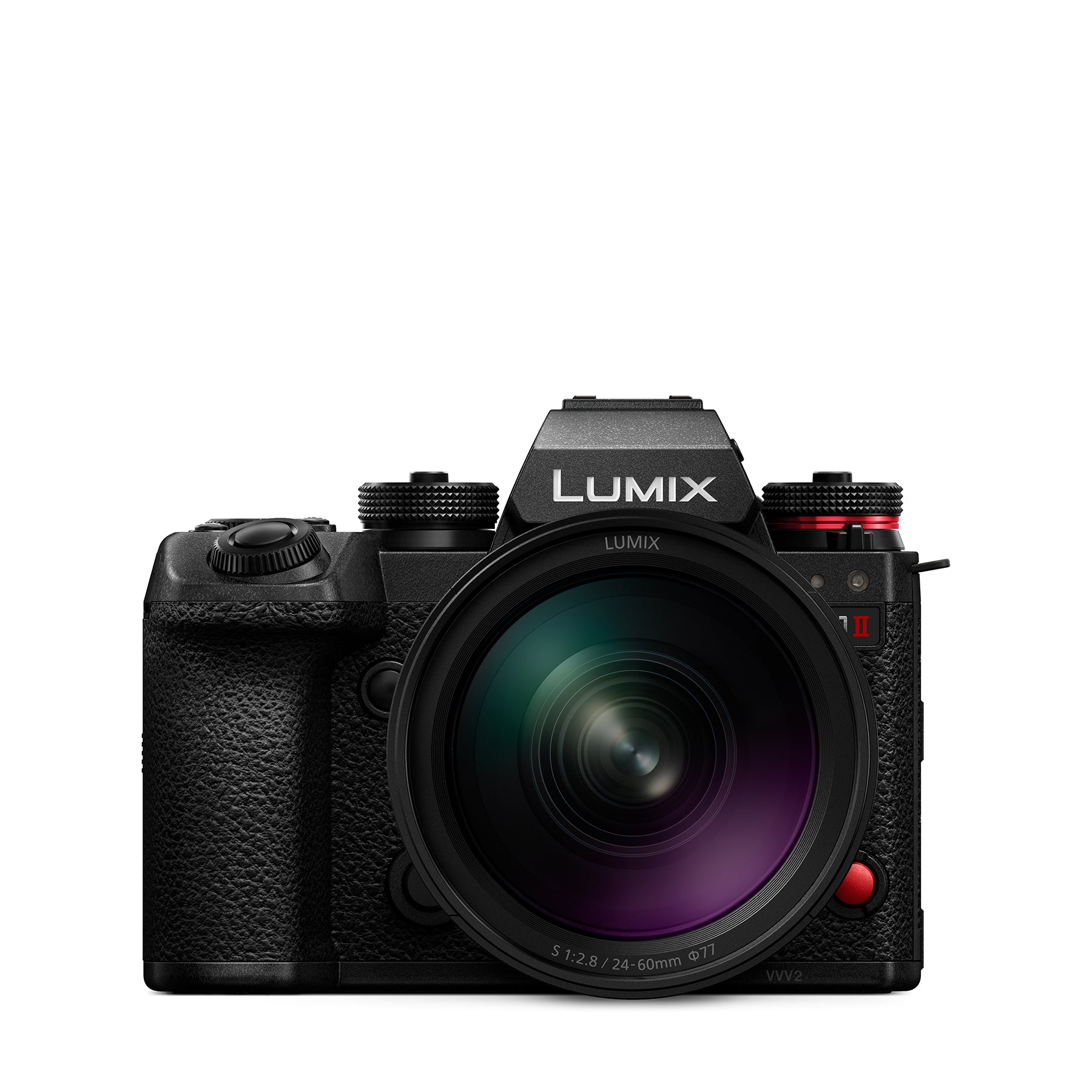

The Panasonic S1 II and the Sony A9 II are two formidable full-frame cameras that frequently come up in discussions among professional photographers and videographers. While both models boast advanced features, they cater to slightly different audiences and use cases. The S1 II, released in 2023, focuses heavily on video capabilities and in-body stabilization, making it a strong contender for those who prioritize videography. In contrast, the A9 II, released in 2019, excels in speed and autofocus performance, attracting sports and wildlife photographers who require rapid-fire shooting without missing critical moments. This comparison highlights their key differentiators to help potential buyers make an informed decision.
Specifications Comparison
Detailed Comparison
Image Quality
Both the Panasonic S1 II and the Sony A9 II offer impressive image quality, but they have subtle differences that may appeal to different segments of photographers. The S1 II features a 24.1-megapixel sensor, which provides excellent dynamic range and low-light performance. Its newer sensor design is optimized for capturing fine details, making it suitable for high-resolution photography and delivering stunning results in challenging lighting conditions. Conversely, the A9 II has a slightly lower resolution at 24 megapixels, but it compensates with its design that prioritizes speed and continuous shooting capabilities. The A9 II's sensor benefits from its BIONZ X image processor, which enhances image quality through advanced noise reduction, especially at higher ISO settings.
Autofocus System
When it comes to autofocus, the Sony A9 II takes the lead with its sophisticated system that employs 693 phase-detection points. This extensive coverage enables quick and accurate focusing, making it ideal for capturing fast-moving subjects in sports and wildlife photography. The A9 II's Eye Autofocus feature is particularly noteworthy, allowing photographers to achieve precise focus on a subject's eyes, which is invaluable in portrait and fashion photography. On the other hand, the Panasonic S1 II features a robust autofocus system, but it does not match the sheer number of points available in the A9 II. While it is competent, particularly in video modes, it lacks the same level of speed and accuracy as the A9 II, especially in dynamic scenarios.
Video Capabilities
In terms of video capabilities, the Panasonic S1 II clearly outshines the Sony A9 II. The S1 II supports 5.1K video recording at 60 frames per second, allowing filmmakers to capture high-resolution footage with incredible detail and versatility. The built-in 8-stop stabilization further enhances video quality by ensuring smoother shots, even in handheld scenarios. In contrast, the A9 II is limited to 4K video at 30 frames per second. While it does provide good video performance, especially in terms of autofocus during recording, it does not match the advanced features offered by the S1 II, making the latter the preferred option for videographers looking for top-tier capabilities.
Build & Ergonomics
Both the Panasonic S1 II and Sony A9 II feature solid build quality and ergonomics designed for professional use. The S1 II, being the newer model, incorporates modern design elements and a user interface that many find ergonomic, suitable for lengthy shooting sessions. Additionally, it boasts a more extensive weather-sealing compared to the A9 II, which is helpful for outdoor shooters in various conditions. The A9 II, with its compact dimensions and lighter weight (678g), can be an advantage for photographers needing portability. However, while both cameras are robust, the S1 II's enhanced stabilization and grip make it more comfortable for extended video sessions, giving it a slight edge in usability for video-centric users.
Battery & Storage
Battery life is an essential consideration for professionals, and in this respect, the Sony A9 II excels with its capability of capturing approximately 690 shots on a single charge. This longevity can be a game-changer for photographers shooting events or long sessions where battery changes may not be feasible. Meanwhile, the Panasonic S1 II does not have its battery life specified as robustly, indicating less confidence in its endurance for prolonged usage. Both cameras support dual-card slots, providing ample storage solutions for photographers who need redundancy. However, the A9 II's greater battery endurance makes it more reliable for all-day shoots.
Value for Money
When comparing value for money, the prices of the two cameras also play a significant role. The Sony A9 II is priced at around $4500, which could be considered steep, especially given its age compared to newer offerings. However, its speed, reliable autofocus, and battery life justify this cost, particularly for users needing a camera for fast-paced photography. The Panasonic S1 II, released in 2023, is aimed at videographers and includes features that enhance its value proposition in that domain such as 5.1K recording at 60p. Depending on the typical use case, the S1 II may provide a higher value for users focused on video, while the A9 II offers competitive features for high-speed photography that may validate its pricing.
Lens Ecosystem
The lens ecosystem is a crucial factor when choosing between these two systems. Sony's E-mount has a rich selection of native lenses and extensive third-party support, catering to a wide range of photography styles and needs. This variety is a significant advantage for A9 II users, ensuring flexibility with lens choices. On the other hand, Panasonic's L-mount alliance has also grown, particularly since partnerships with Leica and Sigma, but it remains less extensive than Sony's. Users who value a wider selection of lenses at launch may lean toward the A9 II, while those planning on long-term investment in a newer ecosystem may favor Panasonic's burgeoning lineup.
Our Verdict
Ultimately, the choice between the Panasonic S1 II and the Sony A9 II hinges on the intended use case. The S1 II emerges as an outstanding option for videographers given its superior video capabilities and stabilization features, while the A9 II stands tall for photographers who prioritize speed and autofocus performance. With each camera excelling in its domain, it would be prudent for buyers to assess their specific needs, budget, and intended photography style when making their decision.
Panasonic S1 II
Sony A9 II
Also Compare
Frequently Asked Questions
Which camera is better for sports photography?
The Sony A9 II is superior for sports photography due to its fast autofocus system and high frames per second capability, making it ideal for capturing action shots.
Is the Panasonic S1 II suitable for vlogging?
Yes, the Panasonic S1 II is an excellent choice for vlogging as it offers advanced video features, including 5.1K recording and extensive in-body stabilization.
How do the battery lives of the two cameras compare?
The Sony A9 II has a significant advantage with around 690 shots per charge, while the Panasonic S1 II may require more frequent battery changes during extended use.
What are the autofocus capabilities of both cameras?
The Sony A9 II has a more advanced autofocus system with 693 points, while the Panasonic S1 II offers a solid but less extensive autofocus capability.
Do both cameras support dual card slots?
Yes, both the Panasonic S1 II and the Sony A9 II provide dual card slots for flexible and redundant storage solutions.