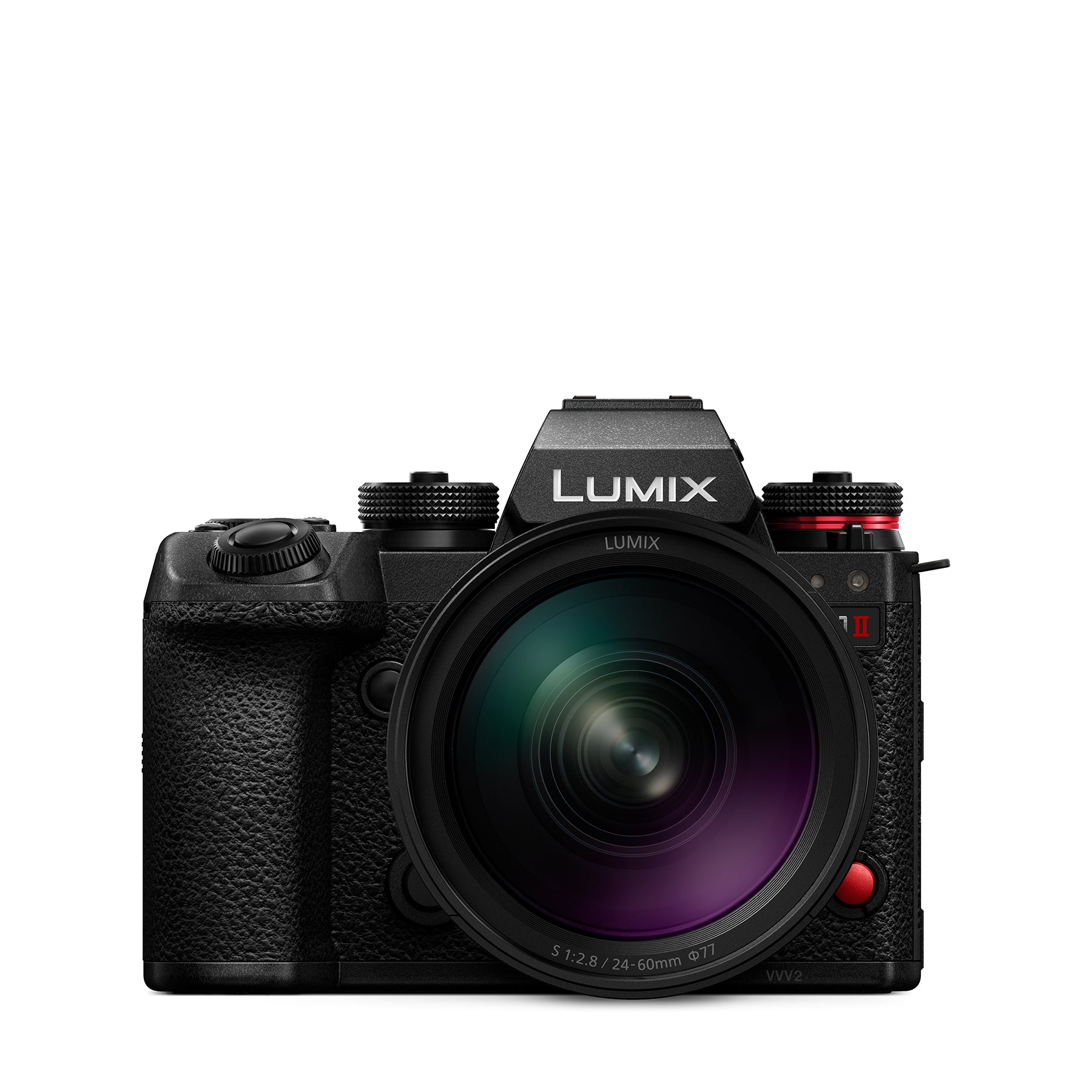
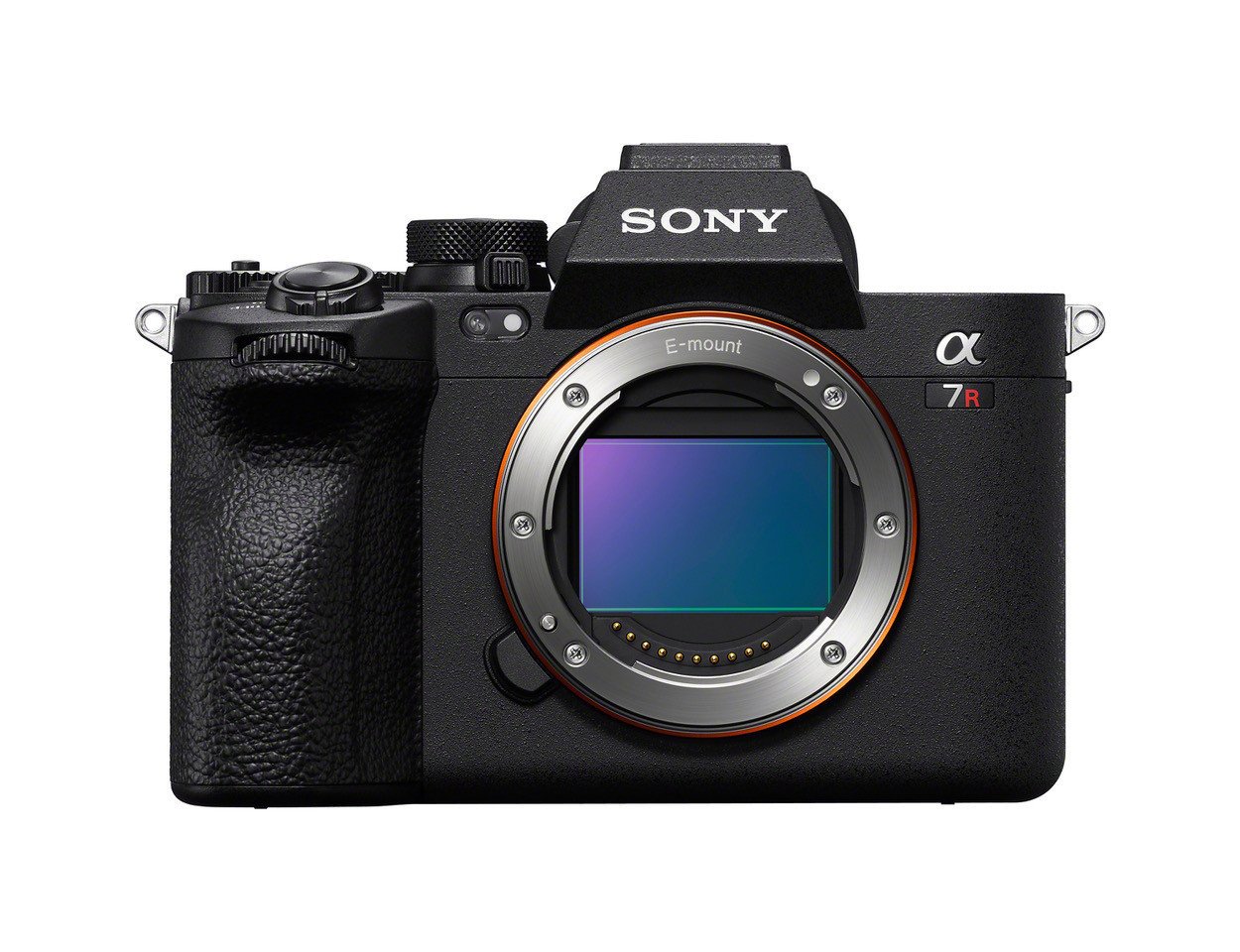
The Panasonic S1 II and Sony A7R V are two high-performance full-frame mirrorless cameras that attract photographers and videographers seeking advanced capabilities. The S1 II is popular among enthusiasts and professionals looking for exceptional video features and stabilization, while the A7R V appeals to those prioritizing high-resolution photography and advanced autofocus. With both cameras released in close proximity to one another, potential buyers often compare them based on specific needs like image quality, autofocus performance, and video capabilities. The key differentiators lie in their megapixel counts, video resolutions, and overall usability for different types of content creation.
Specifications Comparison
Detailed Comparison
Image Quality
The Sony A7R V boasts a significant advantage in terms of resolution, providing an impressive 60 megapixels compared to the Panasonic S1 II's 24.1 megapixels. This higher resolution allows the A7R V to capture more detail, making it an ideal choice for photographers who work with large prints or require extensive cropping capability. Additionally, the A7R V's expansive ISO range (ISO 100-32000, expandable to 50-102400) offers greater flexibility in low-light situations, enabling cleaner images at higher sensitivities.
On the other hand, the S1 II, while lower in resolution, still delivers excellent image quality thanks to its advanced sensor technology and processing. Its performance in dynamic range and color reproduction is well-regarded among videographers, providing a cinematic look that is often preferred in video production.
Ultimately, while the A7R V leads in resolution and ISO flexibility, which can be critical for stills, the S1 II offers great image performance, particularly for filmmakers. As such, this aspect leans towards the Sony A7R V as the winner for conventional photography applications.
Autofocus System
The autofocus system in the Sony A7R V is sophisticated, featuring 693 phase-detection points combined with 425 contrast-detection points. This advanced system allows for fast and accurate focusing across the frame, making it a strong choice for capturing moving subjects. The autofocus also supports real-time eye tracking and animal eye autofocus, enhancing its effectiveness for portrait and wildlife photography alike.
In comparison, the Panasonic S1 II offers a robust but simpler autofocus system that, while effective, does not reach the complexity or responsiveness of the A7R V. The S1 II still provides decent performance for many shooting scenarios, including decent tracking capabilities, but lacks some of the advanced features found in Sony's implementation.
Given the superior autofocus performance of the A7R V, especially for fast-moving subjects or in challenging lighting conditions, this aspect clearly favors Sony.
Video Capabilities
When it comes to video capabilities, the Panasonic S1 II shines with its ability to record 5.1K video at 60p, offering filmmakers high-resolution footage that is ideal for professional-grade production. The S1 II also features advanced video-focused options like V-Log and high dynamic range profiles, giving creators flexible options during post-production. Its 8-stop 5-axis in-body stabilization is especially beneficial for handheld shooting in a variety of environments.
The Sony A7R V, while capable of recording impressive 4K video at 60p, does not reach the same resolution as the S1 II. However, it does offer excellent color profiles and great low-light performance. The camera also includes features like S-Cinetone, which is popular among videographers for its pleasing tonal rendition straight out of the camera.
In this category, the Panasonic S1 II takes the lead by offering superior video resolution and enhanced features for filmmakers, making it the better choice for high-end video production.
Build & Ergonomics
The build quality of both cameras is top-notch, reflecting each manufacturer's commitment to durability and usability. The Sony A7R V, weighing 723 grams and with dimensions of 131 x 97 x 82 mm, has a compact and lightweight design that many photographers appreciate during extended shoots. Its electronic viewfinder and high-resolution touchscreen provide excellent control and feedback, enhancing the shooting experience.
Panasonic's S1 II has an equally robust construction and an ergonomic grip, but it is slightly bulkier and heavier. It is designed with a focus on video shooting, providing ample buttons and customizable options to streamline the workflow for videographers. Its weather-sealed body is also excellent, standing up to challenging conditions.
While both cameras excel in build quality, the A7R V's lighter design might offer more comfort for long periods of shooting, making it the preferred choice for photographers who prioritize compactness and weight.
Battery & Storage
The Sony A7R V provides a reliable battery life, rated at approximately 530 shots per charge, which is competitive among mirrorless models. It supports dual slots for CFexpress Type A and SD memory cards, offering versatility for fast data transfer and storage options, particularly useful in high-resolution shooting scenarios.
The Panasonic S1 II does not specify an exact battery life but is also designed to perform well for extended shooting. However, it notably lacks the dual card slot feature available in the A7R V, which may limit storage options during high-demand usage situations, especially for video.
Given the dual card slot versatility and better battery life of the A7R V, it stands out as the winner in this category for long-term, practical use.
Value for Money
The Sony A7R V carries a price tag of approximately $3900, reflecting its advanced technologies, high-resolution capabilities, and superior autofocus system. While it is more expensive, many professionals find the return on investment justifiable given its performance across a range of photographic and videographic scenarios.
On the other hand, the Panasonic S1 II, releasing in 2023, has positioned itself with competitive pricing that appeals to video-centric users, especially considering its high-resolution video options and stabilization features. While it may have lower overall image resolution, its specialized capabilities for videography can represent a great value for filmmakers.
Ultimately, while the price difference creates variability on how each camera could fit into a budget, the A7R V generally offers more robust image capture for stills, while the S1 II brings unmatched value for videographers. Overall, due to its higher initial cost but the overall capability range, the value aspect slightly favors the A7R V.
Our Verdict
While both the Panasonic S1 II and Sony A7R V stand out in their respective areas, the A7R V ultimately wins the comparison, particularly for photographers and hybrid shooters seeking high-resolution capture, advanced autofocus, and strong all-around video capabilities. It excels in image quality, autofocus efficiency, build portability, and battery life, making it ideal for those who require versatility and performance across the board. The S1 II remains a strong contender, particularly for videographers prioritizing high-quality video and stabilization features, but given the overall performance spectrum, the A7R V takes the lead as the better all-around option.
Panasonic S1 II
Sony A7R V
Also Compare
Frequently Asked Questions
Which camera is better for video?
The Panasonic S1 II is better for video due to its higher resolution (5.1K) and advanced stabilization features, making it ideal for filmmakers.
Is the Sony A7R V worth the higher price?
Yes, the A7R V is worth the higher price for those needing exceptional resolution and market-leading autofocus, ideal for both professional photography and videography.
Which camera has better battery life?
The Sony A7R V has better-rated battery life, approximately 530 shots per charge, while the S1 II does not specify an exact shot count.
How do the autofocus systems compare?
The Sony A7R V features a more advanced autofocus system with 693 points, allowing superior subject tracking compared to the S1 II's less complex system.
Which is easier to carry around for long shoots?
The Sony A7R V is lighter and more compact than the S1 II, making it easier to carry for extended shoot sessions.