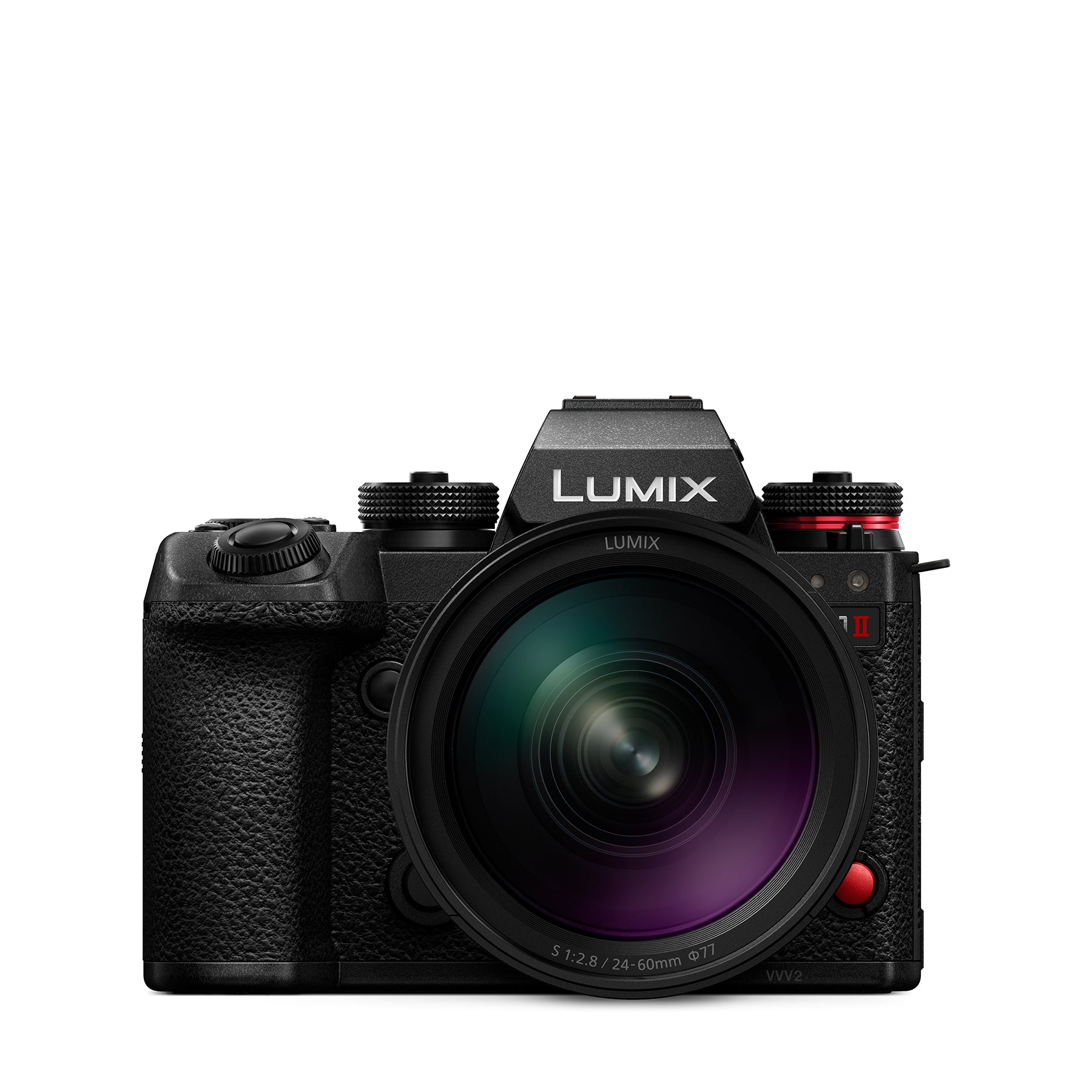
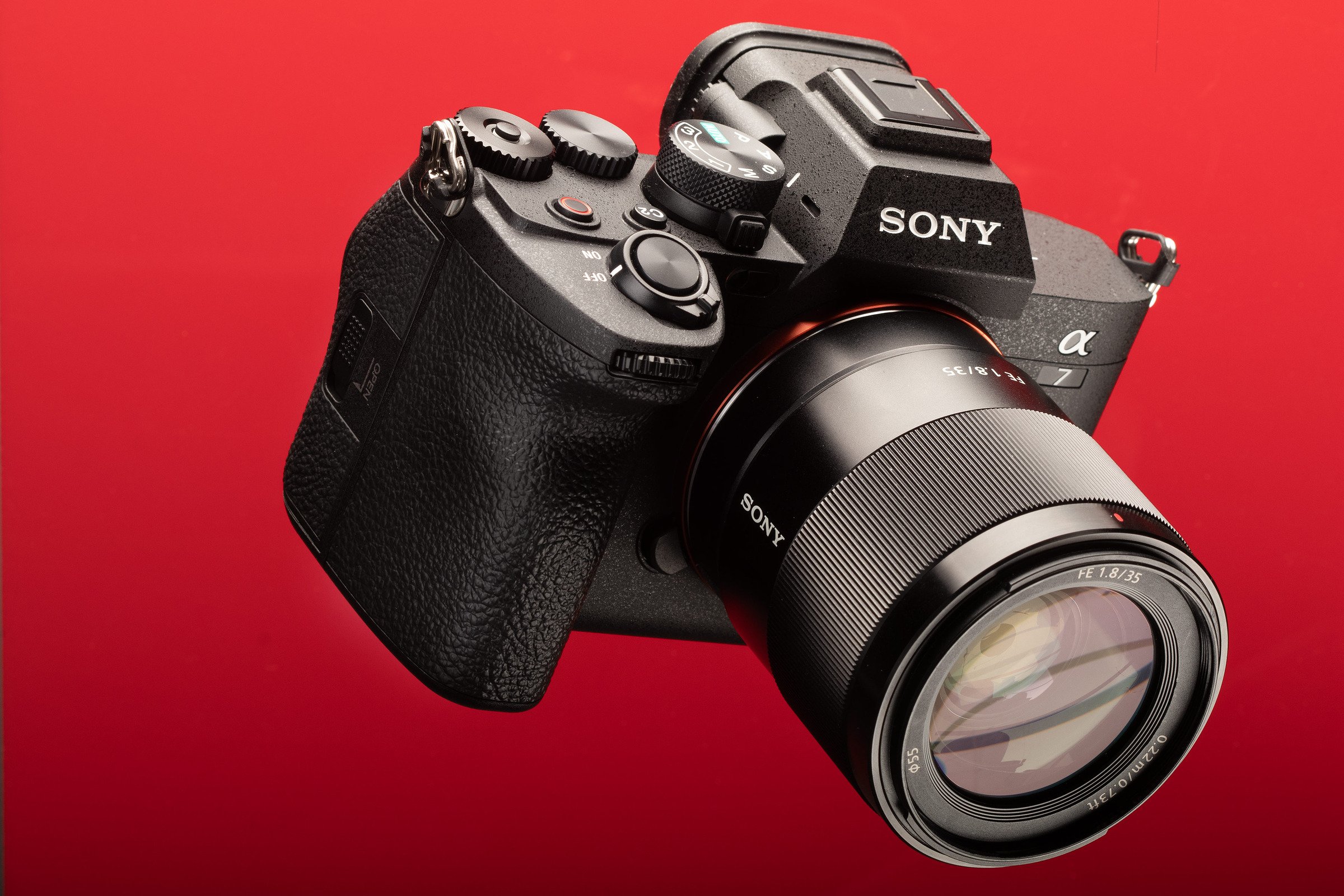
The Panasonic S1 II and Sony A7 IV are two formidable contenders in the full-frame mirrorless camera market, appealing to both enthusiasts and semi-professionals alike. With their unique features and capabilities, they attract photographers and videographers who are looking for versatility and high performance. Particularly, those engaged in events, portrait, and landscape photography may find themselves weighing the options between these two models due to their respective strengths in image quality, autofocus systems, and video capabilities.
Specifications Comparison
Detailed Comparison
Image Quality
In terms of image quality, the Panasonic S1 II offers a 24.1 MP full-frame sensor which provides excellent detail retention and color accuracy, making it a solid option for photographers focused on still images. The S1 II's images can exhibit lower noise at higher ISO settings, especially useful in low-light conditions, due to its sensor design. On the other hand, the Sony A7 IV is equipped with a higher resolution 33 MP sensor, which allows for larger prints and more cropping flexibility without significant loss of detail. This higher megapixel count generally results in sharper images, provided that the photographer can manage focus accurately.
While the S1 II presents an inherent advantage in managing noise, the A7 IV's larger number of pixels may manifest greater detail in ideal shooting conditions. Both cameras produce a wide dynamic range, yet the A7 IV's 33 MP sensor often translates excellent color grading options in post-processing due to the slight increase in detail capture. When comparing outright, the preference for image quality can depend on the user's specific needs, whether they're prioritizing resolution or low-light performance.
Autofocus System
Autofocus performance is paramount for many photographers, and this is where the A7 IV shines with its sophisticated hybrid autofocus system featuring 759 phase-detection points. This system can quickly lock onto subjects, making it an ideal choice for shooting fast-moving objects or during events where precision is crucial. In contrast, the Panasonic S1 II utilizes a contrast-detection autofocus system that, while decent, doesn't quite match the speed and accuracy of its Sony counterpart. This can lead to missed focus opportunities in fast-paced shooting environments.
Additionally, the A7 IV's advanced tracking capabilities, especially for wildlife and sports photography, provide an edge. It includes Real-time Eye autofocus for people and animals, which is particularly useful for portrait and wildlife photographers. On the other hand, while the S1 II does have reliable focus points, many users may find it lacking in high-intensity scenarios. For consistent and rapid autofocus, the Sony A7 IV stands out considerably.
Video Capabilities
Both the Panasonic S1 II and the Sony A7 IV are equipped to handle high-quality video recording, yet they cater to slightly different appetites when it comes to resolution and frame rates. The S1 II offers impressive 5.1K video recording at 60p, providing high-resolution capabilities that are excellent for videographers seeking the ultimate in image quality and detail. This is coupled with its superior 8-stop in-body stabilization which is advantageous for handheld shooting without the need for a gimbal.
Contrarily, the A7 IV is limited to 4K 60p video resolution, though it does provide highly professional video output with excellent color science and superior autofocus during video capture. The 4K recording uses full sensor readout - a significant advantage for those wishing to avoid crop factors in their videography. While the Panasonic has the upper hand in resolution, the Sony provides robust features like 10-bit color depth recording, making each platform appealing in different contexts. Ultimately, for videographers, the choice depends on whether resolution or the overall video features are being prioritized.
Build & Ergonomics
Build quality plays a vital role for photographers and videographers who may frequently work in various environmental conditions. Both cameras feature weather sealing; however, the S1 II is generally designed with a rugged, robust body that can withstand harsher environments compared to the A7 IV, which is also sturdy but lacks the same level of industrial feel. The weight of the S1 II is heavier, which may be a deciding factor for those concerned about carrying equipment over extended periods.
In terms of ergonomics, the A7 IV sports a well-designed grip and has dimensions that many find comfortable for prolonged use. The button layout and touchscreen interface provide an intuitive workflow for users, making it user-friendly for both beginners and advanced users. However, the S1 II's larger body can be advantageous for larger lenses and handling, giving a more secure feel in hand. For build quality and ruggedness, the S1 II may take the lead, while the A7 IV excels in ergonomics and portability.
Battery & Storage
Battery performance is another critical area for consideration. The Sony A7 IV boasts a battery life of about 580 shots on a single charge, which is quite impressive for a mirrorless camera in its class. This is a significant factor for users who need to shoot for extended periods without changing batteries frequently. The S1 II, while not specified, generally offers competitive battery performance but may not match the longevity of the A7 IV in real-world usage.
On the storage side, the A7 IV uses dual card slots, fully supporting CFexpress Type A and SD UHS-II cards, providing flexibility and speed. The S1 II also supports dual card slots but emphasizes video recording capabilities with faster write speeds. For professional use, flexibility in storage and longer battery life can influence the decision, and here the A7 IV slightly edges out due to its better overall battery life and dual card options for fast data transfer.
Value for Money
When analyzing the price, the Sony A7 IV is priced at approximately $2499, making it a large investment for both enthusiasts and professionals. However, given its range of features, high-resolution sensor, and overall well-rounded ability, it provides significant value for photographers who require top-notch performance. The flexibility of dual card slots, high autofocus points, and strong battery life contribute to its appeal as a versatile tool in various genres of photography and videography.
In contrast, although the Panasonic S1 II is positioned for a similar market segment, it does not carry the same price tag if expressed relative to its performance in traditional photography. It shines in specific video aspects, notably with its high-resolution capability, and provides excellent image stabilization. The decision ultimately comes down to whether a photographer or videographer is willing to invest more for slightly greater resolution and ruggedness with the S1 II, or they prefer the overall versatility that the A7 IV offers for the same price point. In terms of outright value based on versatility, the A7 IV wins.
Our Verdict
After comprehensive evaluation, the Sony A7 IV emerges as the overall winner, given its superior autofocus system, battery life, and better versatility for video and general photography. While the Panasonic S1 II excels in video resolution and image stabilization, it is positioned primarily for users who lean towards professional videography rather than photographic versatility. The A7 IV serves both scenarios exceptionally well, making it a better rounded choice for a wider range of photographers and videographers alike.
Panasonic S1 II
Sony A7 IV
Also Compare
Frequently Asked Questions
Is the Panasonic S1 II better for video than the Sony A7 IV?
Yes, the Panasonic S1 II offers higher video resolution at 5.1K and better stabilization, making it suitable for serious videographers.
Which camera has better autofocus performance?
The Sony A7 IV has a sophisticated autofocus system with 759 points, providing faster and more accurate focus in various situations compared to the Panasonic S1 II.
How do the battery lives compare?
The Sony A7 IV offers a longer battery life of around 580 shots, whereas the Panasonic S1 II's battery life is competitive but not specified, making the A7 IV a better choice for extended shooting sessions.
Which camera is more suitable for wildlife photography?
The Sony A7 IV's superior autofocus and higher megapixel count make it more suitable for wildlife photography, offering better tracking and detail capture.
Are both cameras weather-sealed?
Yes, both the Panasonic S1 II and Sony A7 IV feature weather-sealing, but the S1 II is designed to handle harsher conditions generally.