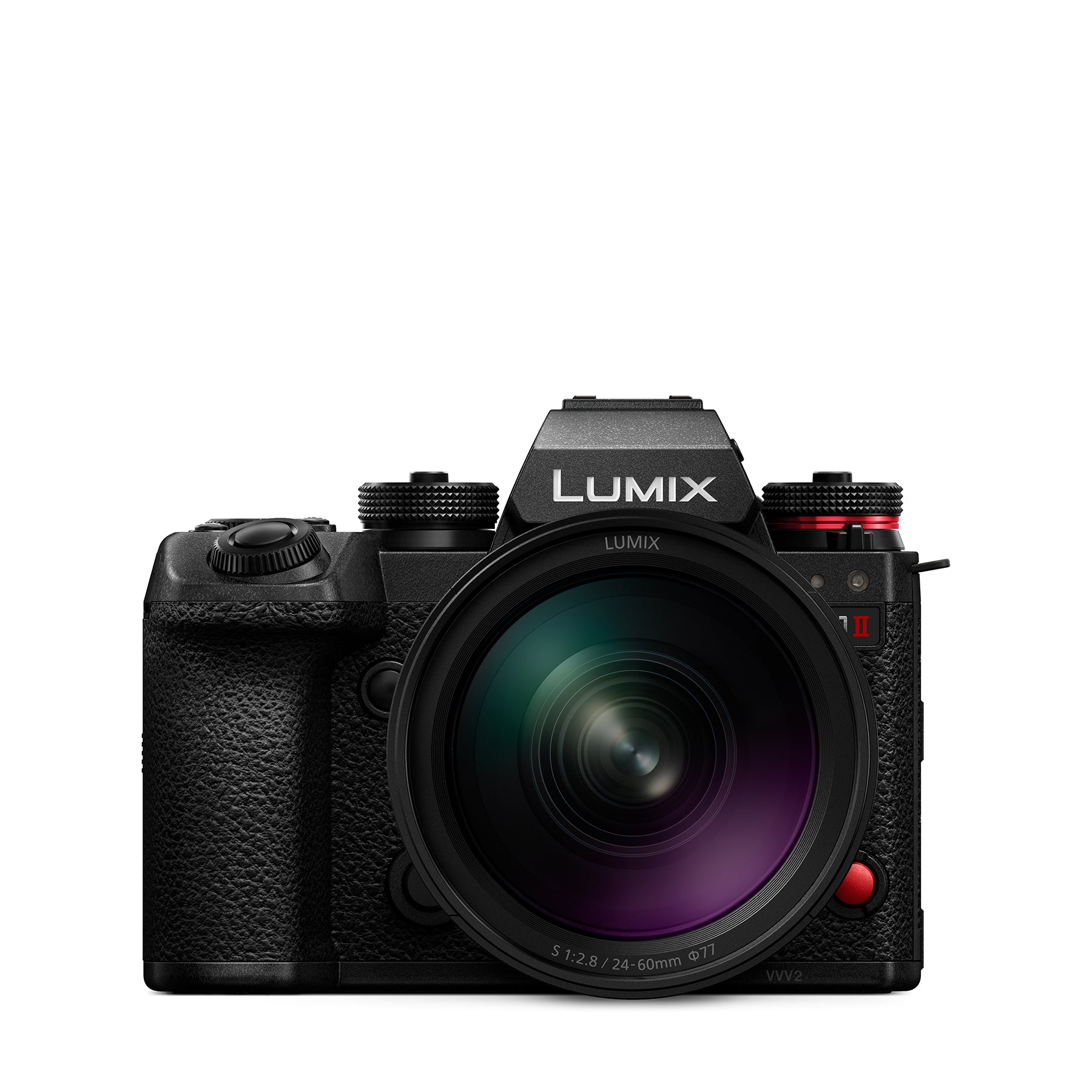
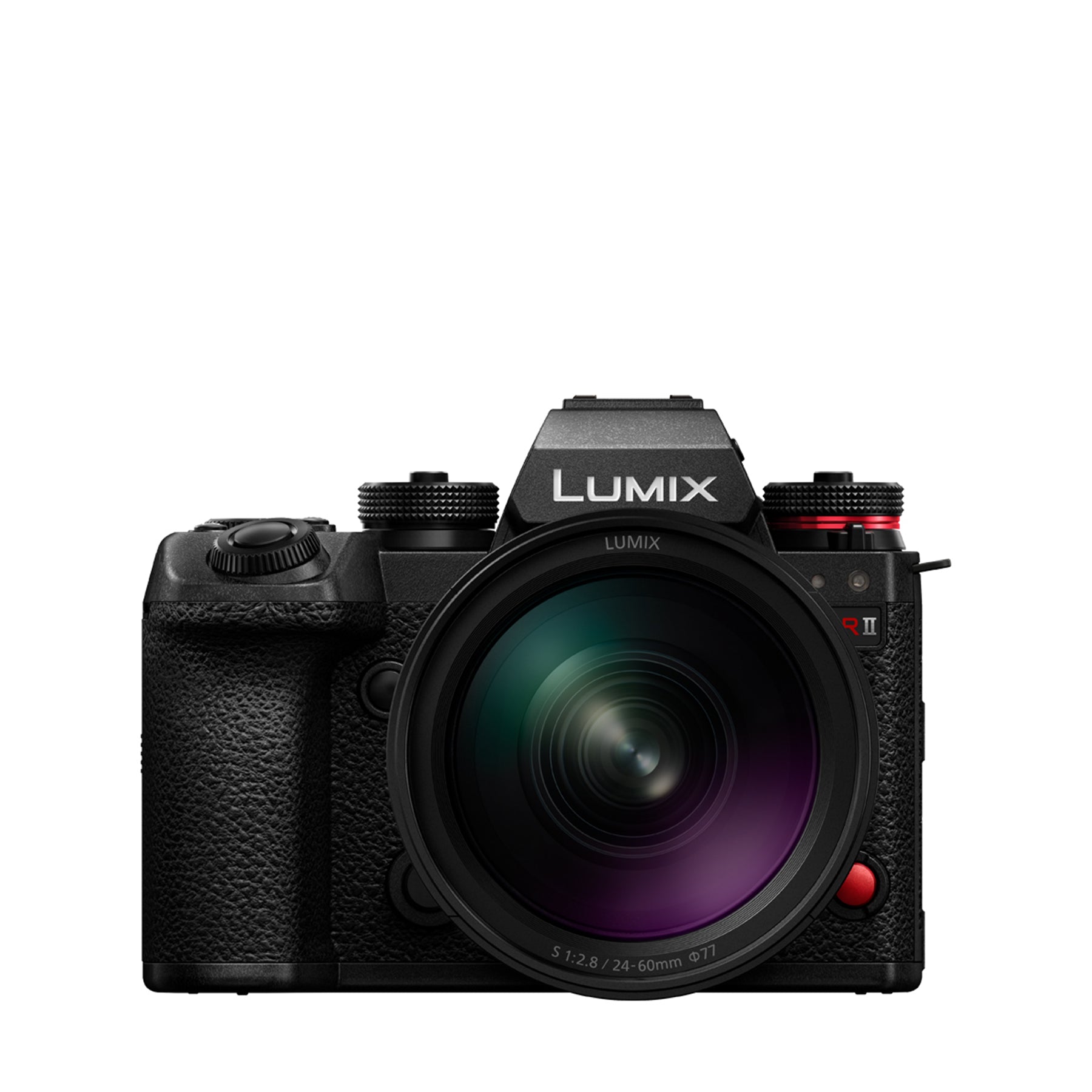
The Panasonic S1 II and Panasonic S1R II are two full-frame mirrorless cameras from Panasonic's Lumix S series, each targeting different types of photography and videography enthusiasts. The S1 II is designed for a broad audience, providing a versatile blend of performance features, while the S1R II appeals to higher-end users who demand exceptional resolution and advanced video capabilities. These cameras are commonly compared because they share the same lineage, yet differ significantly in specifications and intended use cases, influencing potential buyers in their decision-making process.
Specifications Comparison
Detailed Comparison
Image Quality
The S1R II leads in image quality with a staggering 44.3 megapixels, allowing for incredibly detailed images that are advantageous for landscape and studio photographers. Its high-resolution sensor excels in capturing fine details, making it ideal for large prints and post-processing flexibility. In contrast, the S1 II, with its 24.1 megapixels, provides a solid performance suitable for most photography needs but lacks the extreme detail found in the S1R II. While the S1 II offers better low-light performance with less noise at higher ISO settings, the S1R II shines in daylight conditions due to its larger image files. The choice between the two depends on whether the user prioritizes detail or versatility in different shooting environments.
Autofocus System
Both the S1 II and S1R II come equipped with advanced autofocus systems, but there are distinctions worth noting. The S1 II features an improved autofocus system specifically designed for fast-paced shooting conditions, making it suitable for action photography. It uses deep learning technology to enhance subject tracking, providing reliable performance in moving subjects. In contrast, while the S1R II also boasts a robust autofocus performance, it may not keep pace with fast-moving subjects as efficiently as the S1 II. Therefore, if high-speed autofocus is vital, the S1 II would be the better choice, although the S1R II remains capable for most scenarios.
Video Capabilities
When it comes to video capabilities, the S1R II takes the lead with support for 8K video at 30p and 4K video at 120p, catering to higher-end filmmakers. This makes the S1R II ideal for those who need extensive video options and higher resolution for post-production work. On the other hand, while the S1 II also offers impressive video recording at 5.1K 60p, it lacks the capacity to shoot in 8K, which is becoming increasingly relevant for professional filmmakers. Both cameras perform well with stabilization, but the S1R II's enhanced options allow for more flexibility in video shooting, solidifying its position as the better choice for videographers.
Build & Ergonomics
In terms of build quality, both cameras exhibit a robust design suited for professional use, featuring weather-sealed bodies to withstand various environmental conditions. They both offer excellent ergonomics, ensuring comfort during extended shooting sessions. However, the S1 II incorporates a better stabilization system for handheld shooting, rated at 8 stops, compared to the standard sensor-shift stabilization of the S1R II. This result gives the S1 II an edge for videographers and photographers shooting in dynamic conditions. Ultimately, both bodies feel solid and well-constructed, but the added stabilization capability of the S1 II may appeal to those who prioritize handheld shooting.
Battery & Storage
Battery life performance is a critical consideration for many users, especially those planning to use the camera for extended shoots. The S1 II offers commendable battery life that supports long working sessions without frequent recharging. However, the S1R II, while performing admirably, typically requires more power due to its higher resolution and additional features. On the storage front, both cameras utilize dual card slots, allowing flexibility and redundancy in shooting. Overall, for prolonged usage, the S1 II might edge out slightly due to its more efficient power management.
Value for Money
In terms of value, the Panasonic S1 II is priced more attractively when compared to the premium S1R II, which is reflected in its advanced features and higher resolution. For photographers looking to maximize the value of their investment, particularly those who do not need ultra-high resolution, the S1 II provides a compelling combination of quality and performance without breaking the bank. By contrast, while the S1R II offers superior specifications aimed at professionals, its higher price tag may not be justified for users whose needs may not demand such high-end features. Therefore, for most users seeking excellent performance at a more accessible price point, the S1 II is often the better choice financially.
Our Verdict
While both the Panasonic S1 II and S1R II are impressive cameras, the S1 II emerges as the overall winner in this comparison due to its exceptional value for money, superior low-light performance, and enhanced stabilization features. It is ideally suited for a broader range of skills and uses, especially for those focused on photography and versatility in various environments. Conversely, the S1R II will appeal to those who require the very highest resolution and extensive video capabilities, particularly in professional settings, allowing more nuanced control over image details and advanced video functionalities.
Panasonic S1 II
Panasonic S1R II
Also Compare
Frequently Asked Questions
Which camera is better for high-resolution photography?
The Panasonic S1R II, with its 44.3 megapixel sensor, is better suited for high-resolution photography, allowing for detailed images that are ideal for large prints.
Which camera is better for videography?
The Panasonic S1R II is the superior choice for videography, offering 8K video recording and higher frame rates, while the S1 II supports 5.1K video.
Is the autofocus system better in the S1 II?
Yes, the S1 II boasts a more advanced autofocus system designed for fast tracking, making it better for action photography compared to the S1R II.
What are the main differences in battery life?
The S1 II generally offers better battery life compared to S1R II, which requires more power due to its higher resolution and features.
Which camera is more suited for handheld shooting?
The S1 II is more suited for handheld shooting due to its 8-stop stabilization system, offering better performance in dynamic conditions.