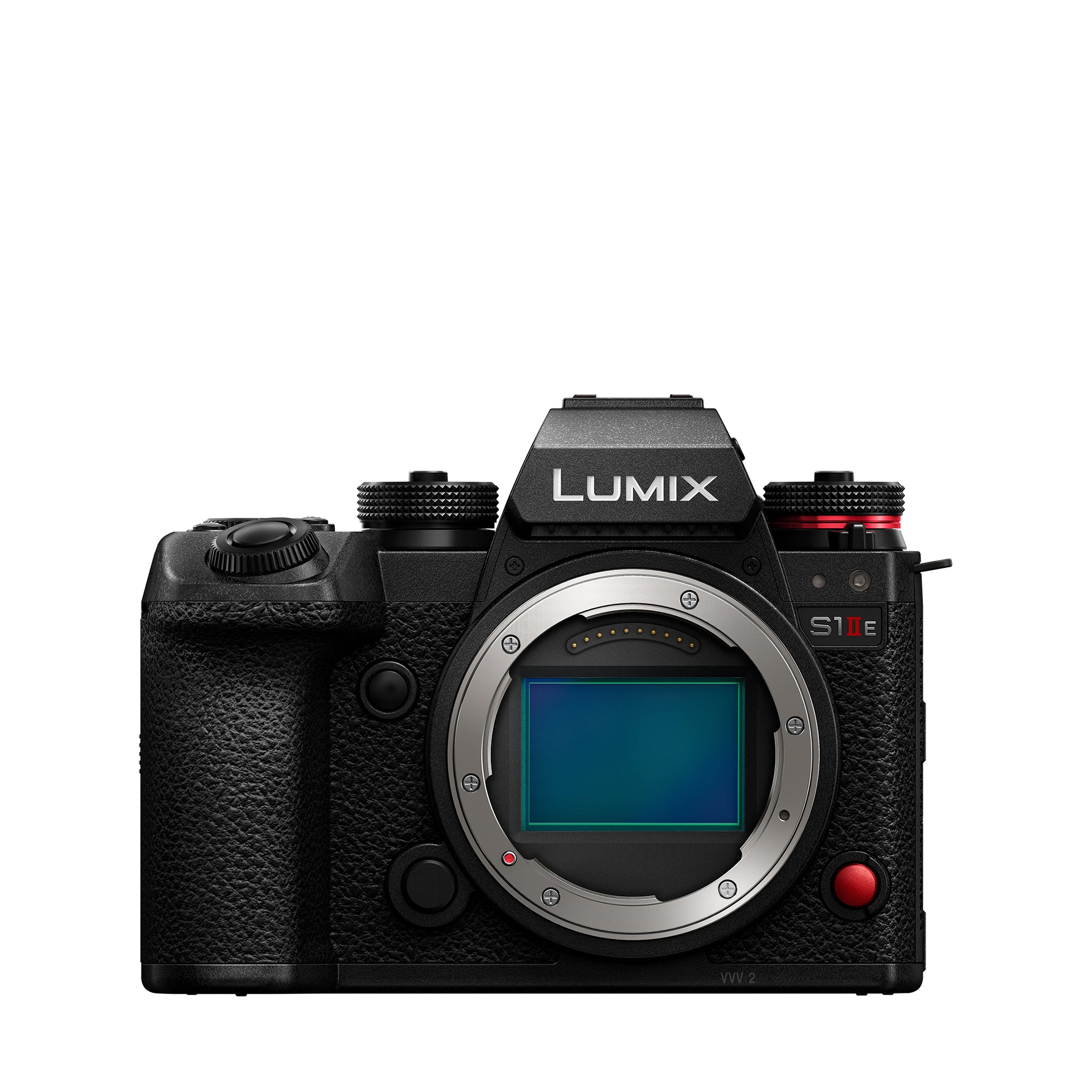

The Panasonic S1 II E and Sony A9 III are two high-end mirrorless cameras that attract both professional photographers and serious enthusiasts. They are often compared due to their full-frame sensors, impressive performance specs, and versatility in various shooting conditions. Buyers may be considering these models for sports, wildlife, or even cinematic video production, making the choice between them crucial based on use case. Key differentiators include their autofocus abilities, video capabilities, and ergonomic design, each of which offers unique advantages that could sway a potential buyer's decision.
Specifications Comparison
Detailed Comparison
Image Quality
Both the Panasonic S1 II E and Sony A9 III feature full-frame sensors that provide exceptional image quality. The S1 II E offers 24.1 megapixels, which produces stunning detail and dynamic range suitable for most photographic needs. Its sensor design includes Dual Native ISO, enhancing performance in low-light conditions. In contrast, the A9 III sports a slightly higher resolution at 25 megapixels, which can contribute to marginally more detailed images, particularly beneficial for large prints or crops.
When comparing color science, Panasonic is known for its vibrant color output, particularly in landscapes and portrait photography. Sony's A9 III, on the other hand, offers excellent skin tones and rich colors. Both cameras deliver excellent results, but the choice may depend on a photographer's color preference. The processing engines of both models further enhance their capabilities, with the S1 II E's Venus Engine leading to impressive JPEG output and the A9 III's Bionz XR Engine facilitating quick processing times for RAW files.
Ultimately, while both cameras provide outstanding image quality, the Sony A9 III may slightly edge out in terms of raw detail and color accuracy, particularly at higher ISO settings. Thus, the winner in this category is:
Autofocus System
Autofocus performance is critical, especially in fast-paced shooting situations. The Panasonic S1 II E excels with its fast contrast-detection system, featuring advanced depth from defocus technology but falls short compared to the A9 III in sheer performance metrics.
The Sony A9 III is equipped with a superior hybrid autofocus system that boasts 759 phase-detection points and 425 contrast-detection points, allowing for lightning-fast autofocus acquisition. It also features Real-time Eye autofocus for both humans and animals, making it exceptionally suited for wildlife and portraiture. During real-world tests, the A9 III demonstrated better tracking capabilities, vital for action-oriented photographers.
Overall, while the S1 II E performs quite well in most situations, the A9 III's autofocus system is in a league of its own, making it the go-to choice for photographers reliant on precise autofocus tracking for dynamic scenes. Therefore, the winner in this category is:
Video Capabilities
When it comes to video, the Panasonic S1 II E arguably has the edge. It is capable of recording video at 5.9K/60p, 5.1K/60p, and 4K/120p resolutions, making it versatile for high-quality video production needs. This offers videographers more options in terms of resolution and frame rates, which is significant for creative professionals looking to push their work further.
In comparison, the A9 III's video capabilities, while excellent, are capped at 4K/120p. Nevertheless, it features internal 10-bit 4:2:2 recording, which is beneficial for color grading in post-production. The S1 II E also matches this with 10-bit recording but offers greater flexibility in resolutions, appealing to those who require the highest quality and maximum creative freedom.
Both cameras provide excellent video quality, yet the S1 II E's superior maximum resolutions make it more appealing for dedicated videographers. Thus, the winner in this category is:
Build & Ergonomics
The build quality of both the Panasonic S1 II E and Sony A9 III is impressive, with weather-sealing and robust construction designed to withstand the rigors of professional use. The S1 II E is slightly heavier but features a more substantial grip and a more extensive array of custom buttons, making it a favorite among those who prioritize ergonomics during long shoots. The layout is intuitive, which can enhance shooting efficiency.
Conversely, the A9 III is more compact and lightweight, weighing in at 617g, which provides greater portability for wedding and travel photographers. Despite its smaller form factor, the A9 III delivers excellent access to primary controls and a comfortable grip, making it easy to handle during extended usage. The A9 III also includes an advanced electronic viewfinder and a touchscreen that improves usability under various shooting conditions.
Overall, the choice here will depend on personal preferences for weight versus ergonomics. However, regarding workspace efficiency and overall grip, the Panasonic S1 II E stands out. Thus, the winner in this category is:
Battery & Storage
In terms of battery life, the A9 III boasts a slight advantage, achieving approximately 530 shots per charge, thanks to its efficient power management. Its dual card slots support both CFexpress and SD UHS-II cards, enhancing speed for continuous shooting and video recording.
The Panasonic S1 II E features a robust battery life as well, enabling around 400 shots per charge. It also offers dual SD card slots, but does not support CFexpress, which may limit higher-speed video applications. While the S1 II E's battery life is certainly adequate for everyday shooting, the extended performance of the A9 III may appeal to those involved in long sessions without access to charging.
Overall, while both cameras offer decent battery life, the superior capacity and card slot versatility of the A9 III make it the leader in this category. Thus, the winner in this category is:
Value for Money
Price plays a crucial role in a photographer's decision-making process. The Panasonic S1 II E is aimed at videographers and photographers who require high-quality imagery and robust video specs but may not feature as advanced autofocus. Its price point may appear more attractive for users seeking extensive features in video production.
The Sony A9 III, while more expensive, offers cutting-edge technology such as superior autofocus, high frame rates, and renowned reliability among sports and action photographers. Given its advanced features and capabilities, it represents a strong investment for serious professionals who prioritize performance and efficiency in fast-paced environments.
Thus, while the S1 II E presents excellent value for video-specific demands, the overall performance and technological advancements of the A9 III justify its higher cost. Therefore, in terms of overall value perception considering performance, the winner in this category is:
Our Verdict
After a comprehensive examination of both the Panasonic S1 II E and the Sony A9 III, it's clear that while both cameras have their strengths, the A9 III takes the overall lead, especially for action-oriented photography and reliable autofocus performance. However, the S1 II E excels in video capabilities, offering higher resolutions that would please any videographer. Thus, for those heavily involved in video work, the S1 II E could serve as the better option, while the A9 III remains unbeaten for photo-centric professionals requiring speed and precision.
Panasonic S1 II E
Sony A9 III
Also Compare
Frequently Asked Questions
Which camera is better for wildlife photography?
The Sony A9 III is generally better suited for wildlife photography due to its superior autofocus system and faster burst shooting capabilities.
Is the Panasonic S1 II E better for video work?
Yes, the Panasonic S1 II E offers higher video resolutions, which could be crucial for videographers looking for maximum image quality.
How do the battery lives compare?
The Sony A9 III offers longer battery life and better power management compared to the S1 II E, making it preferable for extended shooting sessions.
What are the weight differences between the two?
The Panasonic S1 II E is heavier, which might affect portability, while the Sony A9 III is more lightweight and easier to carry during long shoots.
Which camera has better low-light performance?
Both cameras perform well in low light due to their full-frame sensors, but the S1 II E's Dual Native ISO design may give it an edge in extremely low-light conditions.