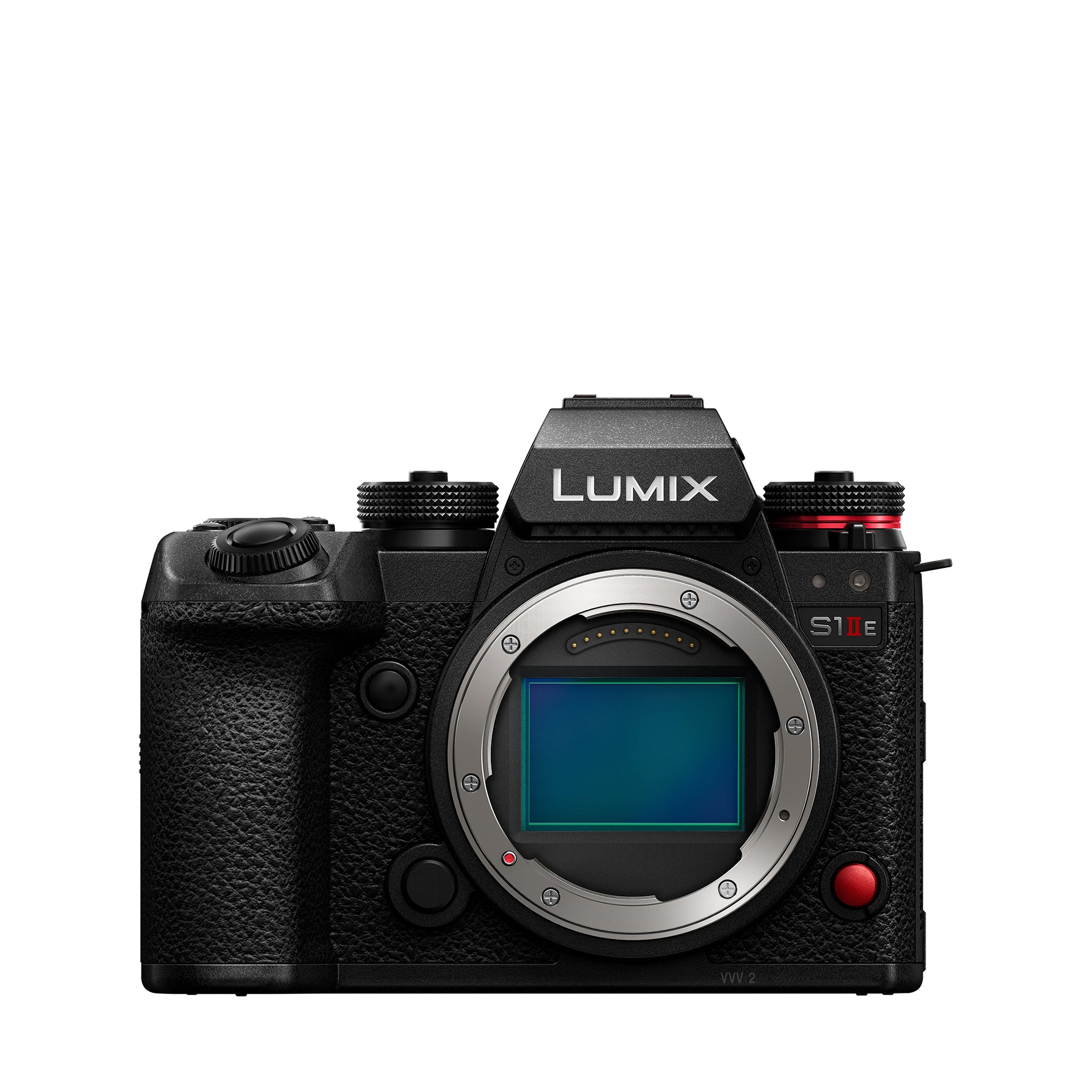
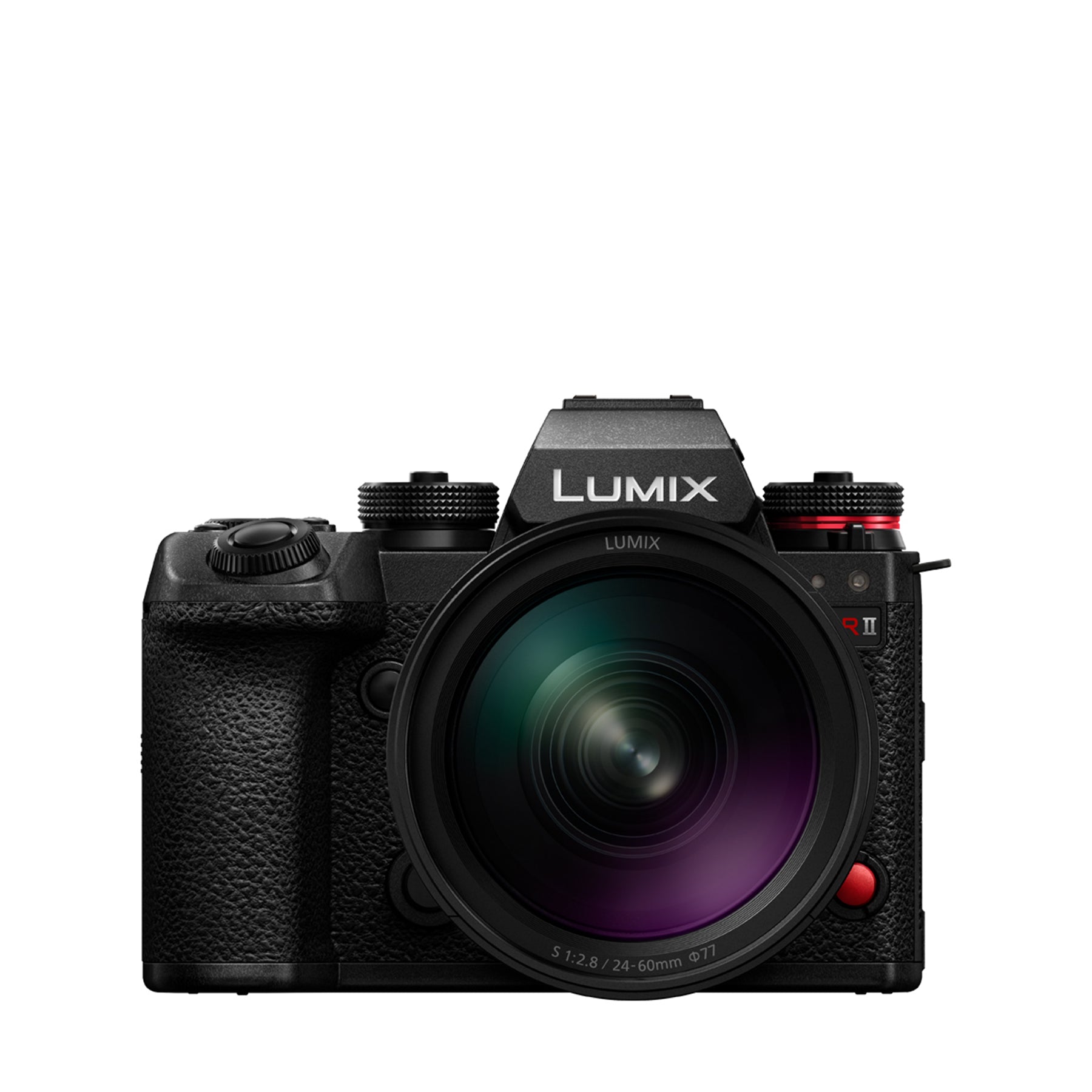
The Panasonic S1 II E and S1R II are two formidable contenders in the full-frame mirrorless camera market, often compared by professional photographers, videographers, and enthusiasts seeking high-quality performance for various applications. Both models embody Panasonic's commitment to advanced imaging technology, making the decision between them a matter of specific needs and preferred use cases. While the S1 II E is designed for versatility in both stills and video, the S1R II leans more towards high-resolution photography, targeting users who prioritize image detail over extensive video features.
The key differentiators between these two models lie in sensor resolution, video capabilities, and frame rate performance. The S1 II E boasts a 24.1MP sensor, optimized for fast photography and robust video performance with impressive frame rates. On the other hand, the S1R II offers a substantial 44.3MP sensor for capturing stunning detail in still images, while also providing advanced video features like 8K recording. As potential buyers evaluate these two cameras, understanding how these specifications translate into real-world applications will be crucial in guiding their choice.
Specifications Comparison
Detailed Comparison
Image Quality
When it comes to image quality, the Panasonic S1R II takes the lead due to its 44.3-megapixel sensor, which allows for capturing exceptionally detailed images suitable for large prints and intricate post-processing work. The high resolution of the S1R II provides more latitude for cropping and makes it an excellent choice for landscape, wildlife, and studio photography, where details are paramount. Additionally, the larger sensor collects more light, contributing to better performance in low-light conditions as well.
Conversely, the Panasonic S1 II E, with its 24.1MP sensor, offers high-quality images that are more than sufficient for many users, especially those engaged in online content creation, portrait work, or wedding photography. While it may not match the S1R II in detail resolution, the S1 II E is able to produce vibrant and sharp images, especially at higher ISOs due to its efficient processing, making it reliable in various shooting scenarios.
Overall, while both cameras produce excellent images, the S1R II's superior resolution and low-light capabilities make it the winner in this category, particularly for professional photographers seeking every possible detail in their work.
Autofocus System
Both the Panasonic S1 II E and S1R II feature advanced autofocus systems designed to keep pace with fast-moving subjects. The S1 II E provides rapid autofocus performance with its hybrid AF system, utilizing a combination of contrast and phase detection. With a maximum burst shooting capability of 30 fps, it supports fast-paced shooting environments, making it well-suited for sports and wildlife photography.
The S1R II, while slightly higher with a maximum burst of 40 fps, also offers a robust autofocus system that performs exceptionally well in various situations. It benefits from sophisticated algorithms for subject recognition, making it reliable for tracking moving subjects. However, it is essential to note that both cameras perform admirably with quick and accurate focus locking across diverse lighting conditions.
In this section, while the S1R II has a slight edge in burst speed, the ultimate choice may hinge on specific use cases. Users focused predominantly on fast action may find the S1 II E's autofocus more aligned with their needs, but overall both cameras provide excellent autofocus capabilities.
Video Capabilities
Video performance is a significant differentiator between the S1 II E and S1R II. The S1 II E excels in this department with its ability to shoot up to 5.9K at 60 fps, and 4K resolution up to 120 fps, catering to filmmakers who require high frame rates for slow-motion video and high-resolution footage for professional video projects. This makes the S1 II E an attractive option for content creators and videographers seeking versatility in their work, as well as the ability to produce high-quality video.
In contrast, the S1R II primarily targets a still image-centric audience but does not fall short in video capabilities with its ability to record in 8K at 30 fps, along with 4K up to 120 fps. While the 8K recording is compelling for high-resolution video projects, it's less commonly required by average users compared to the S1 II E's broader range of 5.9K and 4K options.
Given these distinctions, the S1 II E takes the lead in video versatility, while the S1R II is better suited for scenarios where 8K resolution is beneficial, but this may not be a common requirement among most users.
Build & Ergonomics
Both the Panasonic S1 II E and S1R II exhibit robust build quality, designed to withstand the rigors of professional use. They feature weather-sealed bodies that protect against moisture and dust, making them suitable for outdoor shooting. Their ergonomics also cater well to prolonged shooting sessions, featuring comfortable grips and well-placed controls.
The S1R II has a slightly more premium feel thanks to its slightly heavier build, which may work in its favor for users who prefer a more substantial camera in hand. The button layout is intuitive, allowing for quick adjustments on the fly. Moreover, both cameras support dual card slots, further enhancing their usability for professional photographers.
Ultimately, both models impress in terms of build quality and ergonomics, leading to a tie in this category as they equally cater to the demands of serious photographers.
Battery & Storage
Battery life is a critical consideration for users planning to shoot extensively. The S1 II E has a robust battery that allows for approximately 380 shots on a single charge, which is decent for a full-frame camera, especially when considering its extensive video capabilities. Users can also rely on the option to use battery grips for extended shoots effectively.
On the other hand, the S1R II provides similar battery longevity but can vary depending on usage, particularly during high-resolution video recording or extensive usage of the high megapixel mode. Both cameras utilize identical battery types, although, due to the higher resolution of the S1R II, users may notice a slight difference in performance during long shoots.
Storage capabilities show a similar trend, with both cameras featuring dual card slots that allow for simultaneous writing and backup, crucial for professional use. Overall, while both models perform admirably in battery life and storage capacity, neither camera holds a significant advantage over the other, making this category a draw.
Value for Money
Conversely, the S1R II, while more expensive, provides exceptional value for those seeking high-resolution images and extensive detail. It is particularly advantageous for professionals involved in specific fields like commercial photography, where high pixel count translates directly into quality deliverables. However, users must weigh whether the additional cost justifies the extra resolution and 8K video capabilities if they do not require such features.
Ultimately, for users who prioritize balanced performance without the need for professional-grade resolution, the S1 II E represents a more prudent financial decision. In contrast, photography professionals with high demands may find the premium pricing of the S1R II entirely justified based on its superior capabilities.
Our Verdict
In the overall comparison, the Panasonic S1R II emerges as the overall winner due to its superior image quality, exceptional resolution, and professional-grade video capabilities. While the S1 II E shines in versatility and value for those needing both still and video capabilities, the S1R II is tailored for those who demand exceptional detail in still photography and advanced video recording features like 8K. Each camera distinctly caters to different user needs: the S1 II E is ideal for hybrid shooters and videographers, while the S1R II caters to the high-resolution photography niche where detail is paramount.
Panasonic S1 II E
Panasonic S1R II
Also Compare
Frequently Asked Questions
Is the S1R II better for landscape photography?
Yes, due to its high resolution of 44.3MP, the S1R II is better suited for landscape photography, capturing significant detail, which is crucial for this genre.
Which camera is better for videography?
The S1 II E is better for videography, offering versatile video options including 5.9K/60p and 4K at high frame rates, appealing to video creators.
Do both cameras perform well in low light?
Yes, both cameras perform well in low-light conditions, but the S1R II's higher resolution may provide better detail when shooting at night.
How do the autofocus systems compare?
Both cameras feature advanced autofocus systems with fast performance; however, the specific use case may determine which suits a user best.
Which camera should I choose for a wedding photographer?
The S1 II E might be the better option for wedding photography due to its combination of excellent still quality, video versatility, and faster burst mode.