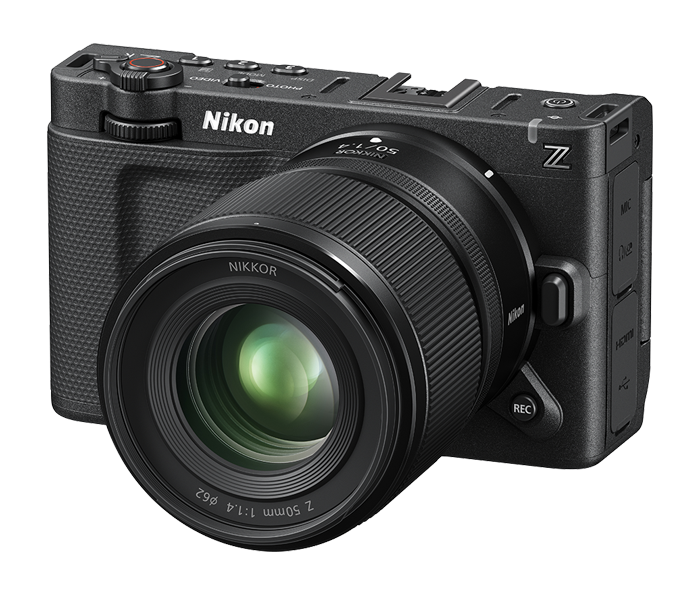

The Nikon ZR and Sony A9 II are two high-performance full-frame mirrorless cameras that attract professional photographers and enthusiasts seeking cutting-edge technology. Often compared, these cameras cater to different user preferences and styles, from sports and wildlife photography to more general still and video production. Key differentiators include their autofocus systems, image quality, build quality, and price points, which can significantly impact the decision-making process for potential buyers.
Specifications Comparison
Detailed Comparison
Image Quality
The Nikon ZR features a 25-megapixel sensor, slightly higher than the Sony A9 II's 24-megapixel sensor. However, both systems utilize full-frame architecture, which typically yields excellent image quality, low light performance, and dynamic range. The ISO range for the ZR extends from 100 to 64000, while the A9 II offers a similar range (100 to 51200), but it can expand to 204800, providing additional flexibility in extreme low-light situations. Generally, both cameras produce rich, detailed images, but the Nikon may edge slightly ahead for its enhanced megapixel count.
In practical terms, the difference between 24 and 25 megapixels is minimal and may not be noticeable unless large prints or heavy cropping are involved. Both cameras perform superbly in various lighting conditions, ensuring photographers can capture high-quality images regardless of environment or circumstance.
Autofocus System
The autofocus systems in these cameras are significant highlights, with the Nikon ZR containing 273 autofocus points compared to the Sony A9 II's impressive 693 points. The wider coverage in the A9 II allows for rapid and reliable focusing, particularly useful in sports or wildlife photography. This abundant number of autofocus points, combined with superior tracking capabilities, makes the A9 II better equipped for fast-moving subjects.
While the ZR's autofocus system is also effective and offers solid performance in most situations, it just can't quite compete with the extensive tracking options available in the A9 II. Each camera performs well under standard conditions, but the Sony A9 II's advanced autofocus capabilities make it the preferred choice for professional and high-stakes shooting scenarios.
Video Capabilities
When considering video capabilities, the Sony A9 II stands out with its ability to shoot in 4K at up to 30p. This feature makes it particularly suitable for creators who require high-quality video alongside still photography. In contrast, the Nikon ZR's current specifications do not mention any video capabilities, indicating it may fall short for videographers or anyone interested in multi-purpose functionality.
For those who require video production features, the A9 II's robust video functionality is a significant advantage, offering various frame rates, and specific codec options for professional video work. This differentiates it clearly from the Nikon ZR in terms of versatility and usability in video production environments.
Build & Ergonomics
Both the Nikon ZR and Sony A9 II feature weather-sealed bodies, making them durable options for outdoor and rugged usages. However, the dimensions and weight may influence user comfort during extended shoots. The Nikon ZR measures 133 x 81 x 49 mm and weighs 630 g, while the A9 II is slightly larger at 129 x 96 x 76 mm and weighs 678 g.
In terms of ergonomics, user preference will play a large role. Some photographers may find the slightly bulkier grip of the A9 II makes for better handling, especially when utilizing larger lenses. On the other hand, the compact design of the ZR can be preferable for portability without sacrificing too much in usability. Ultimately, both options exude a level of build quality and durability expected from professional-grade cameras.
Battery & Storage
Battery life is an essential consideration, particularly for professionals shooting in demanding environments. The Sony A9 II boasts an impressive battery life of approximately 690 shots per charge, thanks to its efficient power management. The Nikon ZR, on the other hand, has not specified battery life in terms of shots and thus may have varying performance depending on usage. It is crucial for users to test battery performance under conditions that mirror their typical shooting scenarios.
Regarding storage, both cameras support SD UHS-II formats, offering ample speed for high-resolution image and video files. However, the more established Sony E mount ecosystem also includes a broader range of adapters and memory optimization tools, which further enhances the utility for photographers using extensive setups. The difference in battery life only strengthens the A9 II's standing in this category.
Value for Money
At a price point of $2200, the Nikon ZR presents a more budget-friendly option compared to the Sony A9 II, which is priced at $4500. The lower cost of the ZR combined with its full-frame capabilities and strong image quality makes it appealing for hobbyists and semi-professional users for whom budget is a priority.
However, the A9 II justifies its higher price tag through its superior autofocus system, excellent battery life, and robust video capabilities, making it an ideal choice for serious professionals needing reliable performance in demanding conditions. Buyers must weigh the importance of features against their budget and specific needs, which leads to differing value perspectives depending on the primary use case.
Our Verdict
Both the Nikon ZR and Sony A9 II offer compelling features tailored for different types of photographers. The ZR shines in terms of cost-effectiveness, portability, and solid image performance, making it suitable for enthusiasts or budget-conscious users. Conversely, the A9 II is the clear choice for professional photographers requiring cutting-edge autofocus and video capabilities, despite its higher price. Ultimately, the choice between the two cameras will depend on the user's specific needs, balancing the significance of performance features against overall budget constraints.
Nikon ZR
Sony A9 II
Also Compare
Frequently Asked Questions
Which camera has better autofocus performance?
The Sony A9 II has a superior autofocus system with 693 points compared to the Nikon ZR's 273 points, making it an ideal choice for fast-moving subjects.
Is the Nikon ZR good for video shooting?
The Nikon ZR does not specify any video capabilities, making it less ideal for users focusing on video production compared to the Sony A9 II, which offers 4K video recording.
How does the battery life compare?
The Sony A9 II features a battery life of approximately 690 shots per charge, while the Nikon ZR's battery life has not been specified, making the A9 II a potentially more reliable option for extended shooting.
What is the price difference?
The Nikon ZR is priced at $2200, whereas the Sony A9 II costs $4500, making the ZR a more budget-friendly option for photographers.
Which camera is lighter?
The Nikon ZR is slightly lighter at 630g compared to the Sony A9 II's 678g, making it a more portable choice.