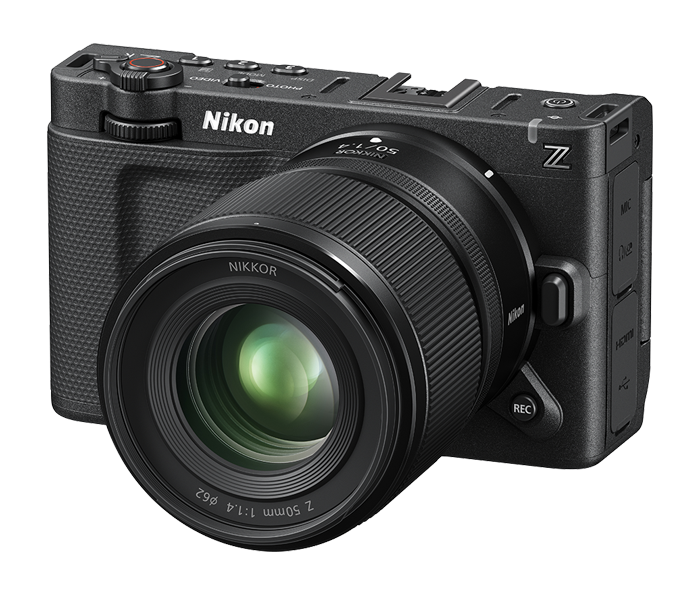
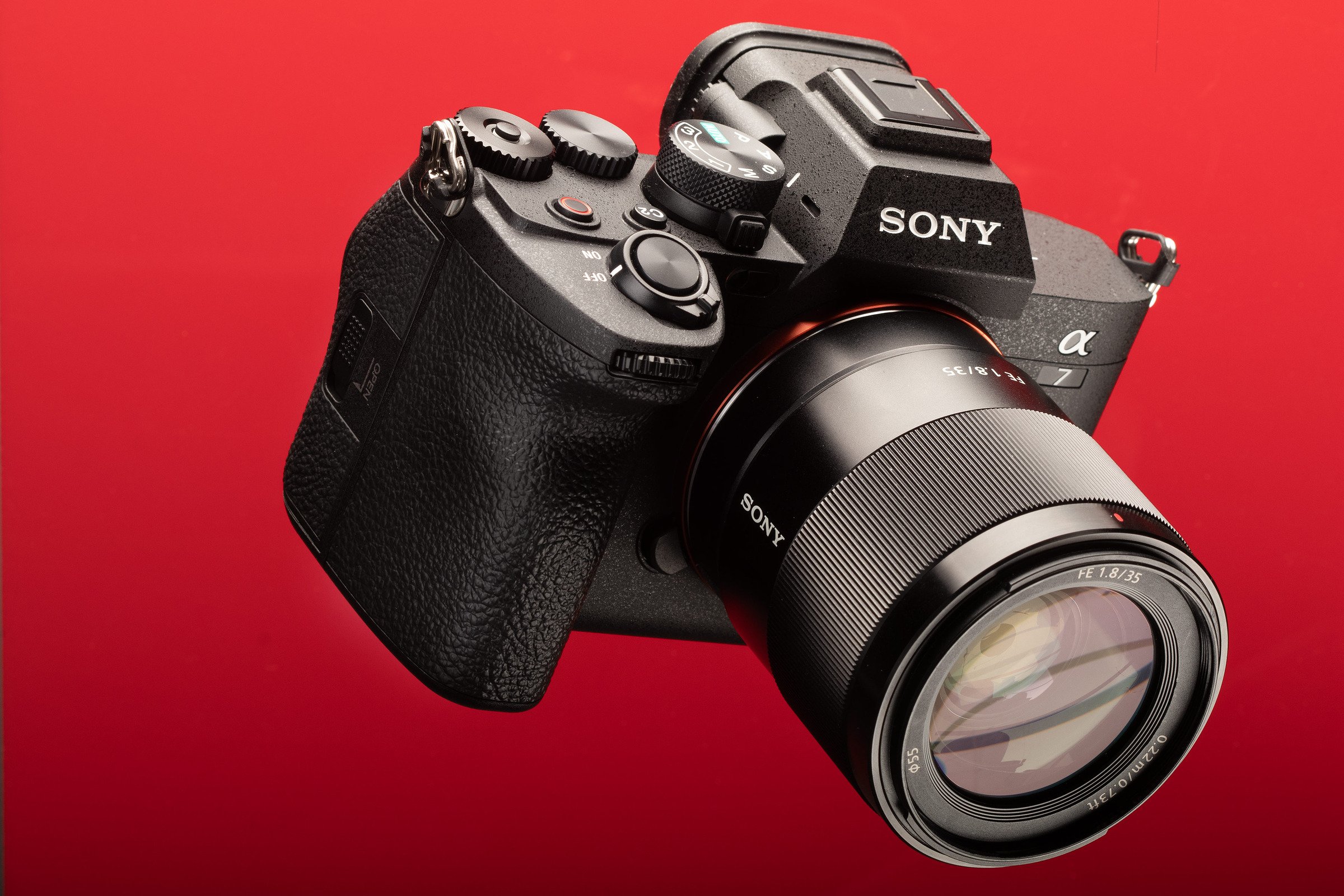
The Nikon ZR and the Sony A7 IV are two high-end full-frame mirrorless cameras that cater to photography enthusiasts and professionals alike. Both models come equipped with impressive specifications that appeal to a wide range of users, from portrait and landscape photographers to videographers. Given their similar price points and capabilities, it's common for buyers to compare the two when deciding which camera best fits their needs. Key differentiators include image quality, autofocus systems, and video capabilities, which can significantly influence a photographer's choice.
Specifications Comparison
Detailed Comparison
Image Quality
When it comes to image quality, the Sony A7 IV offers a higher resolution with its 33-megapixel sensor compared to the Nikon ZR's 25 megapixels. This means that the A7 IV potentially captures more details, especially useful for large prints or significant cropping. However, the Nikon ZR's full-frame sensor benefits from a wider ISO range that extends from 100 to 64000, enabling better performance in low-light conditions. The A7 IV, while it has an impressive low-light performance, has a maximum ISO of 51200, expandable to 204800, but in practical applications, the Nikon may yield cleaner images at higher native ISO settings.
Both cameras feature similar full-frame sizes, with the Nikon ZR measuring 35.9 x 23.9 mm and the A7 IV at 35.6 x 23.8 mm, resulting in comparable sensor performance. In practical tests, both are capable of producing stunning images with vibrant colors and excellent dynamic range. However, keen shooters may notice the difference in resolution when aggressively cropping images or printing large formats.
In summary, while both cameras produce excellent image quality, the Sony A7 IV edges out the Nikon ZR due to its higher resolution, but the Nikon ZR's superior low-light performance offers a compelling advantage.
Autofocus System
The autofocus systems of these cameras are pivotal for achieving sharp images, especially in dynamic shooting situations. The Sony A7 IV boasts an impressive autofocus architecture, featuring 759 autofocus points compared to the Nikon ZR's 273 points. This allows the A7 IV to achieve faster and more accurate focus across a broader area of the frame, which is particularly beneficial for action photography or tracking moving subjects.
While Nikon's autofocus system has improved over recent years, it still lags behind Sony's in terms of coverage and sophistication-especially when it comes to face and eye detection in both human and animal subjects. Sony's advanced Real-time Eye AF technology gives it an edge, providing photographers with greater reliability in capturing subjects in focus.
Both systems have shown they can perform admirably in well-lit conditions, but the sheer number of points and the superior tracking capabilities of the A7 IV ultimately make it a more versatile choice for users who prioritize autofocus performance.
Video Capabilities
For videography, the Sony A7 IV has positioned itself as a more compelling option. It supports 4K video recording at up to 60p, facilitating high-quality video production suitable for professionals. The Nikon ZR, although equipped to handle video, lacks a dedicated video resolution specification and reportedly has a maximum frame rate of 20 fps, which might not meet the demands of fast-paced video shooting.
Additionally, the A7 IV provides advanced video features such as S-Cinetone color science and various codecs, appealing to filmmakers who require greater control over their footage. The inclusion of features like 10-bit 4:2:2 recording and improved heat management further reinforces its competence in video tasks, allowing for longer recording times without overheating.
Nikon has made strides in video capabilities, but the Sony A7 IV's advantages establish it as the clearer choice for serious videographers, making it the winner in this category.
Build & Ergonomics
Both cameras feature robust builds and are weather-sealed, making them resistant to dust and moisture, suitable for outdoor shooting conditions. The Nikon ZR weighs in at 630 grams, making it slightly lighter than the Sony A7 IV at 659 grams. This weight difference might be appreciated by photographers who prioritize portability.
In terms of dimensions, the Nikon ZR is more compact in length and height, but the A7 IV's increased depth may offer a better grip for some users. Additionally, the A7 IV features an electronic viewfinder (EVF), whereas the Nikon ZR lacks one, which is a significant consideration for photographers who prefer composing through an EVF rather than solely relying on the LCD screen.
In summary, while both cameras are built to resist environmental challenges, the A7 IV's viewfinder inclusion may provide it with an ergonomic edge, particularly for traditional photography styles.
Battery & Storage
Battery performance is crucial for prolonged shooting sessions, and here, the Sony A7 IV shines with a rated battery life of approximately 580 shots, enabling coverage for longer events or outings without frequent downtime. In contrast, while the specific battery endurance for the Nikon ZR isn't provided, its design typically follows suit with modern mirrorless standards, which may not match the A7 IV in terms of longevity.
On the storage front, both cameras use SD cards, which are commonplace and offer adequate performance for their respective specifications. However, with the potential higher frame rate and video capabilities of the A7 IV, users might benefit more from faster UHS-II SD cards when utilizing high-resolution video settings.
Overall, the A7 IV's better battery life is a distinct advantage in month-long outings away from charging solutions, positioning it ahead in this aspect.
Value for Money
In terms of pricing, the Nikon ZR is priced at $2200, while the Sony A7 IV comes in at $2499. The Nikon ZR presents a more affordable option for those seeking a full-frame camera, but considering its specifications, particularly in resolution and video, the A7 IV appeals to a broader audience who might find value in its extensive feature set.
The higher price of the A7 IV reflects advanced technology that caters to professionals who prioritize image resolution, video capabilities, and focus performance. Users who lean towards casual photography and don't need the extensive feature set of the A7 IV might find better value in the Nikon ZR, especially if budget constraints are a concern.
Ultimately, while the Nikon ZR is attractive for its price, the additional performance from the A7 IV may justify its higher price tag for serious users that demand more features and capabilities.
Lens Ecosystem
Both Nikon and Sony have well-developed lens ecosystems, but Sony's lens offerings are notably more extensive, which translates into greater versatility for users. Sony has built a robust range of native lenses that are highly optimized for their cameras, including numerous prime and zoom lenses ranging from standard to ultra-wide and telephoto options.
Nikon's Z mount lenses, while fewer in number, are expanding rapidly and are well-regarded for their optics. However, users who require specific focal lengths or specialized lenses might find Sony's selection more appealing due to its maturity and diversity.
In conclusion, while both ecosystems have their benefits, users looking for an expansive range of lenses to choose from may find more satisfaction in Sony's established offerings.
Our Verdict
Overall, the Sony A7 IV emerges as the winner in this comparison, owing to its superior image resolution, advanced autofocus system, and robust video capabilities. It is particularly well-suited for professional photographers and videographers who require high performance and versatility. However, for those who prioritize a lighter, more affordable option and still demand quality images, the Nikon ZR provides good value. The choice ultimately comes down to the specific needs of the user, whether it be high-resolution images and video or a more budget-conscious approach to full-frame photography.
Nikon ZR
Sony A7 IV
Also Compare
Frequently Asked Questions
Which camera is better for low-light photography?
The Nikon ZR is generally better for low-light scenarios due to its wider native ISO range, allowing cleaner images at higher settings compared to the Sony A7 IV.
What is the main advantage of the Sony A7 IV over the Nikon ZR?
The main advantage of the Sony A7 IV lies in its higher resolution, better autofocus capabilities, and superior video quality, making it a more versatile choice for both photographers and videographers.
Is the electronic viewfinder on the A7 IV a significant feature?
Yes, the electronic viewfinder on the A7 IV provides a more traditional shooting experience and is beneficial for composing images in bright conditions where an LCD screen may be harder to see.
Which camera is better for video production?
The Sony A7 IV excels in video production with its 4K 60p recording capability and advanced video features, making it the better choice for videographers.
How do the build qualities of both cameras compare?
Both cameras are weather-sealed and built to withstand environmental challenges. However, the A7 IV's ergonomic design with a deeper grip can improve comfort during extended use.