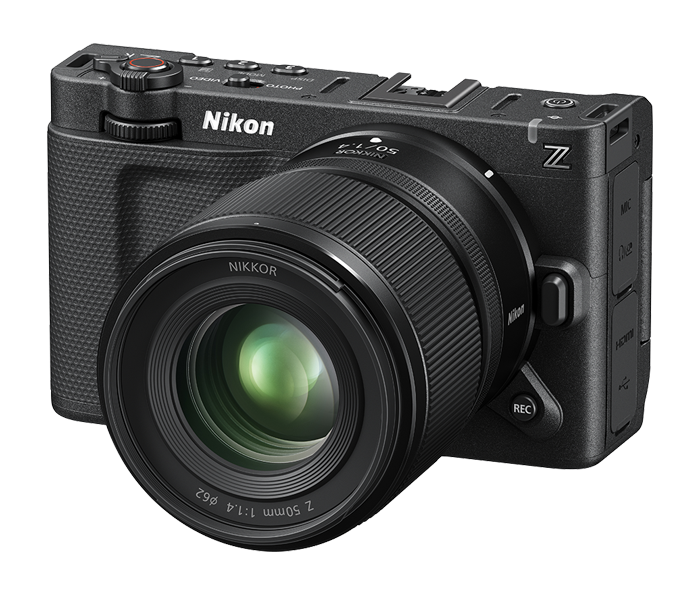
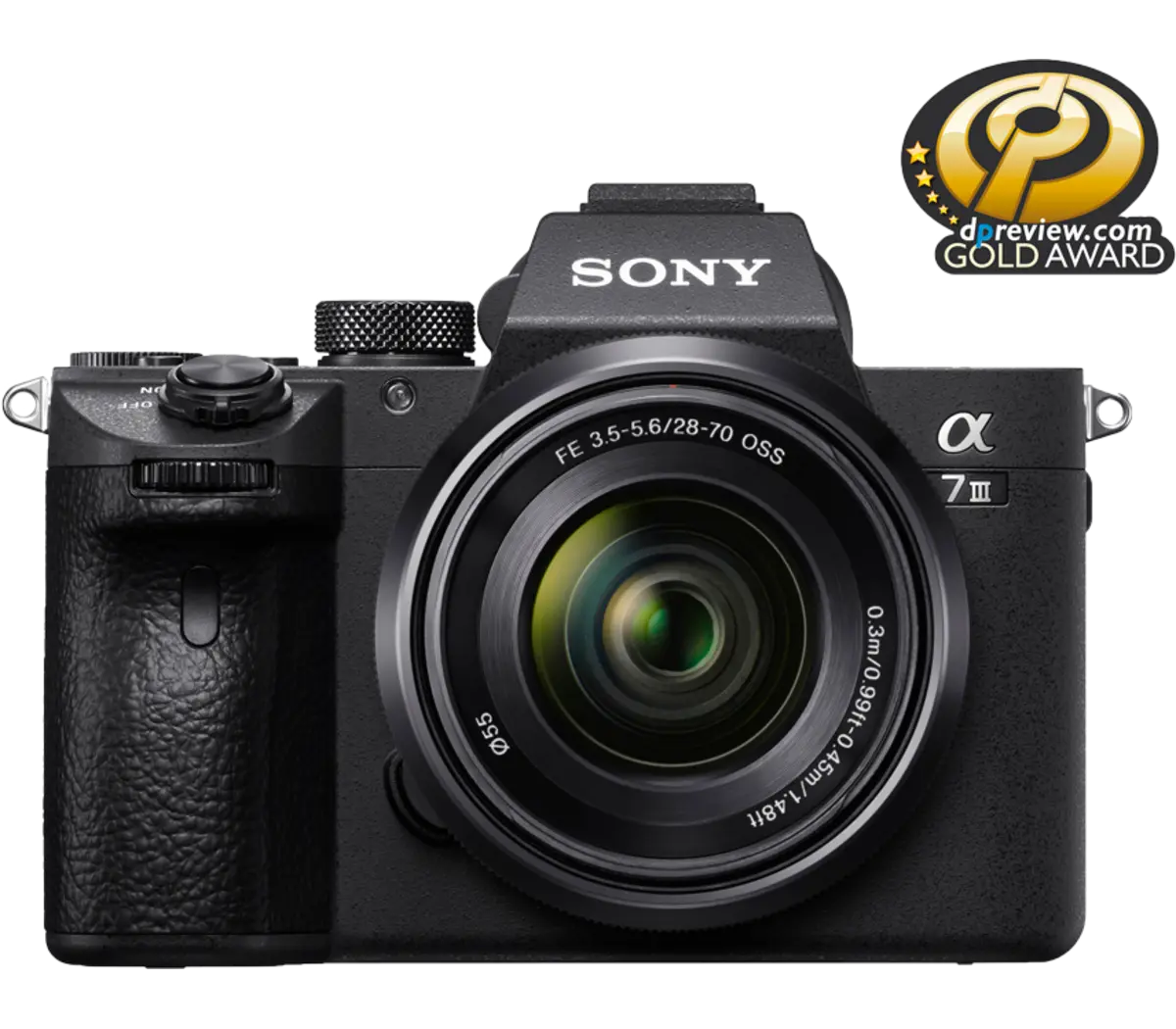
The Nikon ZR and Sony A7 III are both full-frame mirrorless cameras targeting enthusiast and professional photographers seeking high image quality in a compact package. The Sony A7 III, released in 2018, set a benchmark in the category with its robust autofocus, long battery life, and versatile feature set at an affordable price. The Nikon ZR, launched in 2025, is a newer competitor introducing more modern features like a higher-resolution screen, more advanced stabilization, and a lighter, more compact body.
Buyers commonly compare these two models as they occupy a similar price bracket and fulfill overlapping needs-travel photography, event work, and hybrid shooting. Key differentiators include autofocus coverage, burst shooting speed, battery life, stabilization, and the maturity of the respective lens ecosystems. Choosing between the two often depends on shooting priorities, preferred ergonomics, and investment in respective lens mounts.
Specifications Comparison
Detailed Comparison
Image Quality
Both the Nikon ZR and Sony A7 III use full-frame sensors of nearly identical dimensions (35.9 x 23.9 mm vs. 35.8 x 23.8 mm), with 25MP and 24MP resolutions respectively. In real-world use, this difference in megapixels is negligible, with both cameras delivering excellent detail and dynamic range suitable for large prints or commercial work.
The ISO capabilities are close: the Nikon ZR offers a native range of 100-64000, while the Sony A7 III covers 100-51200 (expandable with an auto setting). Both cameras perform admirably in low light, though the Nikon's slightly extended ISO range could provide a marginal edge in specific scenarios. However, Sony sensors traditionally boast excellent high ISO performance-it's likely both models will be very close unless pushing the absolute limits.
Color science and processing also play a role. The Nikon ZR, being newer, likely benefits from advances in sensor technology and processing algorithms, which may translate to better in-camera noise reduction, color rendition, and overall image cleanliness. Yet, the A7 III has proven, reliable output.
Screen quality may also impact image review and assessment. The Nikon ZR's 4", 3,070,000-dot LCD far surpasses the Sony's 3", 921,600-dot panel, making it easier to judge focus and detail in the field.
Autofocus System
Autofocus performance is a major differentiator. The Sony A7 III offers a remarkable 693 phase-detect autofocus points, covering a wide area of the frame, and has proven fast and reliable for both stills and video. Sony's system is especially renowned for its Real-time Eye AF, which is a boon for portrait and event shooters.
The Nikon ZR provides 273 autofocus points, which cover a good portion of the frame and leverage the latest developments in Nikon's AF technology, given its newer release. While Nikon has closed the autofocus gap considerably in recent models, Sony's superior point count and established real-world tracking advantage remain relevant.
For subjects in motion-sports, wildlife, events-the Sony system has a proven track record. However, Nikon's advancements may mean strong performance for most users, and the difference in actual use could be less stark for static subjects.
Ultimately, the A7 III's sheer number of AF points and history of reliable tracking give it the nod here, though the ZR is still very capable.
Video Capabilities
The Sony A7 III is a well-known workhorse for hybrid shooters, offering 4K video at 30p with full pixel readout and minimal rolling shutter. Its video quality, autofocus, and color science have made it popular for independent filmmakers and content creators. The presence of an electronic viewfinder further improves usability for video in bright conditions.
The Nikon ZR's specs do not detail video resolution or frame rates, but given its 2025 release and advanced sensor, it is reasonable to assume at least 4K capability, potentially with higher frame rates and improved internal stabilization (7.5 stops vs. Sony's 5 stops). That said, without explicit confirmation, the A7 III's known high-quality 4K video is a safer bet, especially with its proven workflow advantages.
Nikon's advanced in-body stabilization is a benefit for handheld shooting, especially for vloggers, but the lack of a built-in viewfinder could be a disadvantage for serious video work in bright environments.
Given the certainty and established reputation for video on the A7 III, it maintains an edge, though the ZR is likely to be competitive, especially for stabilized handheld use.
Build & Ergonomics
In terms of build, both cameras are weather-sealed, making them suitable for demanding environments. The Nikon ZR is notably more compact and lighter (630g and 133 x 81 x 49 mm) than the Sony A7 III (650g and 127 x 96 x 74 mm), which favors portability and travel. Nikon's ergonomics, with a deeper grip and more streamlined controls in recent Z-series models, are generally well-liked.
The Sony A7 III includes a built-in electronic viewfinder, a crucial tool for composing in bright sunlight or for traditional shooting styles. The ZR, notably, has no viewfinder at all, relying on its rear LCD, which may be fine for casual or tripod use but is a serious limitation for many pro photographers.
The ZR sports a vastly higher-resolution display (4", 3,070,000 dots) that enhances on-screen image review and manual focusing, while the Sony's older, smaller, and lower-resolution panel feels dated in comparison.
Overall, the lack of a viewfinder on the Nikon ZR is a significant downside for serious shooters, outweighing the benefits of its weight and compactness for most traditional photography scenarios.
Battery & Storage
Battery life heavily favors the Sony A7 III, which is rated for 710 shots per charge, among the highest in mirrorless cameras. The Nikon ZR's battery performance hasn't been specified, but Nikon Z-series models typically lag slightly behind Sony's class-leading numbers.
Storage flexibility also tends to be stronger with Sony's older models, as they feature dual SD card slots-critical for pro shooters seeking redundancy or separate file organization. The Nikon ZR's card configuration is unavailable but, being compact and viewfinder-less, may only have a single slot, although confirmation is required.
Field usage is dramatically impacted by battery endurance, especially for event, travel, or wildlife photographers who may shoot all day.
Sony's established battery and likely dual-card reliability give it a clear edge here.
Value for Money
At $2,200 for the Nikon ZR and $2,000 (MSRP) for the Sony A7 III, both cameras offer excellent feature sets in the premium enthusiast range. The Nikon brings advancements like modern sensor tech, superior IBIS (7.5 stops), and a cutting-edge high-resolution screen. For photographers prioritizing the newest tech and compactness, the price premium could be justified.
However, the Sony A7 III, despite its age, has proven reliability, a stellar feature set for both stills and video, excellent battery life, a built-in viewfinder, and a mature ecosystem-all at a lower street price due to age and availability. Deals and bundles are common, further enhancing its value.
The Nikon ZR's lack of a viewfinder limits its versatility, and for many, will not justify the extra cost unless ultra-portability and a high-resolution LCD are top priorities. For most buyers seeking all-around capability, especially those who plan to invest in lenses and accessories, the Sony A7 III remains the more balanced value proposition.
Considering real-world pricing and feature utility, the Sony A7 III wins on value for money.
Lens Ecosystem
Sony's E-mount system is the largest and most mature full-frame mirrorless lens ecosystem on the market, bolstered by native Sony lenses and from third parties like Sigma, Tamron, and Samyang. This gives A7 III users access to a vast range of affordable options alongside high-end glass for professional work.
The Nikon Z-mount is newer, but Nikon has aggressively expanded its native Z lens range, offering exceptional optical quality. However, lens selection is still narrower, and third-party options-while increasing-are not as extensive or affordable as for Sony. For those seeking specialty lenses or working with a tight budget, Sony's ecosystem remains more attractive.
Adapters exist for both systems, but performance and compatibility are generally best with native glass.
For breadth and value, Sony's lens ecosystem is still the clear winner.
Our Verdict
Overall, the Sony A7 III remains a benchmark for value and all-around performance in the full-frame mirrorless segment. It offers superb autofocus, dependable battery life, robust build, a built-in electronic viewfinder, reliable dual card slots, and access to the industry's richest lens ecosystem-all at a competitive price. Its edge in practical usability and proven reliability earns it the overall win in this comparison. The Nikon ZR is a compelling new entrant, with modern sensor technology, class-leading in-body stabilization, an impressive high-resolution LCD, and a compact, lightweight body. It may appeal to photographers who prioritize portability, cutting-edge displays, or specific Nikon Z-mount lenses. However, the absence of a viewfinder and potential limitations in battery and storage flexibility make it harder to recommend to traditional or professional shooters who want an all-rounder. The ZR is best for those who rarely use viewfinders, travel-light shooters, or tech enthusiasts keen on the latest display technology.
Nikon ZR
Sony A7 III
Also Compare
Frequently Asked Questions
Does the Nikon ZR's lack of an electronic viewfinder matter for most photographers?
For many photographers, especially those shooting outdoors or in bright environments, a built-in electronic viewfinder is essential for clear framing and focusing. Relying solely on the rear LCD can be challenging in strong sunlight or for action shooting. The Nikon ZR's omission of a viewfinder makes it less suitable for traditional or professional shooting styles compared to the Sony A7 III, which has a built-in EVF.
Which camera is better for low-light photography?
Both cameras have excellent full-frame sensors and similar native ISO ranges (Nikon ZR: 100-64000, Sony A7 III: 100-51200). In practice, both deliver strong low-light performance, but Sony sensors are renowned for their high-ISO handling. The Nikon may have a slight edge on paper due to its expanded ISO, but the real-world difference is minimal.
Which is more suitable for video recording?
The Sony A7 III is more established for video with proven 4K 30p, strong autofocus, and a built-in EVF. The Nikon ZR likely matches or exceeds it in stabilization (7.5 stops) and screen resolution, which helps for vlogging or precise manual focus, but the lack of a viewfinder and unknown video specs may limit its appeal to serious video shooters.
Which system offers better lens selection and third-party support?
Sony's E-mount has the widest selection of full-frame mirrorless lenses, including excellent affordable options from Tamron, Sigma, and others, plus extensive native Sony choices. Nikon Z-mount has grown rapidly with many quality lenses, but Sony's system is still far more comprehensive, especially at the budget and specialty ends.
How important is battery life for these cameras?
Battery life is crucial for event, travel, or sports photographers who may shoot all day. The Sony A7 III is a leader in this area, offering up to 710 shots per charge. While the Nikon ZR's battery specs aren't published, Nikon mirrorless cameras typically have shorter battery endurance, so Sony A7 III is the safer pick for heavy shooters.
Who should choose the Nikon ZR over the Sony A7 III?
The Nikon ZR is best for users who prioritize ultra-portability, a cutting-edge high-resolution LCD, and advanced stabilization for handheld or travel shooting, and who don't mind relying solely on the rear screen for composition. It's also a good fit for those invested in the Nikon Z-mount system or wanting the latest tech-even if it means giving up the viewfinder and possibly some battery capacity.