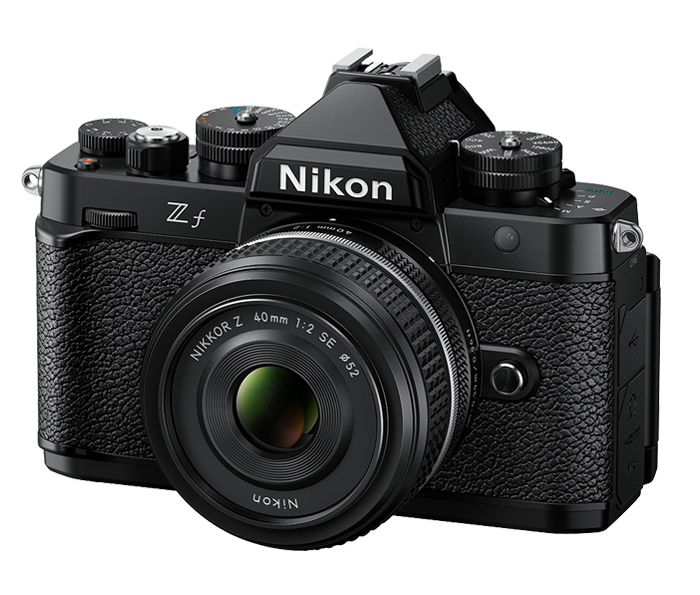

The Nikon Zf and Sony A9 III are two highly regarded full-frame mirrorless cameras released in 2023, targeting professionals and serious enthusiasts who demand high performance in photography and videography. Both brands have significant followings, with Nikon appealing to traditionalists and those loyal to its optical legacy, while Sony tends to attract users who favor cutting-edge technology and high-speed performance. This comparison focuses on the distinct features, user experiences, and overall value both models bring to the table.
Specifications Comparison
Detailed Comparison
Image Quality
Both the Nikon Zf and Sony A9 III sport 25-megapixel full-frame sensors that deliver impressive image quality. The Zf's sensor measures 35.9 x 23.9 mm, while the A9 III has a slightly larger sensor size of 36 x 24 mm. This marginal difference may provide the A9 III with a slight edge in capturing more light, potentially affecting dynamic range and low-light performance. Both cameras produce high-quality images with rich detail, but the real-world performance often depends on factors like lens choice and post-processing. In practice, photographers may find little difference in image quality under normal conditions, but enthusiasts in low-light scenarios may lean slightly toward the A9 III for potential better performance.
Autofocus System
On the autofocus front, the Nikon Zf features 273 autofocus points, while the Sony A9 III boasts a staggering performance with 693 autofocus points. The A9 III utilizes Sony's fast hybrid AF system, making it especially well-suited for tracking moving subjects, which is crucial for sports and wildlife photography. In continuous shooting, the A9 III can reach up to 120 frames per second, while the Zf reaches a maximum of 14 fps. This capability allows the A9 III to capture fast action with breathtaking precision. Consequently, for users who prioritize advanced autofocus performance, the A9 III clearly stands out as the superior choice.
Video Capabilities
When it comes to video capabilities, both cameras are quite capable. The Nikon Zf supports 4K video at 60 frames per second, making it suitable for high-quality digital filmmaking. In contrast, the Sony A9 III offers a significant advantage with support for 4K video at a maximum of 120 frames per second. This higher frame rate allows for breathtaking slow-motion effects that the Zf cannot match. Both cameras include 8 stops of in-body stabilization for smoother handheld footage, but the A9 III's video capabilities make it exceptionally appealing for videographers looking for more versatility.
Build & Ergonomics
Both the Nikon Zf and Sony A9 III are designed with a focus on professional usability and comfort. The Zf weighs in at 710 grams, making it slightly heavier compared to the A9 III, which is 617 grams. The dimensions of the Zf (144 x 103 x 49 mm) also make it bulkier than the A9 III (136 x 97 x 83 mm). Users may appreciate the slightly more compact and lightweight design of the A9 III for extended shooting sessions. Both cameras include weather sealing and robust constructions suitable for professional use, ensuring durability across various shooting conditions. The choice in ergonomics between the two will largely depend on personal preference regarding grip and handling.
Battery & Storage
In terms of battery life, the Nikon Zf provides a respectable 380 shots per charge, while the Sony A9 III offers superior performance with its ability to capture more shots on a single battery-typically around 530 shots. This additional endurance can be critical for professionals who are shooting long events or in remote locations. Furthermore, both cameras support high-speed storage options, but the A9 III's overall efficiency in power management grants it an advantage in prolonged shooting scenarios, making it more reliable for professionals who need the camera to last through extensive use.
Value for Money
With a retail price of $1999, the Nikon Zf presents a competitive offering in terms of features, especially for those focused on still photography and moderate video use. The A9 III, while not disclosed, is expected to be higher due to its rich array of features, particularly in autofocus and video performance, making it more suitable for professionals in fast-paced environments. While both cameras have unique strengths, buyers must assess their specific needs-those favoring video and speed may justify a higher investment in the A9 III, while others may find the Zf sufficiently capable for their photography needs.
Our Verdict
Determining the better camera between the Nikon Zf and Sony A9 III ultimately comes down to the user's priorities. The A9 III excels in autofocus performance, video capabilities, and battery life, making it an excellent option for dynamic photography and videography. Conversely, the Nikon Zf offers great value with its solid image quality and ergonomics suited for traditional photography enthusiasts. For users focused on fast action or advanced video work, the Sony A9 III is the clear choice, while those prioritizing still photography with a budget-friendly option may prefer the Zf.
Nikon Zf
Sony A9 III
Also Compare
Frequently Asked Questions
Is the Nikon Zf better for still photography?
The Nikon Zf offers excellent image quality and great ergonomics, making it suitable for still photography. However, the autofocus performance of the A9 III might still make it advantageous in fast-paced environments.
Which camera is better for video recording?
The Sony A9 III is preferable for video recording due to its higher frame rate of 120 fps at 4K resolution, which allows for more creative slow-motion effects compared to the Zf's 60 fps.
What are the significant differences in autofocus?
The A9 III has a superior autofocus system with 693 points, drastically improving tracking capabilities for moving subjects compared to the 273 points in the Zf.
How does battery life compare between the two cameras?
The A9 III offers longer battery life at about 530 shots compared to the Nikon Zf's 380 shots, making it better for extended shooting sessions.
Are there lens options available for both cameras?
Both Nikon Z and Sony E mounts have a variety of lens options available. However, Sony's system generally offers a broader range of native lenses, benefiting those invested in their ecosystem.