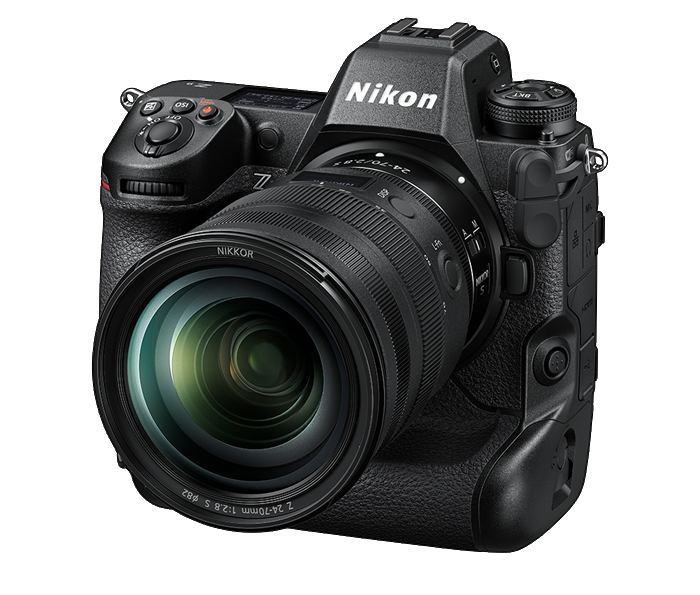

The Nikon Z9 and Sony A9 III are two of the most advanced full-frame mirrorless cameras available, tailored for professional photographers and videographers. Both models are often compared due to their impressive specifications, rapid shooting capabilities, and versatility suited for sports, wildlife, and event photography. Potential buyers are usually those who demand high performance, exceptional image quality, and robust build quality, making the choice between these two powerhouse systems nuanced and significant for their photographic pursuits. Key differentiators include sensor resolutions, autofocus capabilities, weight and build, and overall feature sets designed to optimize user experience.
Specifications Comparison
Detailed Comparison
Image Quality
When it comes to image quality, the Nikon Z9 stands out with its 46 megapixels sensor, delivering highly detailed images that can be crucial for large prints and extensive cropping. This higher resolution provides a significant advantage for photographers looking for maximum detail in their work. In contrast, the Sony A9 III offers a 25 megapixels sensor, which, while still offering excellent image quality, may not satisfy users looking for the extreme detail provided by the Z9. However, the A9 III's sensor has been engineered for high performance in low-light situations, which might appeal to some photographers.
Both cameras excel in dynamic range and color accuracy, with each brand's processors enhancing their respective sensor output. The Z9's processing capabilities lead to exceptional color rendition and detail preservation in both highlights and shadows due to its advanced Expeed 7 processor. Conversely, Sony's processing technology in the A9 III, including the latest BIONZ XR, also assures good low-light performance and rich color profiles, although it does face more limits due to the lower megapixel count.
Overall, while both systems produce stunning images, the Z9's higher resolution sensor provides an edge for those needing fine detail yet doesn't necessarily make the A9 III a poor performer. Users will need to weigh their specific needs against the capabilities of each camera.
Autofocus System
The autofocus systems in these two cameras are noteworthy, featuring advanced technologies designed for speed and accuracy. The Nikon Z9 hosts 493 autofocus points, all of which are phase-detection, offering exceptional tracking performance, especially beneficial in dynamic scenarios like sports or wildlife photography. It features advanced subject detection algorithms, which can automatically track moving subjects accurately across the frame, leading to high hit rates in fast-paced shooting environments.
On the other hand, the Sony A9 III includes a state-of-the-art autofocus system with up to 759 phase-detection points and 425 contrast-detection points, ensuring quick focusing and tracking. Its Eye autofocus feature is particularly acclaimed, and it operates seamlessly whether the subject's eyes are visible, making it ideal for portrait photographers as well as action shooters. The A9 III also supports real-time tracking that excels in maintaining focus on moving subjects, a key feature for sports photography.
While both systems are highly capable, the Z9 may have a slight edge in the sheer number of autofocus points, ensuring extensive coverage across the frame. However, the A9 III's tracking and subject detection can sometimes lead to more consistent performance in fast-moving situations. Both cameras offer exceptional autofocus presented in their unique ways, but the use case may dictate the preferred system.
Video Capabilities
Both the Nikon Z9 and Sony A9 III feature impressive video capabilities, specifically supporting 4K resolution at up to 120 frames per second. This makes both cameras suitable for high-resolution, high-frame-rate video production, giving flexibility for slow-motion or high-action shooting. The Z9 also stands out with its ability to record 8K video at 30p, a feature not present in the A9 III, thus giving it an edge for videographers focused on higher resolution.
The Z9 supports 10-bit internal recording and features N-Log for better dynamic range, allowing for more extensive color grading options in post-production, while the A9 III does not have 8K capabilities but still provides high-quality 4K performance and solid codec options. Additionally, the Z9's broader range of video features including programmable recording options and enhanced cooling systems, lends itself well to longer shooting sessions without overheating.
In essence, while both cameras serve the videography community well, the additional capabilities of the Z9, especially for those interested in 8K recording, may tip the balance in its favor for filmmakers.
Build & Ergonomics
The build quality of both the Nikon Z9 and Sony A9 III showcases their respective brands' commitments to durability and ergonomics. The Z9 features a robust construction with a weather-sealed design that ensures it can withstand harsh environments, making it more appealing for outdoor photographers. Its larger grip and heavier weight (1340g) offer a solid feel that can be comfortable for extended shooting sessions.
Conversely, the A9 III is notably lighter at 617g and designed with a more compact profile, making it easier to carry. Its dimensions also allow for a comfortable grip despite being smaller, which can be a significant advantage for users who prioritize portability and ease of handling during long shoots or travel.
In terms of controls, both cameras are equipped with customizable buttons and dials, allowing users to personalize their shooting experience. While the Z9's larger format provides more real estate for controls and buttons, the A9 III still offers a well-organized layout. Ultimately, while the Z9 is preferable for those prioritizing ruggedness and ergonomics in a bulkier body, the A9 III offers practical advantages in weight and transportability.
Battery & Storage
The Nikon Z9 offers an impressive battery life rated for approximately 740 shots per charge, which is commendable, especially when compared to the A9 III's unknown-specific battery performance targeted towards efficiency. The Z9's EN-EL18d battery not only supports long shooting sessions but also provides it with an effective power management system that photographers can rely on during critical moments.
When it comes to storage, both cameras support dual card slots, but while the Z9 utilizes CFexpress Type B and SD UHS-II cards, the A9 III primarily focuses on CFexpress Type A and SD UHS-II. This flexibility in storage formats ensures that both cameras can handle large files efficiently, particularly important when shooting in high-speed modes.
In summary, while both cameras perform well in battery life and offer dual slots for storage, the Z9's longer battery life makes it a more robust choice for those needing extensive shoot times without interruption. This strengthens the Z9's standing in scenarios where outlet access is limited or impractical.
Value for Money
The Nikon Z9 is priced at approximately $5500, a reflection of its advanced features and high-resolution capabilities. For dedicated professionals, this investment can be justified with the detailed outputs and superior build quality it offers. It caters well to users who need top-of-the-line performance in both photography and videography. The camera's longevity and the advanced technology packed into it might lessen the overall cost-per-use compared to lower-tier models.
In contrast, the Sony A9 III, being released in 2023, likely offers significant updates and improvements while retaining a lower price point, appealing to those who are seeking excellent performance without the highest investment. At a lower megapixel count and fewer high-end features, it could attract a broader audience of professionals who might not need the extreme outputs of the Z9, making it a great value choice.
Essentially, the Z9 represents the premium segment of the market, while the A9 III offers a competitive package that balances performance and price. The choice will largely depend on the specific requirements of the user and how each value proposition aligns with their needs.
Our Verdict
Overall, the Nikon Z9 comes out as the winner, primarily due to its superior image resolution, video capabilities, and battery life which cater extensively to professional users seeking the best in-class performance across the board. Meanwhile, the Sony A9 III, while slightly lower in some aspects such as megapixels and battery life, offers incredible autofocus, a lower price point, and better portability, making it a great choice for dynamic shooters who prioritize a lightweight body and responsive performance. Each camera has its strengths that might sway decision-making based on specific photography or videography needs.
Nikon Z9
Sony A9 III
Also Compare
Frequently Asked Questions
Which camera is better for sports photography?
Both cameras excel in sports photography due to their fast shooting speeds and advanced autofocus systems. However, the Nikon Z9 has a higher resolution, which can be beneficial for cropping, while the Sony A9 III's superior tracking might help in tighter scenarios.
Is the Z9 worth the higher price?
For professionals needing maximum detail, extensive video capabilities, and longer battery life, the Z9 justifies its higher price. If these features are essential for your work, it's worth considering.
How does low-light performance compare?
While both models perform well in low-light, the Sony A9 III benefits from its optimization for lower megapixels and thus retains better high ISO performance, making it appealing for low-light conditions.
Can I use Nikon Z lenses on the A9 III?
No, the Nikon Z lenses are specific to Nikon's Z mount, while the Sony A9 III uses the Sony E mount, meaning lenses are not interchangeable.
Which camera is more durable for outdoor use?
The Nikon Z9 is designed with a more rugged, weather-sealed body, making it the better choice for challenging outdoor environments.