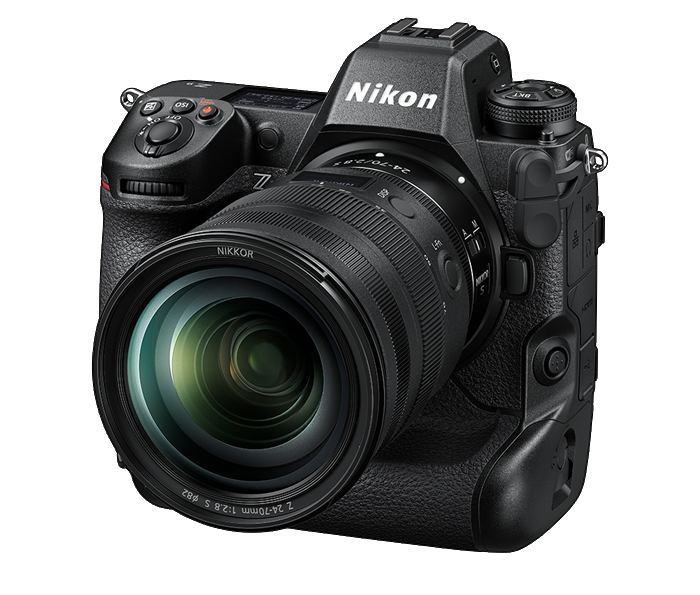

The Nikon Z9 and the Sony A9 II are two powerhouse mirrorless cameras that frequently attract attention from professional photographers and enthusiasts alike. With the rise of mirrorless technology, both of these cameras offer excellent features, making them popular choices for sports, wildlife, and event photography. Buyers often find themselves torn between these models due to their advanced capabilities, price points, and brand ecosystems. Understanding the key differentiators such as image quality, autofocus, and build quality is crucial for making an informed decision.
Specifications Comparison
Detailed Comparison
Image Quality
The Nikon Z9 boasts a remarkable 46 megapixels, providing higher resolution images than the 24 megapixels offered by the Sony A9 II. This additional resolution can be exceptionally beneficial in capturing intricate details, making the Z9 a better choice for large prints and extensive cropping. The full-frame sensor dimensions are slightly larger in the Nikon as well (35.9 x 23.9 mm compared to 35.6 x 23.8 mm), which might marginally affect light gathering and dynamic range performance, tipping the scales towards the Z9 in favorable lighting scenarios.
However, the Sony A9 II's 24 megapixels paired with its enhanced ISO range from 100 to 51200 (expandable up to 204800) allows it to perform admirably in low-light conditions. It offers excellent noise performance, making it easier to shoot at higher ISO levels without sacrificing image quality. This advantage could make the A9 II more appealing for nighttime or indoor shooting.
Overall, while the Nikon Z9 provides superior resolution, the Sony A9 II compensates with better high-ISO performance, leading to a diverse usage scenario where one or the other might excel. Still, in terms of sheer image detail, the Z9 takes the lead.
Autofocus System
Both cameras are equipped with advanced autofocus systems that cater to professional needs, but there are notable differences. The Nikon Z9 features 493 autofocus points, which, while impressive, are somewhat overshadowed by the Sony A9 II's 693 points. The greater number of focus points on the A9 II translates to more coverage across the frame, which is especially advantageous in fast-paced situations like sports or wildlife photography.
Additionally, the A9 II features Real-time Eye Autofocus for both humans and animals, effectively tracking subjects with precision. The Z9, too, has impressive tracking capabilities, but the sheer number of autofocus points in the A9 II often provides an edge in fast-moving scenarios. Notably, the Z9 also has a unique subject detection feature, though its overall focus point count is lower.
In terms of responsiveness, both systems offer swift focusing speeds, allowing for real-time shooting that is crucial for capturing fleeting moments. Ultimately, while both systems are top-tier, the autofocus performance signifies a win for the A9 II due to its higher count of points and tracking capabilities.
Video Capabilities
The Nikon Z9 takes the lead in video capabilities, supporting 4K video recording at an impressive 120 frames per second (fps), which is a significant advantage for videographers looking to create high-speed footage. It also supports 8K video recording, giving it a versatile edge for those who may want to future-proof their work. The video performance of the Z9 caters ideally to professional filmmakers who require high frame rates and resolutions for their projects.
In contrast, the Sony A9 II supports 4K video at up to 30 fps. While the A9 II produces high-quality video that is suitable for casual videography and event coverage, it lacks the advanced framing options and high resolutions that the Z9 offers. The A9 II's video features do include S-Log and HLG (Hybrid Log-Gamma) for HDR, but the overall video capabilities fall short when compared to the Z9's specifications.
Thus, if video quality and options are pivotal for a buyer, particularly in a professional context, the Nikon Z9 is the clear winner in this category.
Build & Ergonomics
Both cameras are built to withstand the rigors of professional use, featuring weather-sealed bodies that protect them from dust and moisture. The Nikon Z9's dimensions are more substantial, weighing in at 1340 grams, making it feel more robust in hand, while the lighter Sony A9 II weighs only 678 grams. This difference can be significant, especially for photographers who spend long hours on shoots or travel frequently.
The Z9 also provides a larger 3.2-inch touchscreen with 2,088,960 dots compared to the A9 II's 3-inch screen with 1,440,000 dots. This contributes to better visibility and user interface navigation. The viewfinder is electronic in both models, offering high resolution, but the larger build of the Z9 may offer a more comfortable grip for some users, particularly those with larger hands.
Overall, while both options have their merits, the Z9's more substantial feel and ergonomic design may provide a superior user experience for extended use, making it the preferred choice for those who value build quality.
Battery & Storage
The Nikon Z9 offers an impressive battery life, capable of capturing around 740 shots on a single charge. In comparison, the Sony A9 II's battery life is slightly lower at approximately 690 shots. For photographers who require long, uninterrupted shooting sessions, this slight edge in battery life can be a critical factor.
In terms of storage, the Nikon Z9 uses dual CFexpress cards, allowing for rapid write speeds especially useful for high-resolution continuous shooting and extensive video recording. On the other hand, the A9 II employs dual SD cards, compatible with UHS-II, which also offer decent write speeds but may not match the crucial demands of high-bitrate video recording offered by the Z9.
Considering the overall performance in both battery life and storage capacity, the Nikon Z9 again takes the lead, making it ideal for professionals who need to ensure uninterrupted workflow.
Value for Money
The Nikon Z9 is priced at $5,500, while the Sony A9 II retails for approximately $4,500. For the extra cost, the Z9 delivers higher megapixels, better video capabilities, and enhanced build quality. This makes it an attractive option for professionals willing to invest more for superior features.
Conversely, the Sony A9 II remains a powerful option that fulfills the needs of many photographers, particularly those who are focused on fast action and sports photography where its autofocus performance shines. Its lower price point may resonate with a broader range of buyers, particularly enthusiasts looking for a high-performance camera without the leading-edge price tag.
In consideration of overall value, those needing cutting-edge features for professional work may find the Z9 a worthy investment, while the A9 II provides compelling performance that may appeal to a more budget-conscious or niche audience.
Our Verdict
Overall, the Nikon Z9 emerges as the victor in this comparison due to its superior resolution, video capabilities, durability, and ergonomic design. While the Sony A9 II excels in autofocus capabilities and provides solid value for money, particularly for action photography, the Z9's comprehensive feature set ultimately makes it a more compelling choice for professionals. Those who prioritize video performance, high-resolution capture, and robust build quality will likely find the Nikon Z9 to be the better overall investment, whereas the A9 II remains a great option for photographers focused on fast-paced subjects who prefer a lighter and more affordable camera.
Nikon Z9
Sony A9 II
Also Compare
Frequently Asked Questions
Which camera offers better low-light performance?
The Sony A9 II is better suited for low-light conditions due to its extended ISO range, maintaining good image quality at higher ISO levels compared to the Nikon Z9.
Is the Nikon Z9 worth the higher price?
For professionals needing high-resolution images, advanced video capabilities, and superior build quality, the Nikon Z9's higher price can be justified. However, it depends on your specific needs.
What is the main advantage of the A9 II?
The main advantage of the A9 II lies in its autofocus performance, particularly with its larger number of focus points that can track fast-moving subjects with higher efficacy.
How does the battery life compare between the two cameras?
The Nikon Z9 has a slight edge in battery life, capable of around 740 shots versus the A9 II's 690 shots, making it marginally better for long shooting sessions.
Can the Nikon Z9 shoot 8K video?
Yes, the Nikon Z9 supports 8K video recording, making it a superior choice for videographers looking for high-resolution footage.